
June 14, 2024
As I described in a previous post, Iona is not an easy place to get to. With all the planes, trains, busses, and ferries, there was no way I could arrive to my Iona week on time. I showed up a day late on Sunday, June 9. Little did I know what a special day that was. June 9 is the feast day of St. Columba. Who? The very person that landed in Iona in 563 and established a monastery shortly thereafter. He is commemorated with a stained glass piece in the Abbey.


The Abbey was home for one week and what a special place it was. Let me share a little about the Abbey itself and the different iterations it has gone through in about 1500 years. Actually the signage on the grounds is fantastic and paired with the audioguide you really get a sense of the significance of the Abbey is its development over the years.
This hill has seen it all.
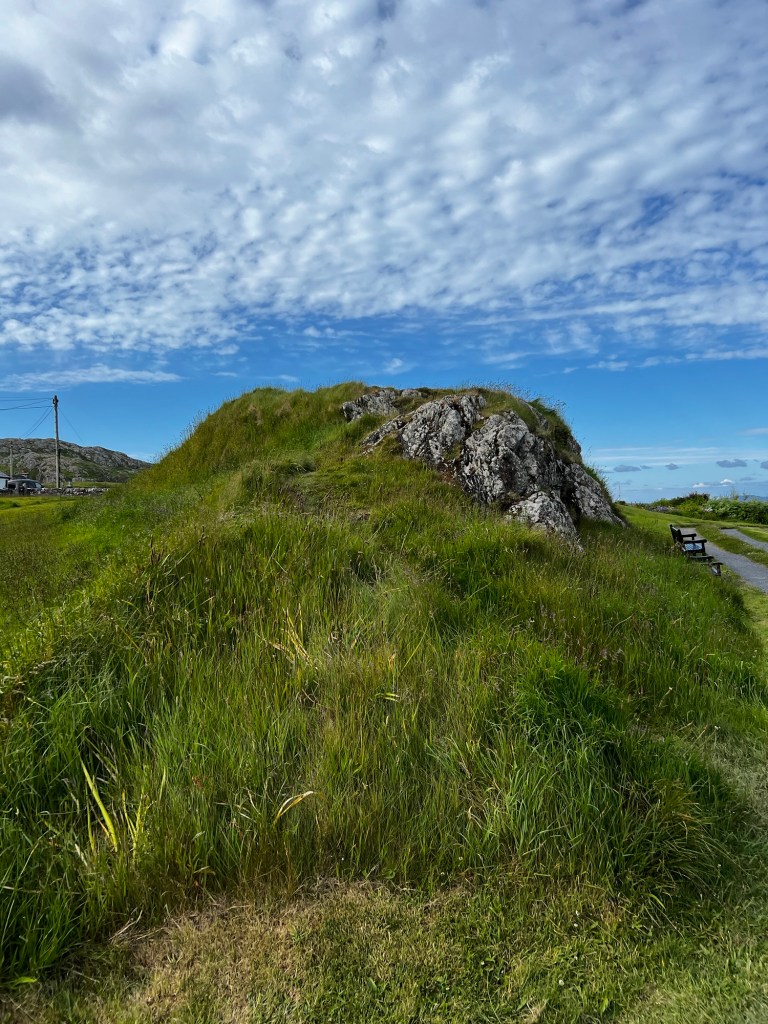
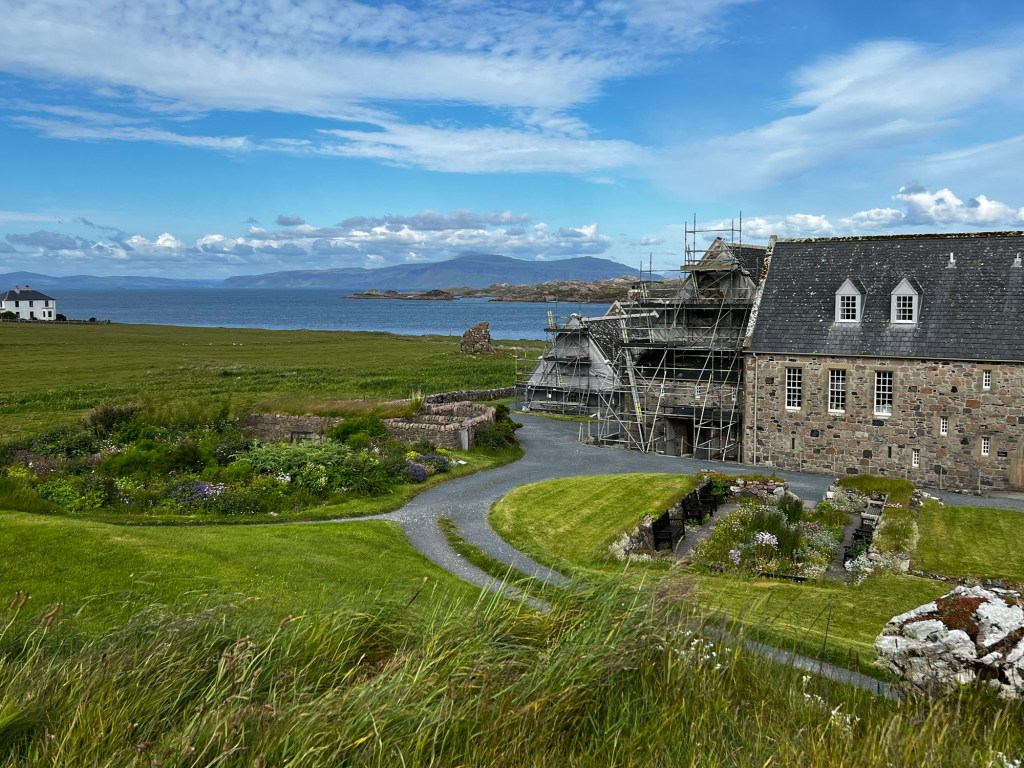
Columba had a small hut on this hill where he would write, study, and watch over his monastery. Not much remains of that original monastery now except for the spiritual intentions of what Columba had in mind: hospitality, compassion, and spiritual guidance. But the hill is still here. What a view!
When Columba died in 597, the monks buried their founder near the abbey church. This small chapel quickly became a pilgrimage destination. For 1400 years pilgrims have travelled to Iona and to this Abbey to visit the church and the shrine of Columba.
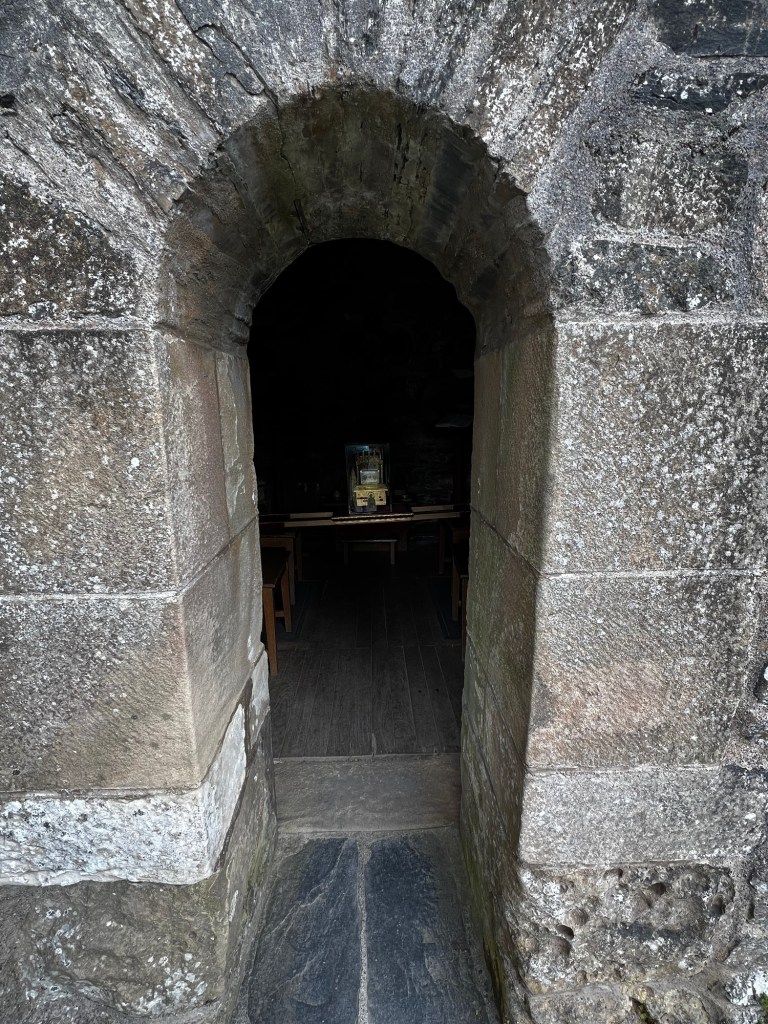


In the centuries after, despite raids by Vikings, the Abbey flourished. The Book of Kells, a work of art as well as a Bible, was created along with hundreds of other bibles in the scriptorium. Remember this is before printing presses so the only way to make more bibles is to handwrite them. Pilgrims flocked to Columba’s shrine. And the wealthy wanted to be buried in this holy place. The burial site is said to hold 48 Scottish kings and a variety of abbots, monks, warriors, and great lords.
St. Martin’s Cross is the only one of Iona’s early high crosses still standing in its original location. It has been on this spot for more than 1200 years. Symbols and Bible scenes were carved into the crosses to share the gospel story. The high crosses were places where pilgrims stopped for prayer and reflection.
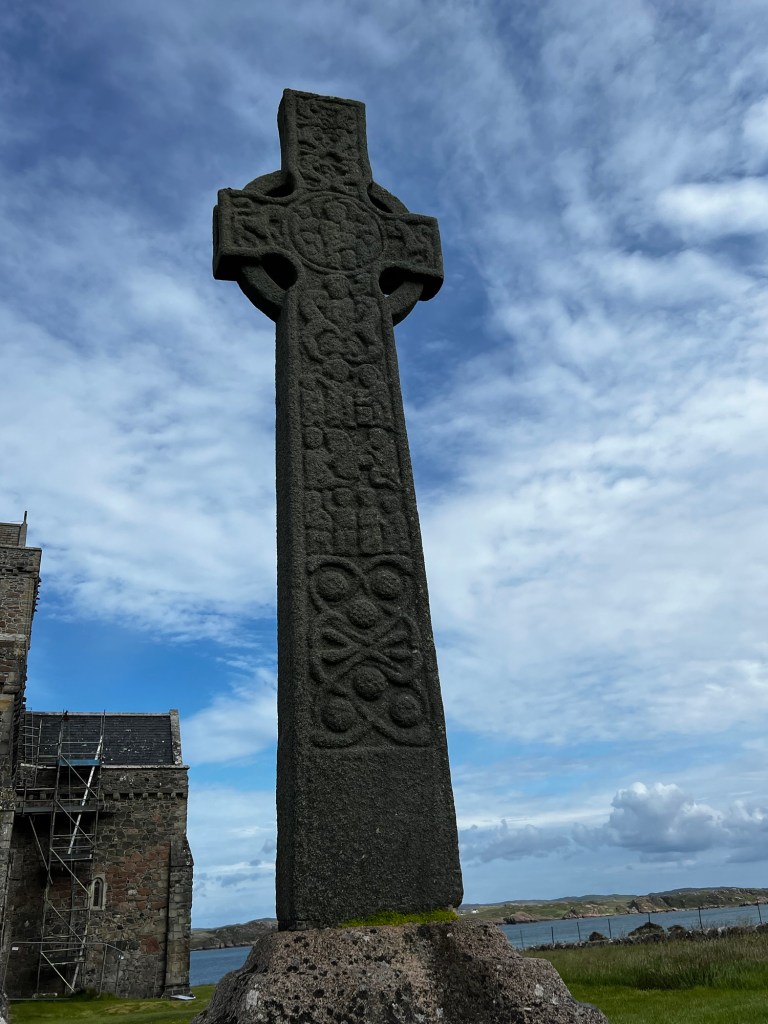

St. Oran’s Cross created in the 800’s preserved in the Abbey’s museum.
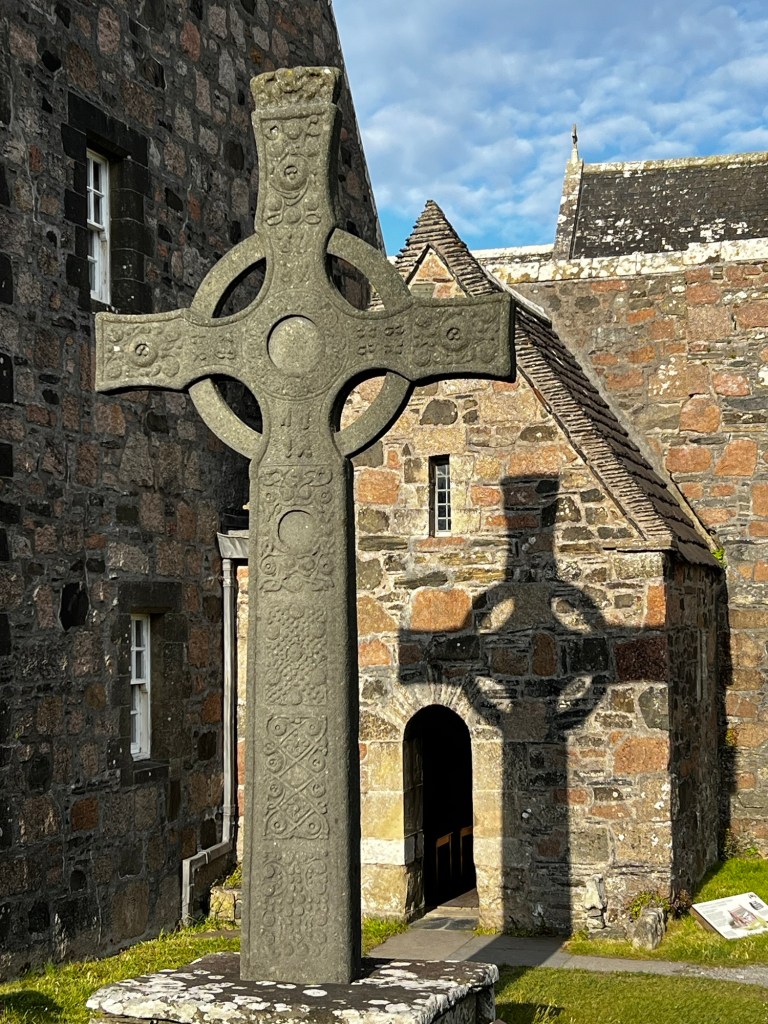
St. John’s cross stood right outside the shrine. The original now stands in the museum with a little help to reconstruct it.


Fortunately, a replica of St. John’s cross was created and placed in the original location.
Now this is my favorite picture from the entire Iona trip. The St. John cross was strategically placed so that when the sun (which can be a rare occurrence in Iona) hit it, the cross would cast shadow over Columba’s shrine. I happened to come across this scene just after dinner and took several pictures. Here is my favorite one.
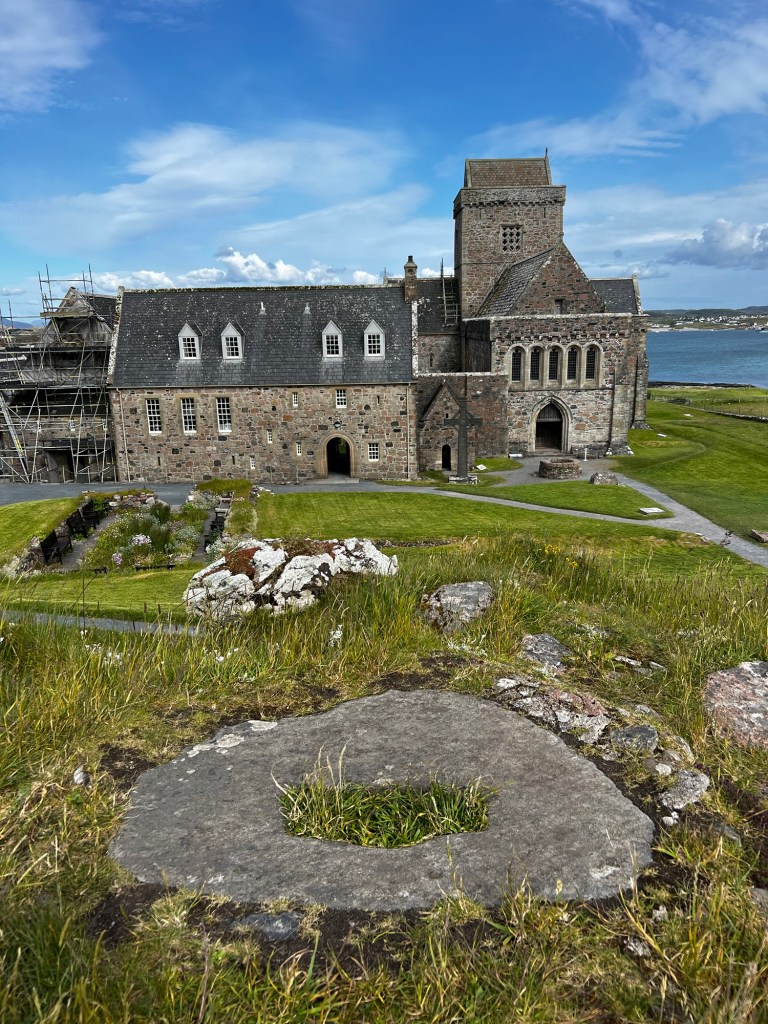
The 1200’s marked a new era at Iona when the Benedictine monks built a monastery on this site. What we see today is mostly a reconstruction of their work.
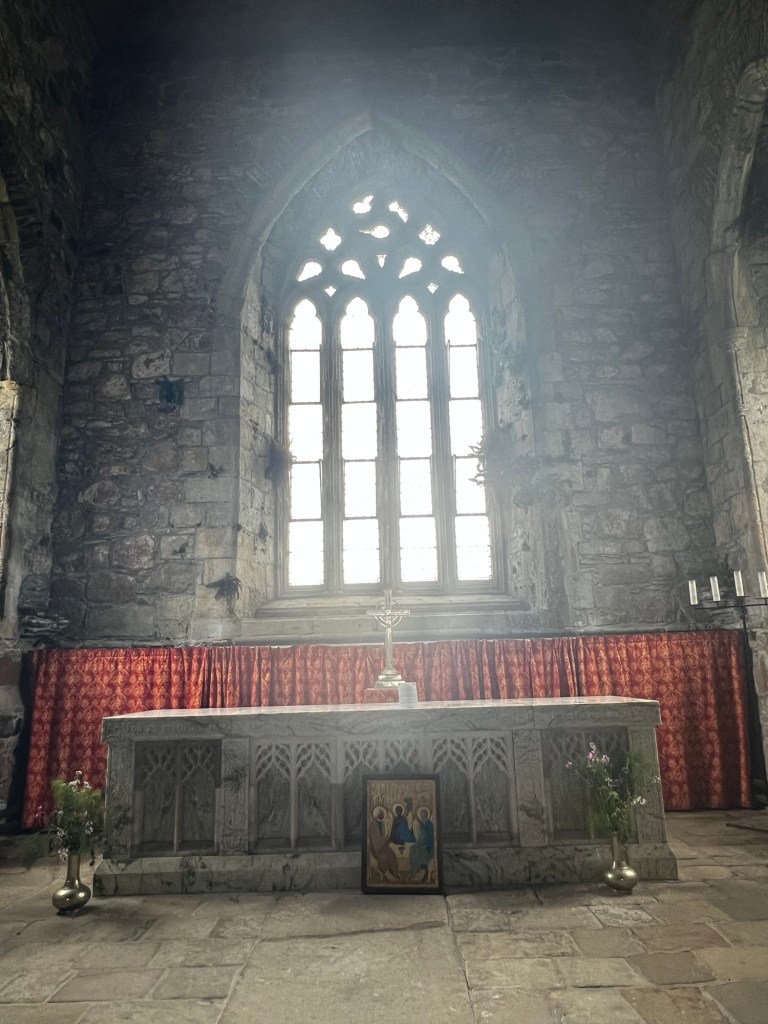
The Cathedral had to be large not simply due to the numbers in the monastic community but because of the crowds of pilgrims who arrived daily. Over the centuries it has been remodeled, extended, lowered, and reconstructed. We had a night tour of church and the intricate symbolic carvings as well as the evidence of the different iterations it has undergone. But I think the church speaks for itself so here are several.




At the heart of the abbey complex, monastic life revolved around the cloister. It linked the church with the rest of the buildings and its covered walkways provided a quiet place for contemplation.
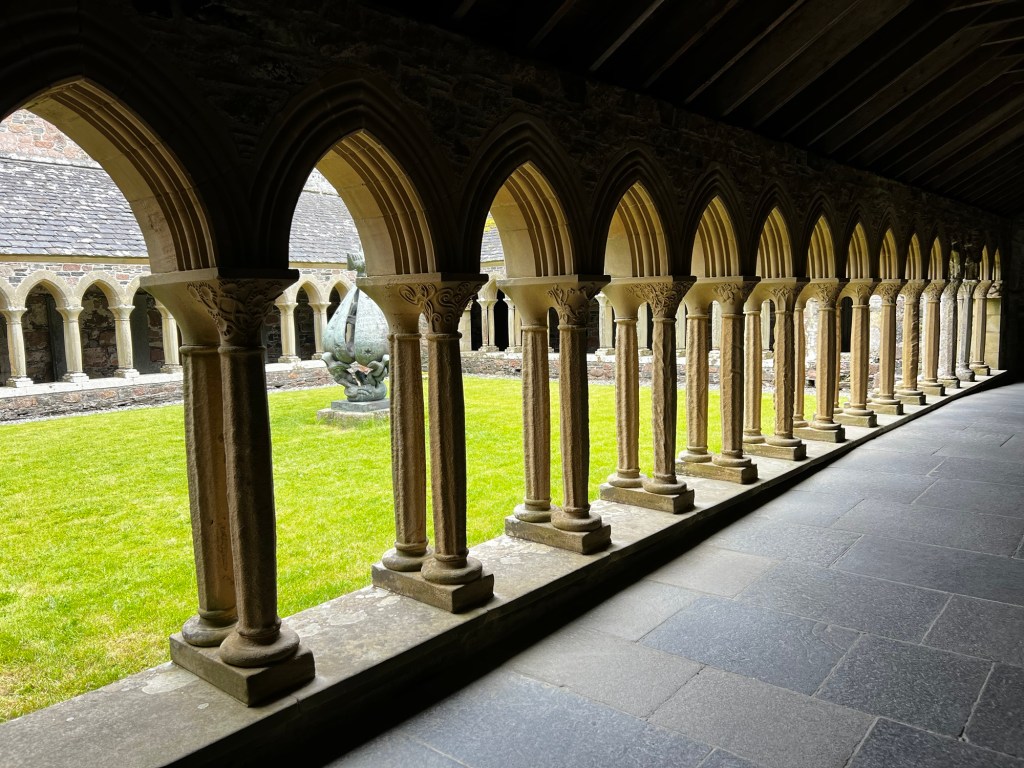
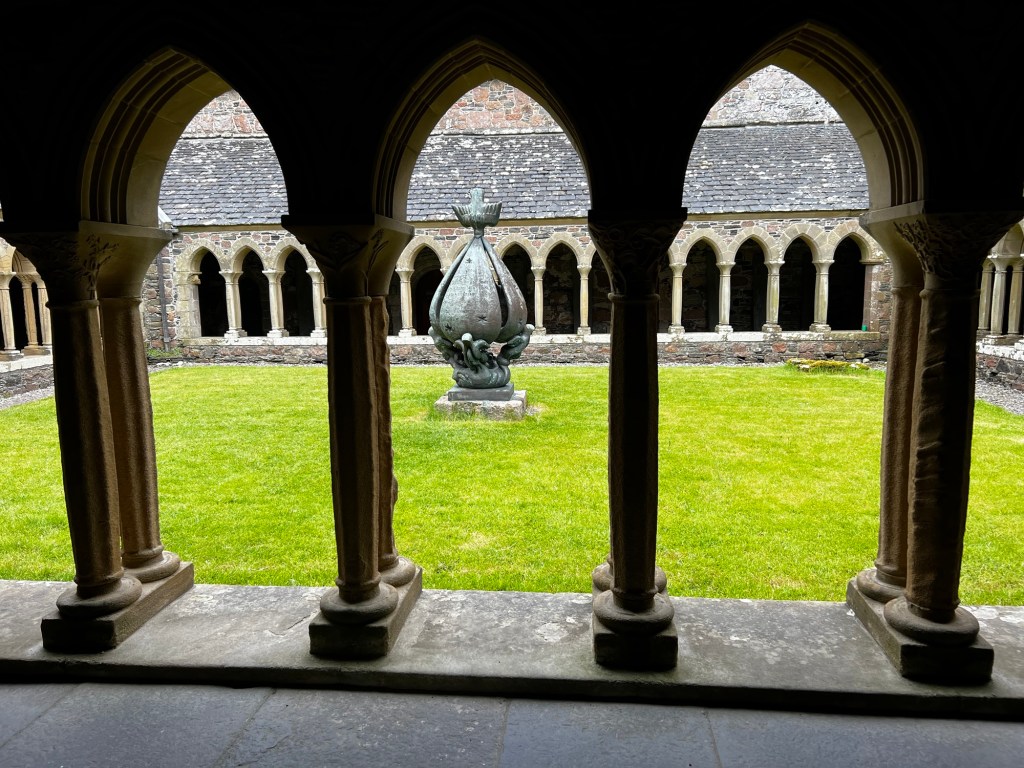

The tops of each pillar were originally decorated in elaborate carvings. Only a few originals remain. Recently, more modern carvings were done to decorate the cloister area. These are some of them.


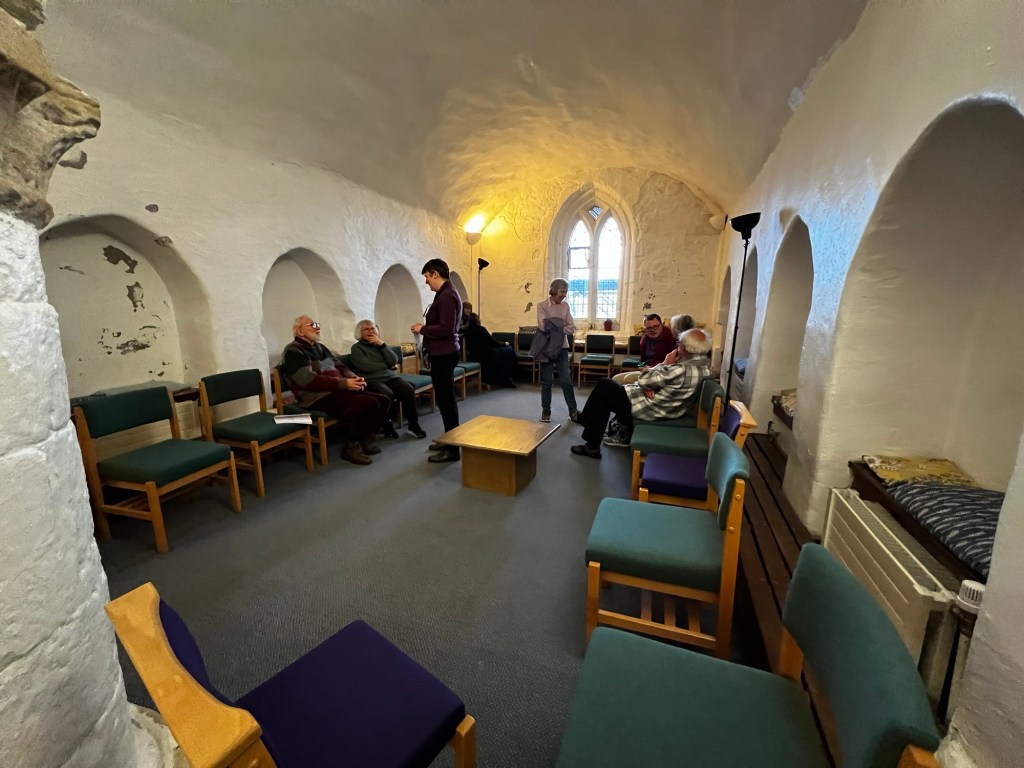
One of the buildings accessed from the cloister is the chapter house. The monks met here daily to confess and discuss business.
We had several gatherings here at the Chapter house for presentations and music.

At the same time that the Benedictine monks were building their Abbey, the Augustinian nuns were building their Nunnery (I didn’t even know that was a word!). While it has not been reconstructed, it is still one of the best preserved nunneries in Britain. They provided hospitality to female pilgrims to Iona as they devoted their lives in prayer and service to God.
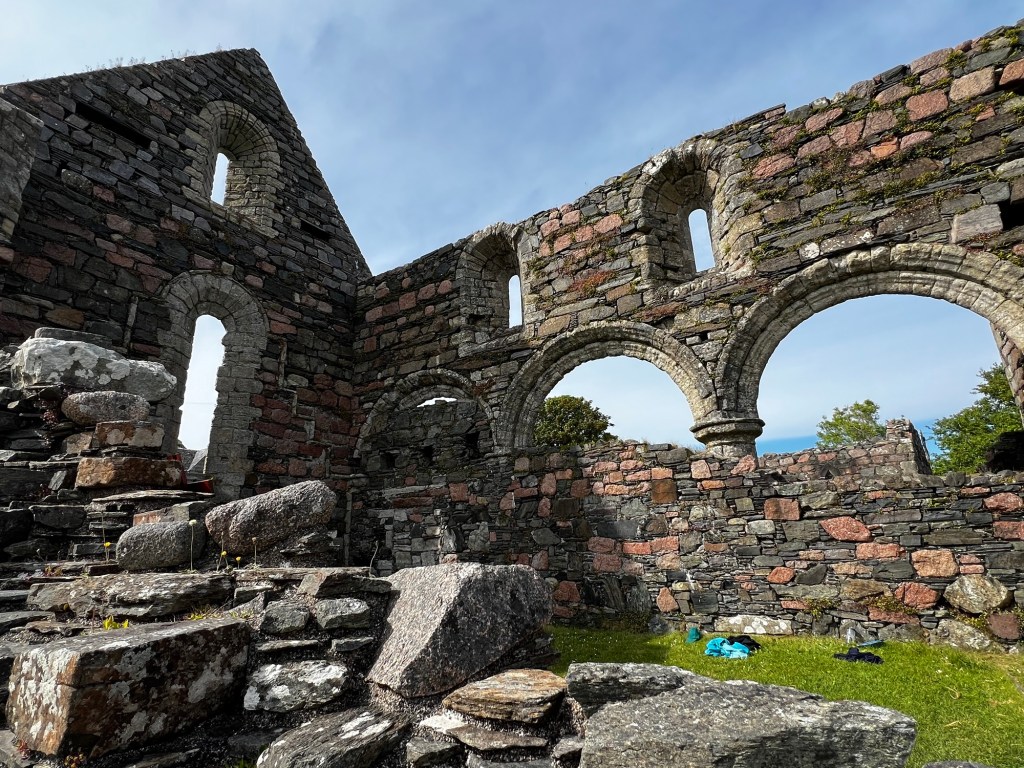
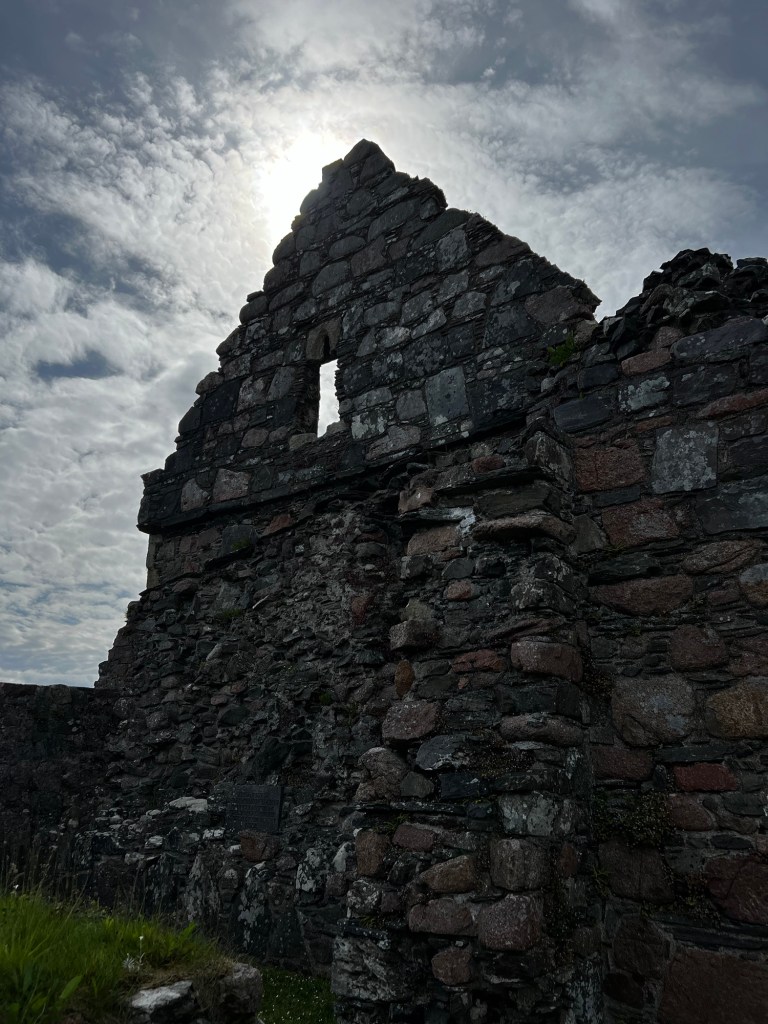
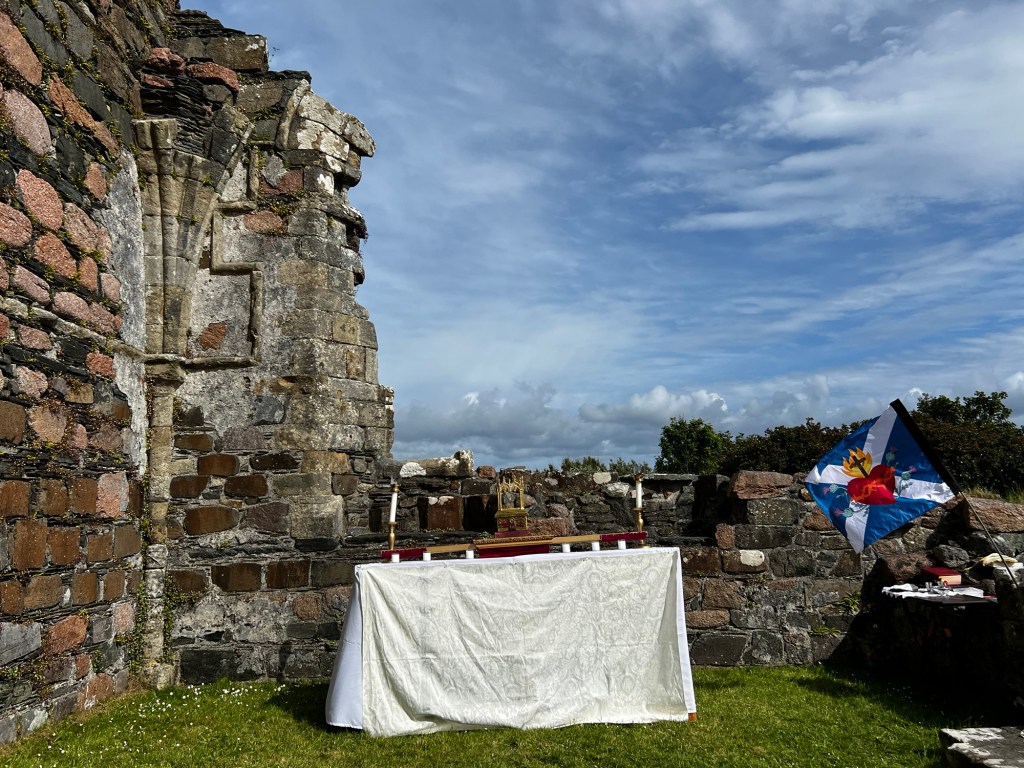
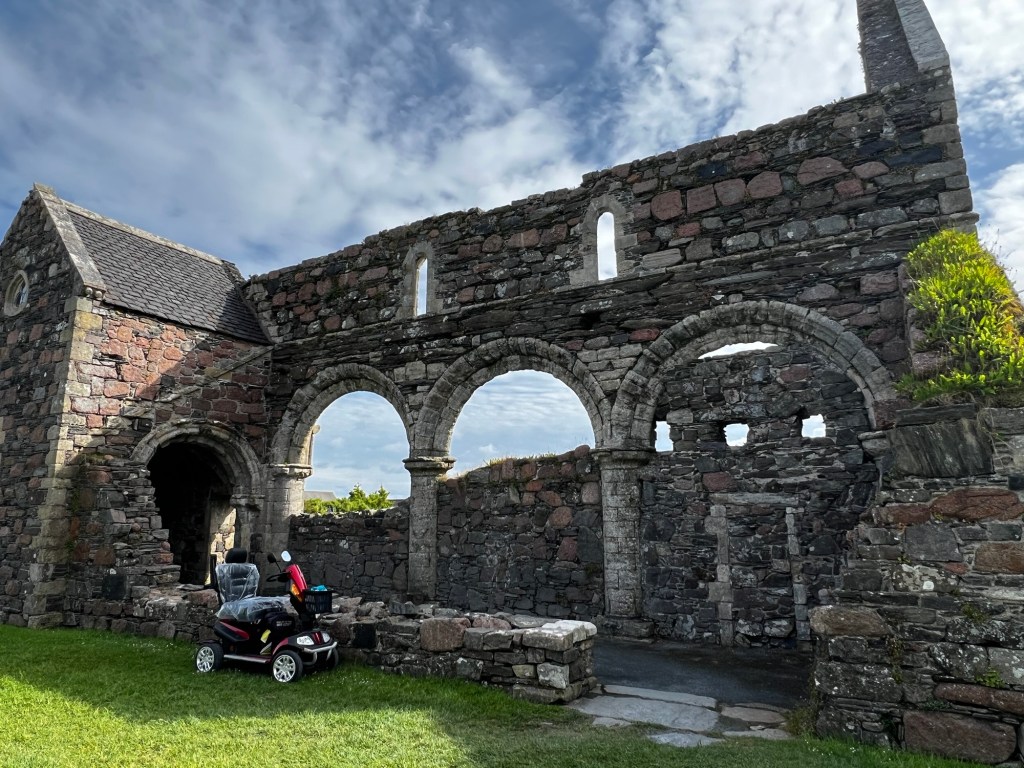

Following the Reformation around 1560, monastic life came to an end and the abbey and nunnery fell into ruin. But pilgrimage continued to come for centuries after. In 1900 the Duke of Argyll who owned the island gave it to the Iona Cathedral Trust for Restoration. This work was continued in 1938 thanks to the vision and great efforts of Rev. George MacLeod. Anyone can join this community who has 280 members and over 2,000 associate members worldwide. They are a wonderful group of people. Click the link below to check out their website.
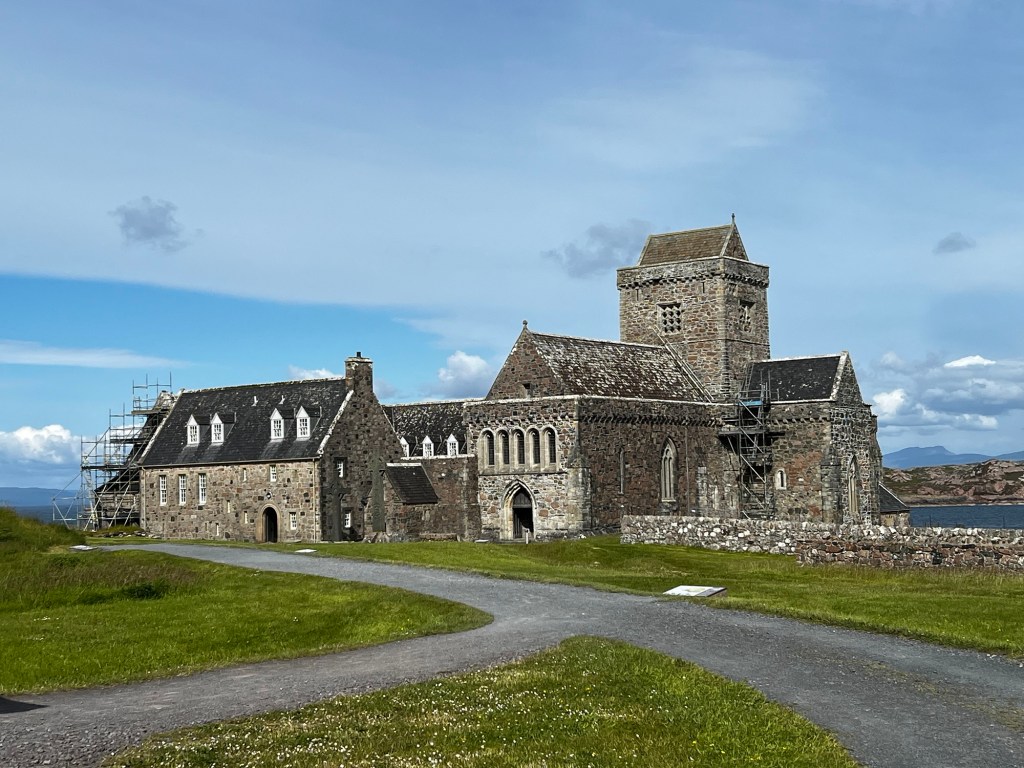

MacLeod founded the Iona community committed to spiritual practices, peace, and justice.
Despite the various iterations this sacred place has had over the past 1500 years, it has always been and will always be a place of reflection and a chance to experience the holy as this bench reminds us.


 The PCUSA Pilgrim Pastor
Leave a reply to nanabreault Cancel reply