Thessalonica
Wednesday, October 16, 2024
Our first stop was at the Archaeological Museum of Thessaloniki. There we saw a few ruins of the Roman Temple of Thessaloniki.

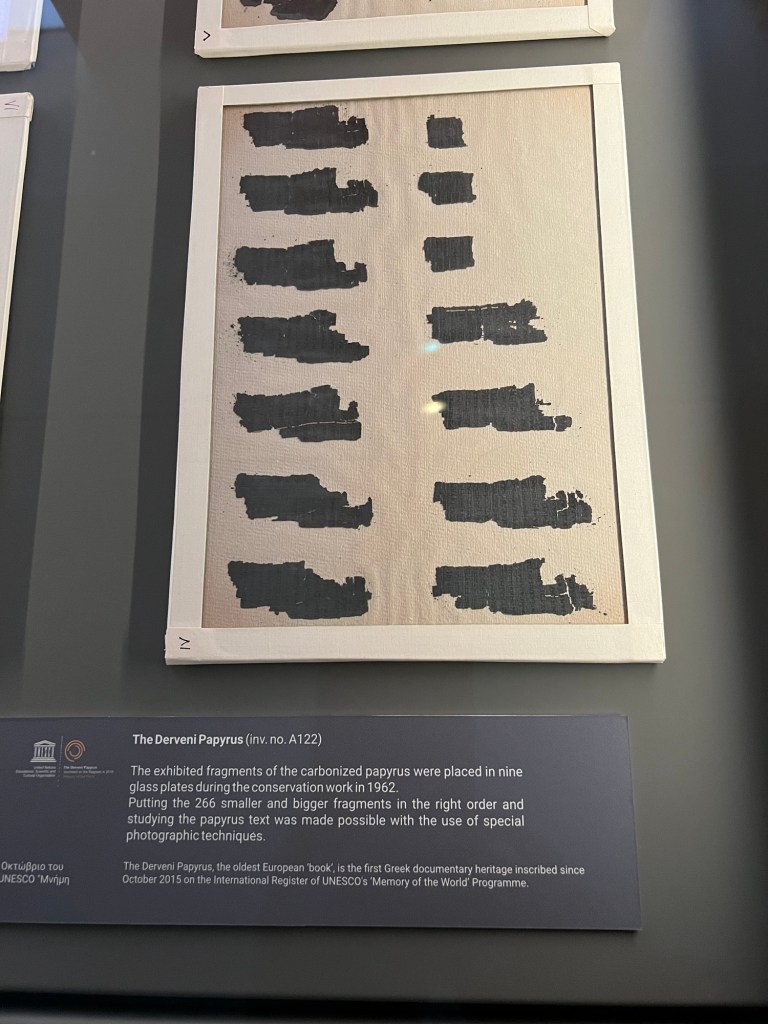
The most interesting museum item was the Derveni papyrus, a papyrus roll carbonized among the remains of a burial site covering a tomb. It dates back to the 4th century BCE and is the oldest surviving Greek papyrus.
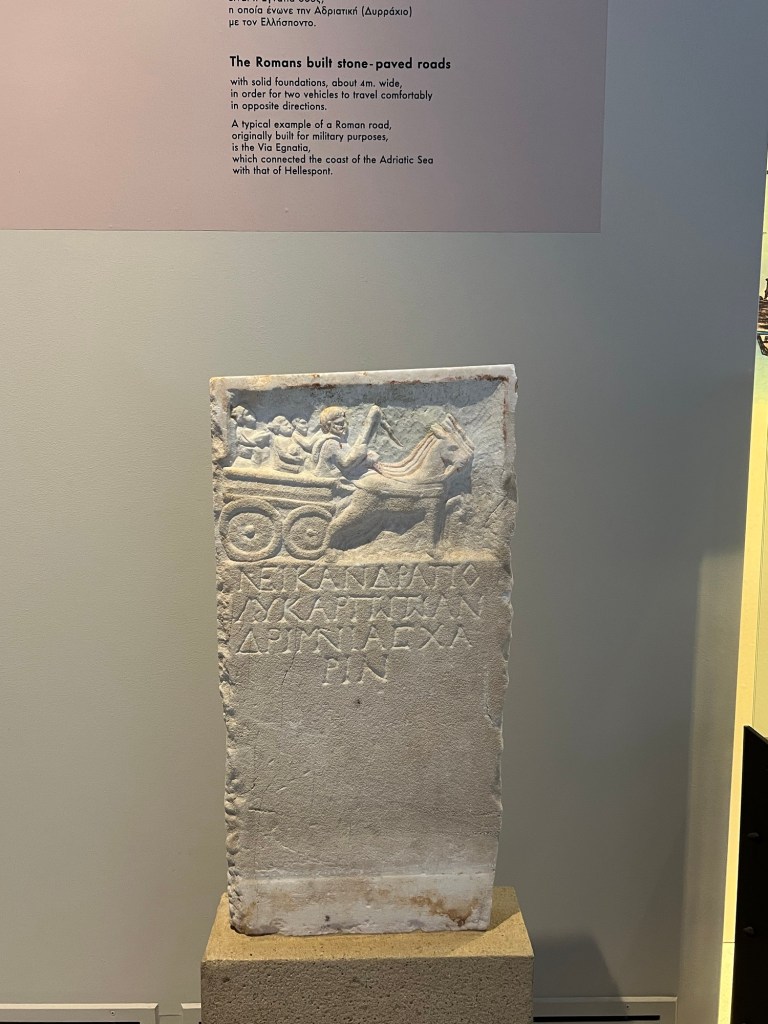
The other item worthy to highlight was this depiction of a chariot along the Via Egnatia, already referred to yesterday.
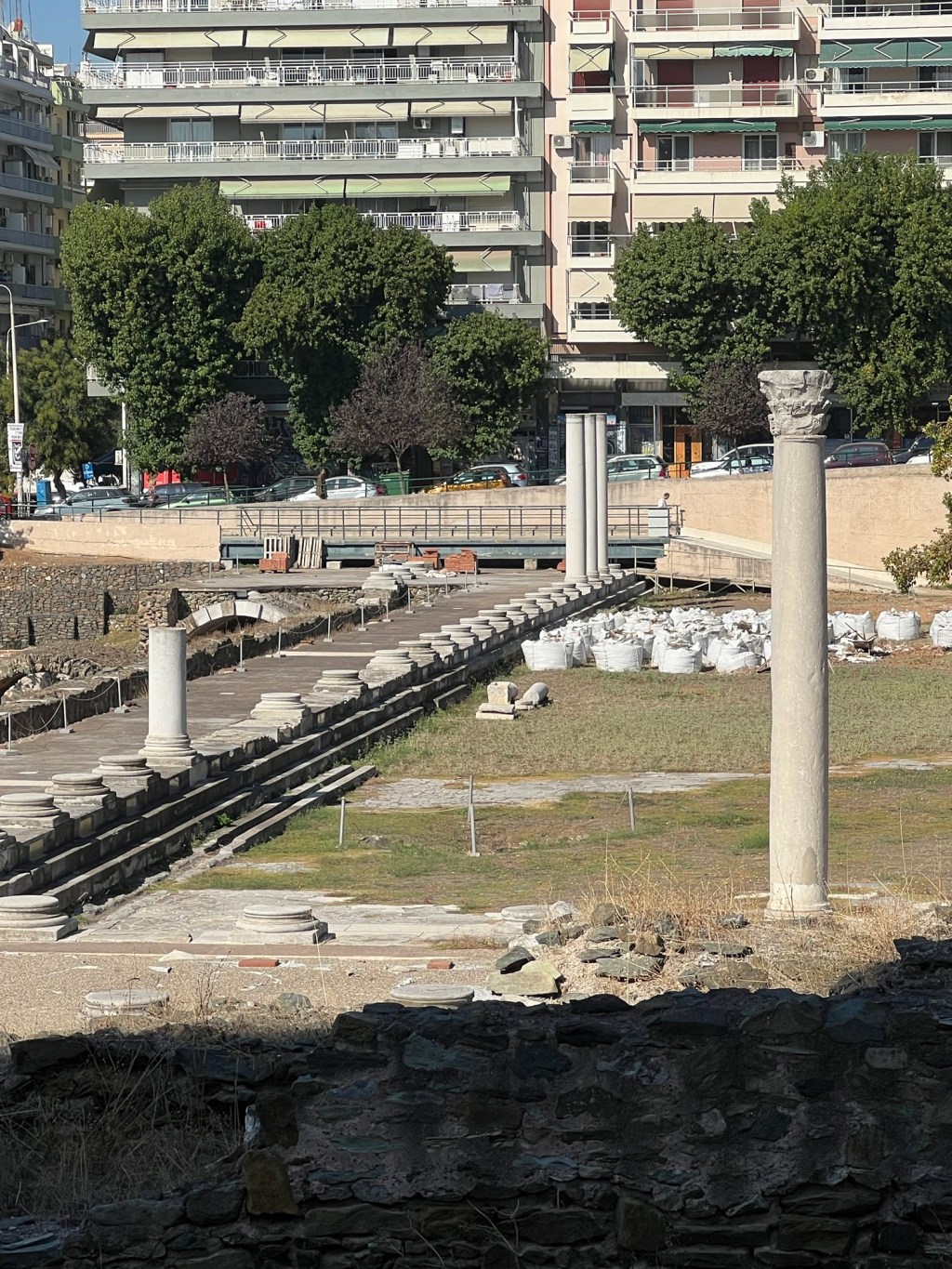
Driving through town, we saw several remnants of the ancient Thessalonica. This city was a Roman hub of trade and commerce in ancient times, widely recognized for its size and wealth.

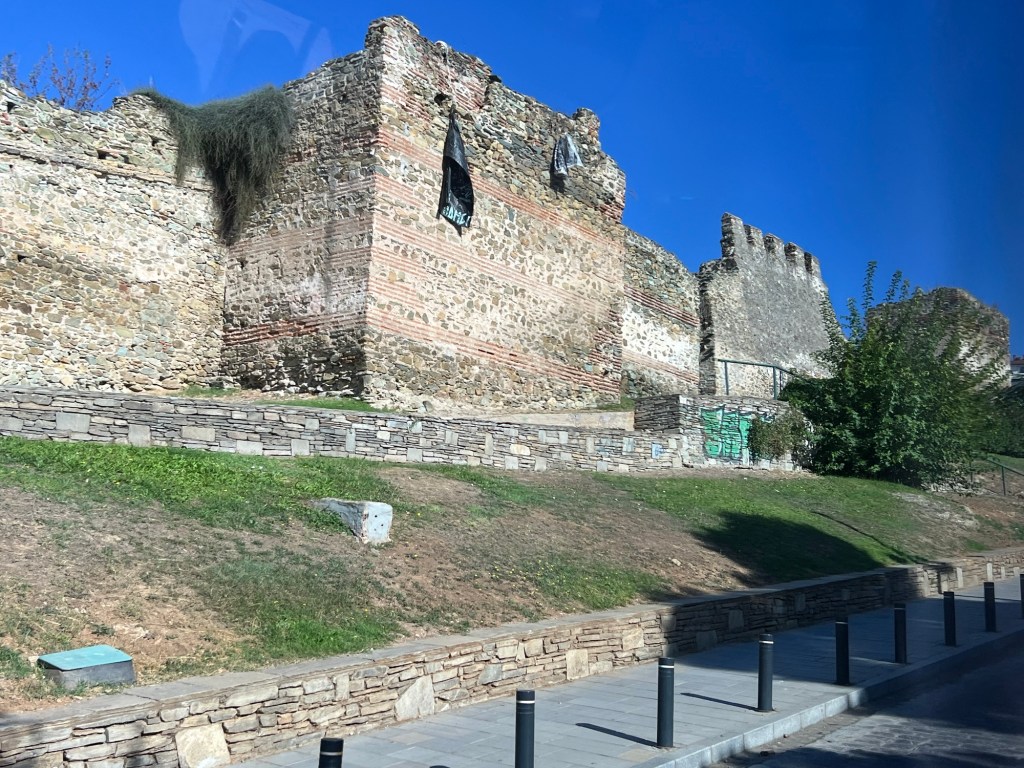
Most impressive were the walls that still stood protecting the biblical city from invaders.The walls include 6 towers and are 3 kilometers long.
Because we were only 10 people, we had a smaller bus so we could go through this arch that led into the old city.
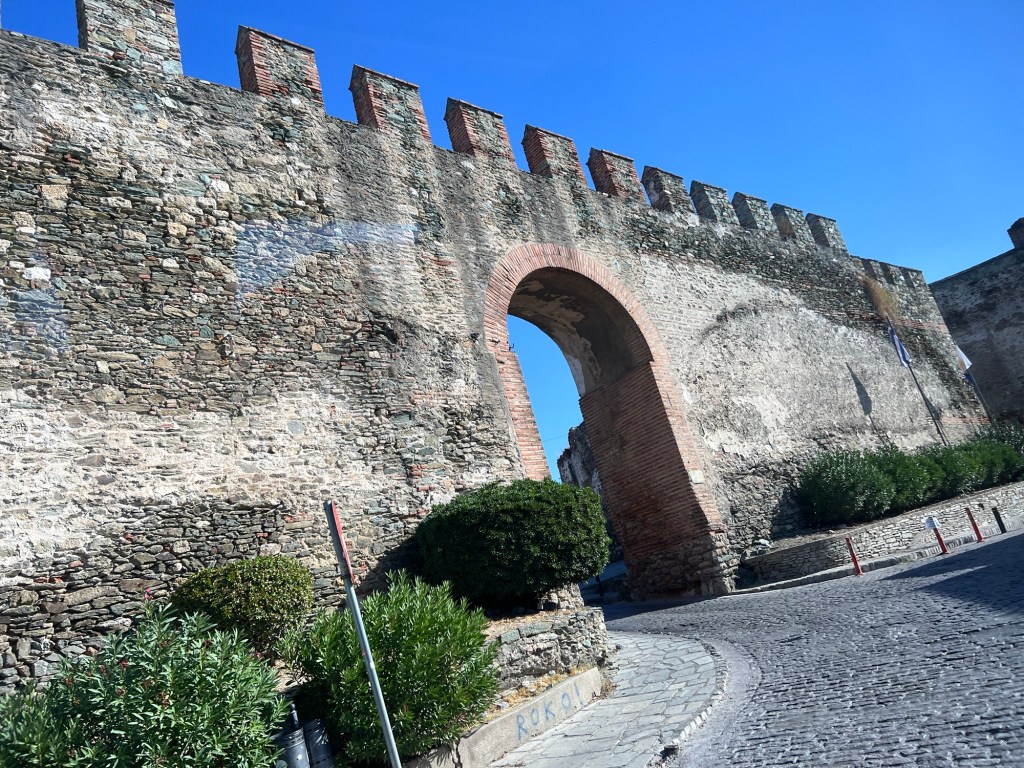
After being illegally imprisoned in Philippi, set free by an earthquake, and then apologized to by the city leaders who asked him to leave and not tell anyone, Paul came and entered these walls of Thessalonica. He preached in the synagogue converting some and upsetting others. Soon a mob started a riot and they rushed to where Paul and Silas were staying. Not finding them, they seized the owner of the house Jason and brought him before the council. Paul and Silas were then sent away to Berea to keep them safe. (Acts 17:1-9)

After driving around the old city where Paul had walked, we stopped at St. Demetrius Greek Orthodox Church.

In some ways, this church is the legacy of Paul. Christianity flourished despite persecution. This Greek Orthodox Church is here because Paul once again risked his life to preach the gospel to both Jews and Gentiles. We went inside to check it out.
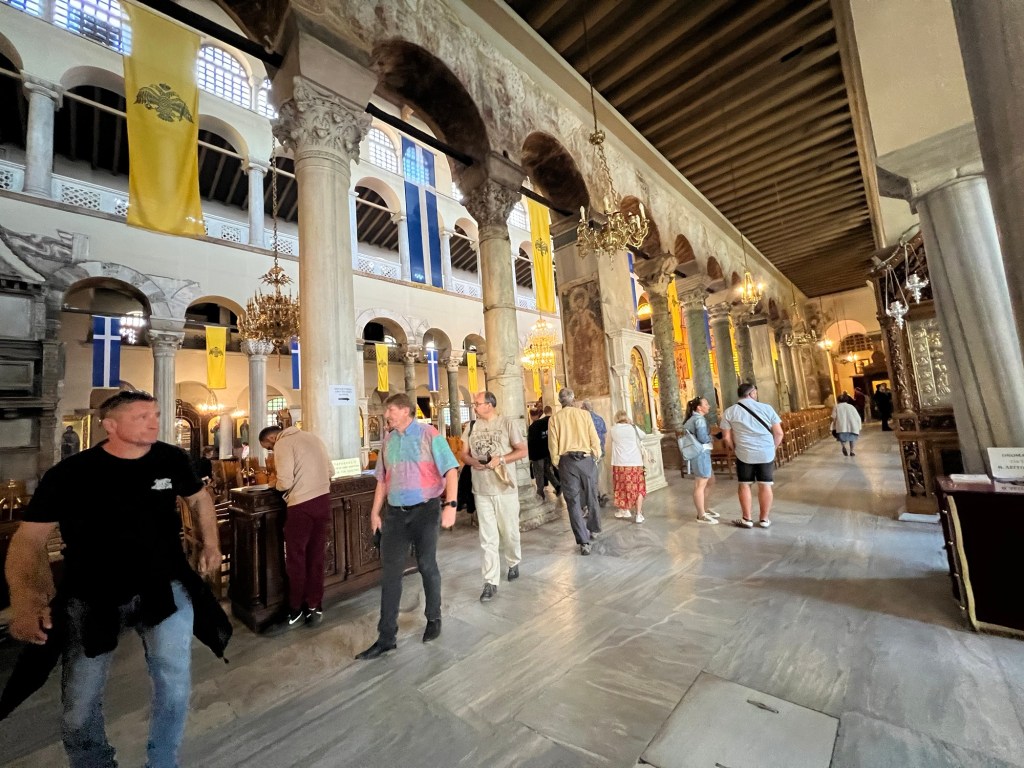
It’s a beautiful church inside. Built in the 5th century, it has stood the test of time and is still an active church today. Our guide was telling us that not as many people attend the full service anymore since it is over a 3 hour worship experience. Kind of makes my sermons seem short in comparison!
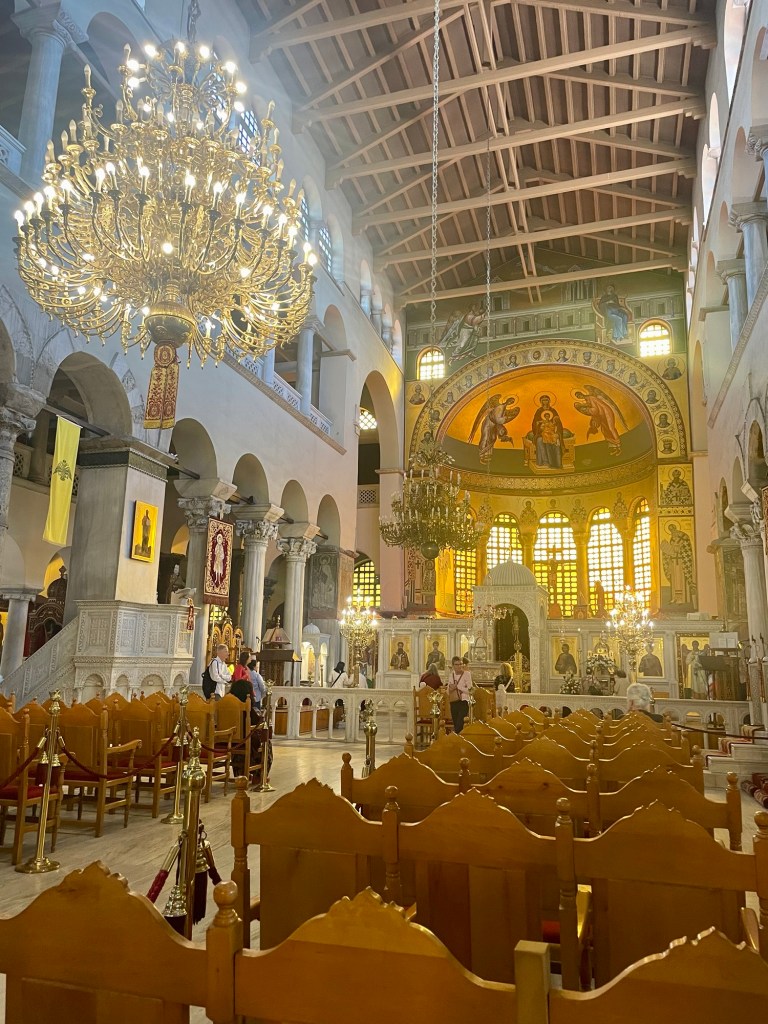
The altar area has a nice mosaic up above and the chancel area below.

As the name suggests, this church was dedicated to Saint Demetrius. Early in the 4th century, Thessalonica became the main residence of the Roman Emperor Galerius. Under his edict, Christians came under severe persecution. One of his Roman officers named Demetrius became a Christian. He hid it for awhile but then had to tell the truth about his faith. He was executed in 306 at the age of 36, martyred for his faith, thus becoming the holy patron saint of the city.

Like Catholics, each saint has a feast day. Well it just so happened that the feast day for St. Demetrius is October 26, just 10 days away. So the relics were brought out from their usually place and put front and center in the chancel area.
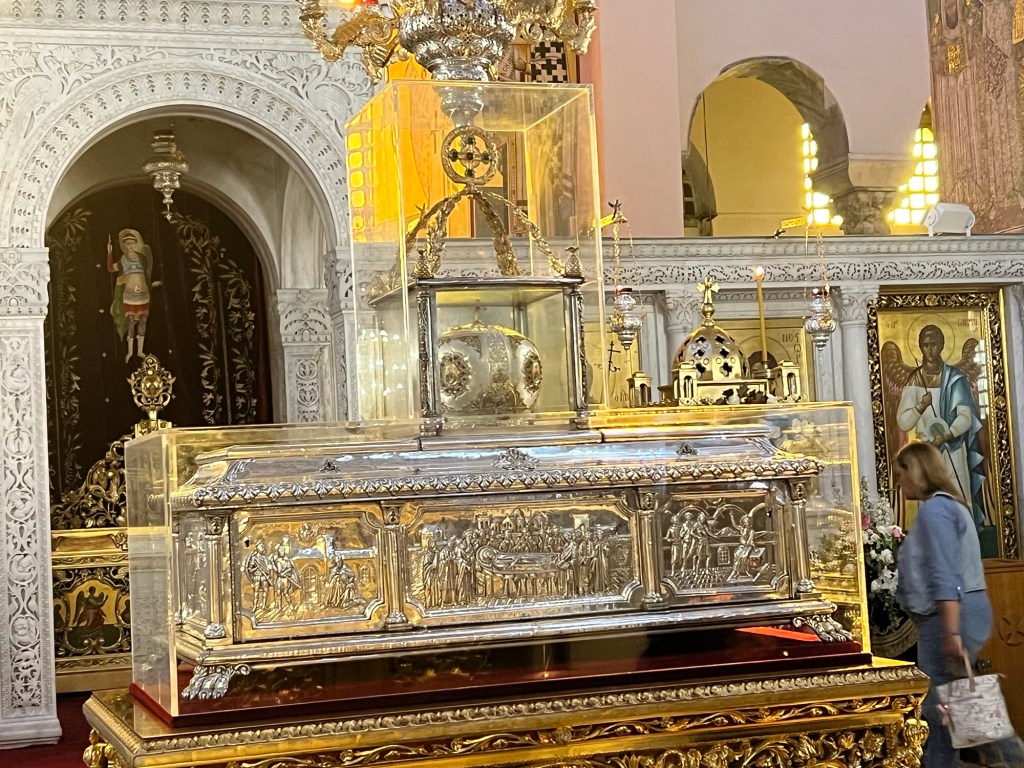
A long line of faithful Christians approached the relics one by one, kissed the glass, knelt down, and paid their respects.

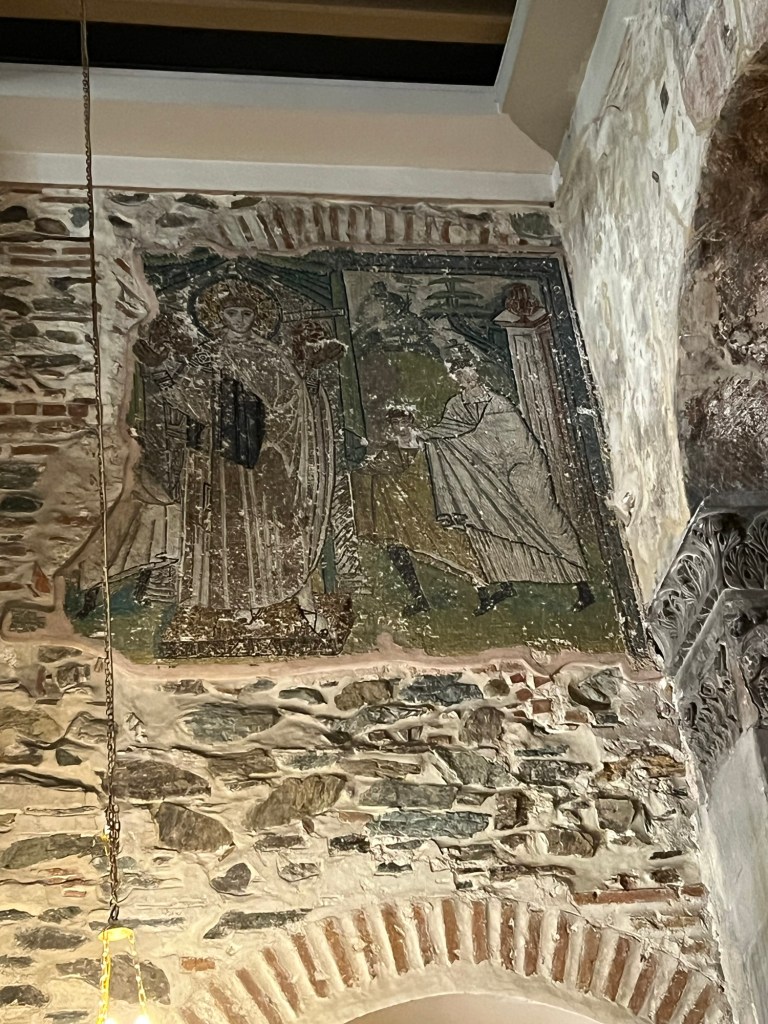
We gathered to read the scripture in Acts 17:1-9 and as we walked around, we noticed this ancient centuries old frescoes.
Next we went to the ancient agora. Agora means open space where people gathered for commerce, socializing, and civic matters. It was the heart of the ancient city.

It was here that Paul preached to the Thessalonians as they went about their daily tasks, converting some and upsetting others. While there is not much left of it now, you can make out the amphitheater in the foreground where he most probably addressed the residents.

After walking in Paul’s footsteps, it was time to check out the town. We went to the market place with awnings and small shops where you could get just about anything.

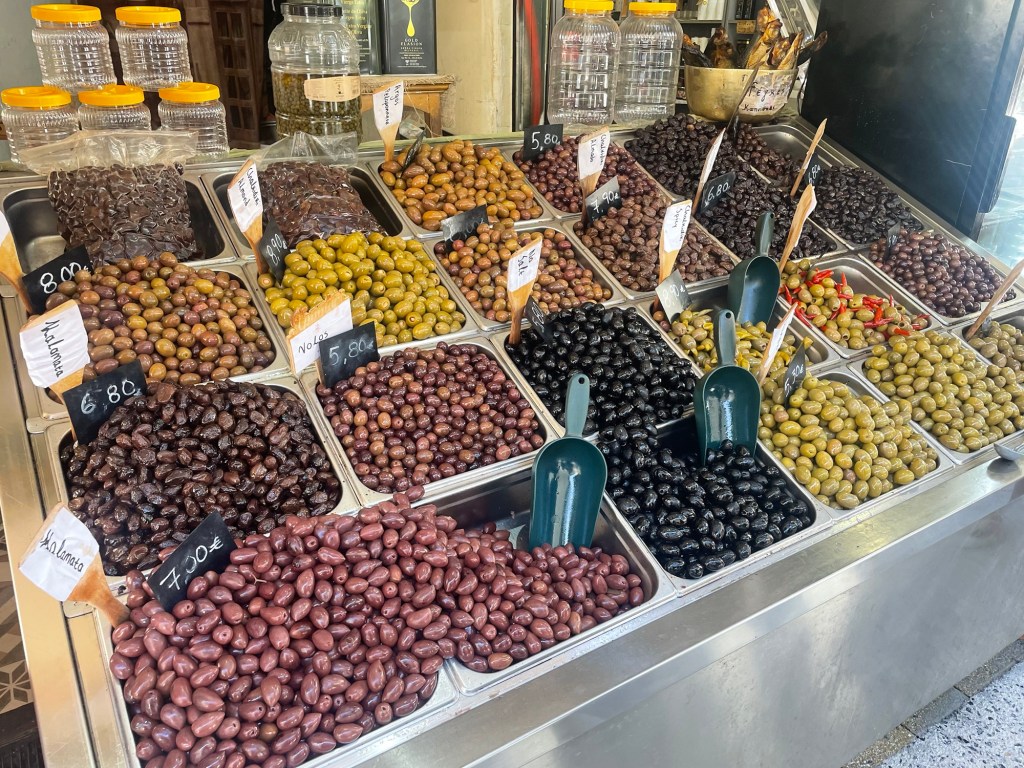
Our guide took us to an olive shop where we sampled some of the regions most delicious olives. I never knew there were so many varieties.
We didn’t get anything from the fish market, but they sure looked fresh.

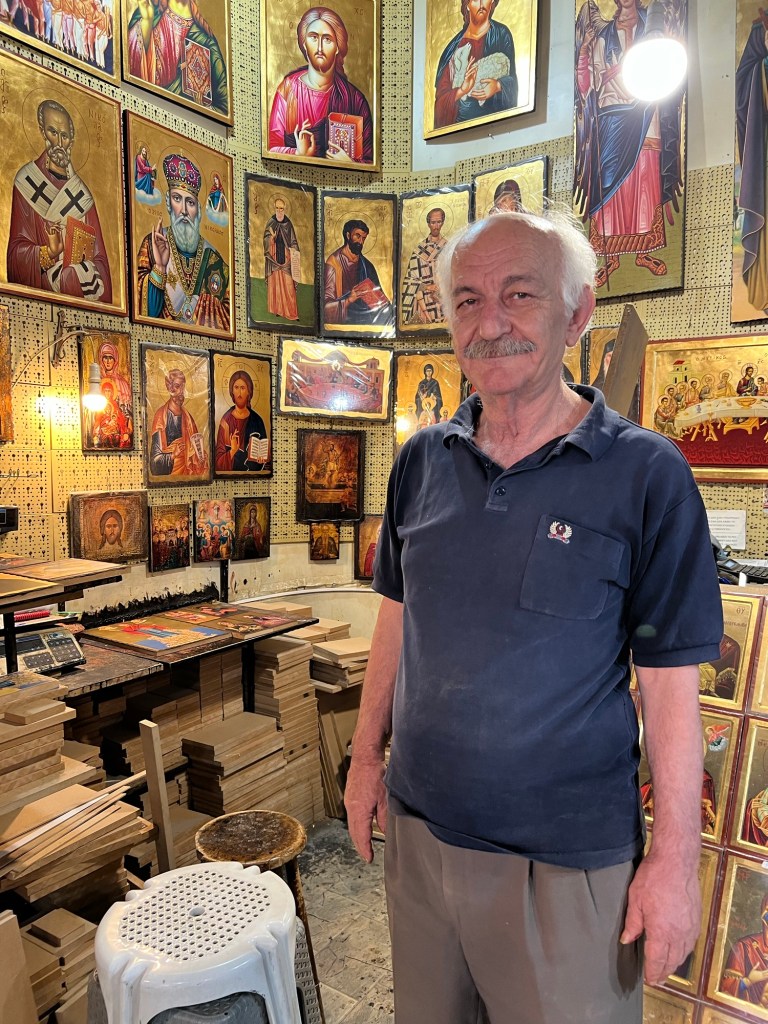
I did get a chance to duck into an icon store which was the workshop of an iconographer. I just couldn’t resist getting one and taking a picture of the artist himself.
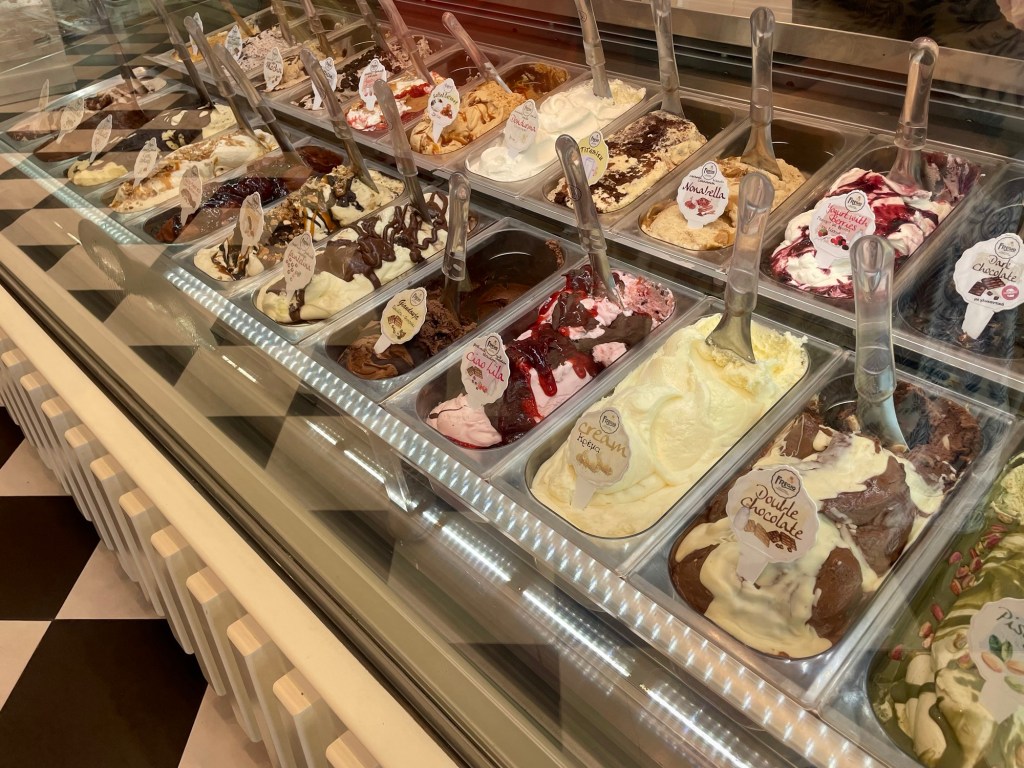
Of course we had to partake of the amazing gelato on such a hot day.
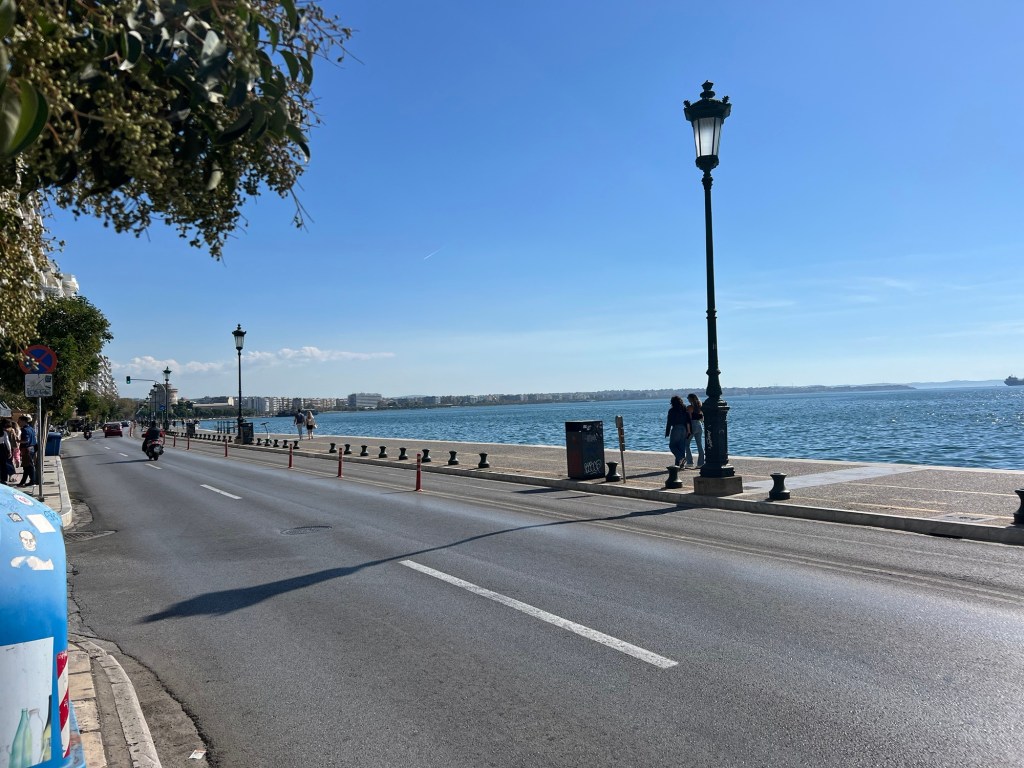
Thessalonica is a port town. Strolling down the boardwalk toward the White Tower where our rendezvous point was the most relaxing part of our day.
This White Tower is the most recognizable structure in the city. It was built in the 15th century and has served as a prison, place of execution, defense post, meteorological laboratory, and now an exhibit venue. It was easy to locate and the perfect place to meet to head to the airport.

In the afternoon we hopped on a flight to Athens arriving for a late night dinner and bed. Tomorrow we explore the famous sites of Athens.

 The PCUSA Pilgrim Pastor
Leave a comment