
Philippi
Monday, October 14, 2024
We left at 7:30 and caught a glimpse of the Trojan horse used in the movie Troy…

Before getting on the 30 minute ferry ride…
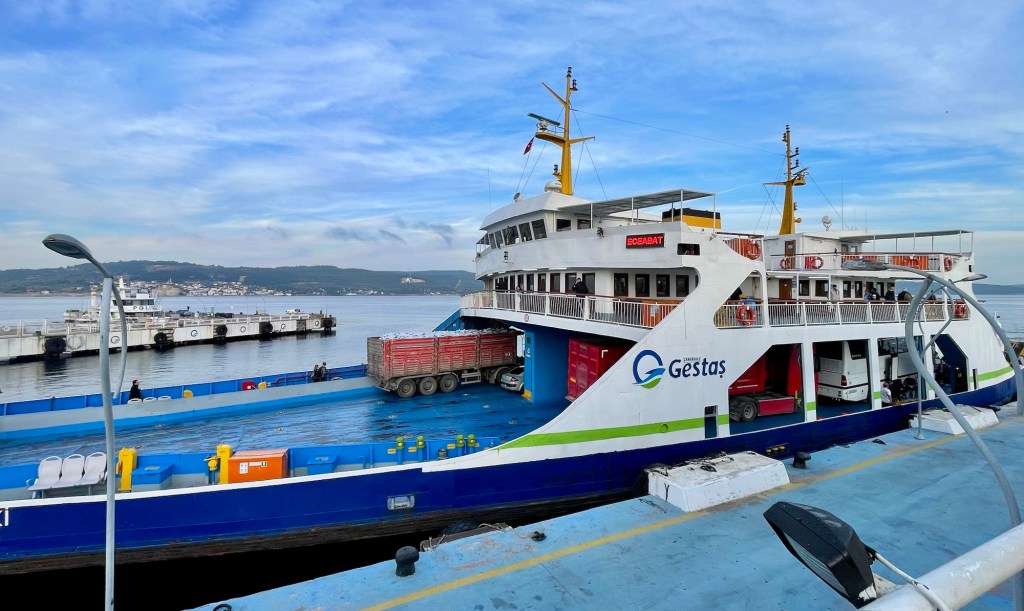
That included both cars and people…

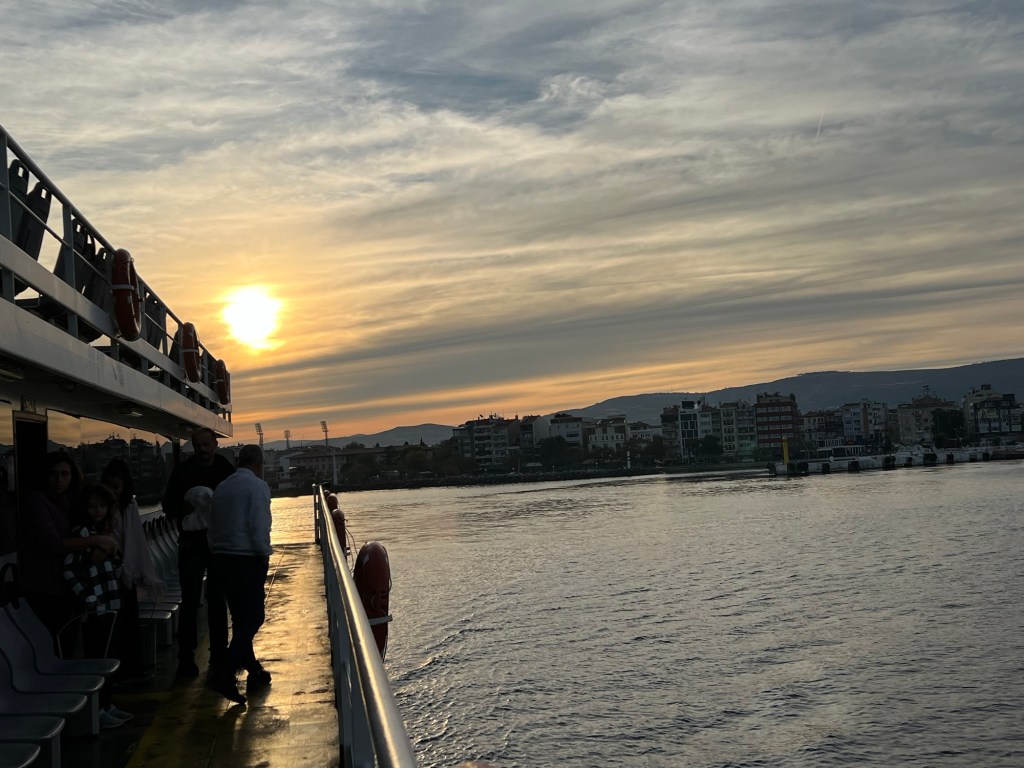
We said goodbye to the port as the sun began to rise.
This memorial is dedicated to the Battle of Gallipoli in 1915. The translation says, “Stop, passenger! This earth, where you unintentionally came and stepped on, is where an era sank.”

Then we drove about another hour and along the way saw the longest bridge in the world. Literally.

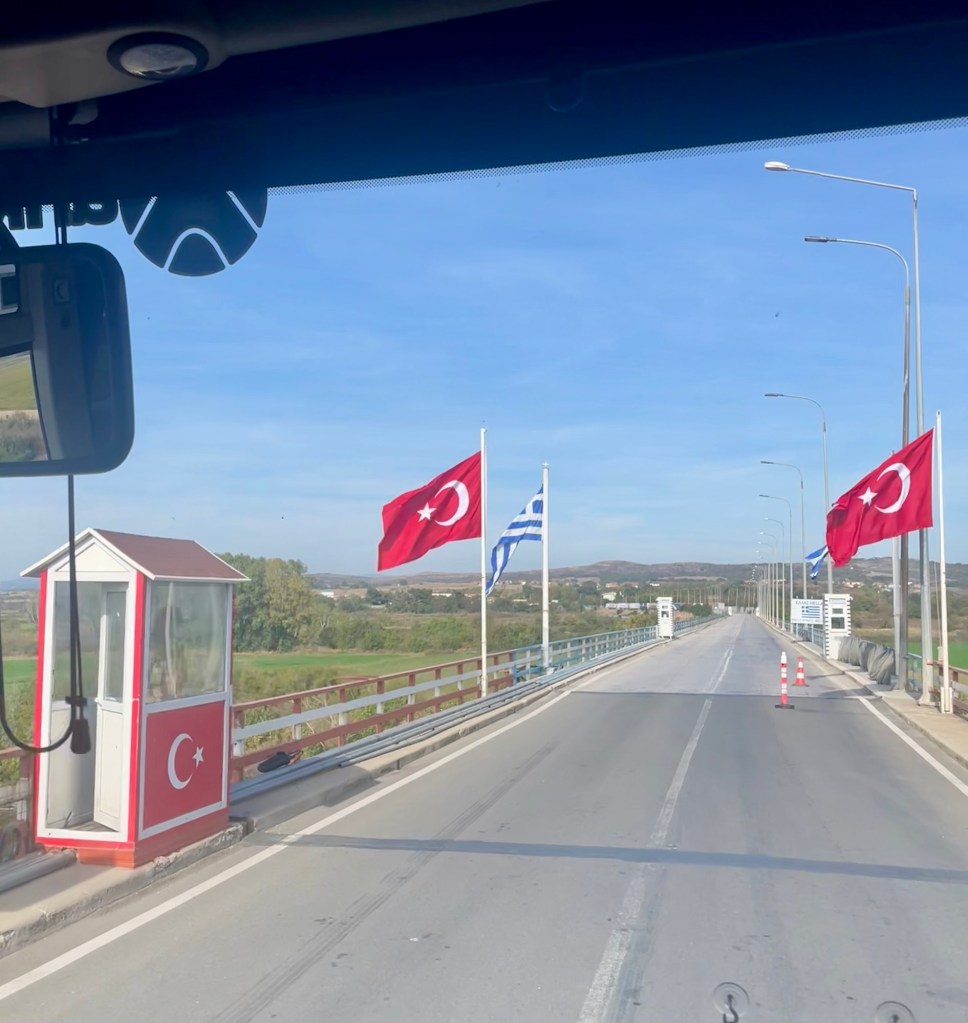
We arrived at the border and had to go through Turkey passport control first.

We had to squeeze through the border booths with our big bus.

The natural border between Turkey and Greece is this Evros river.
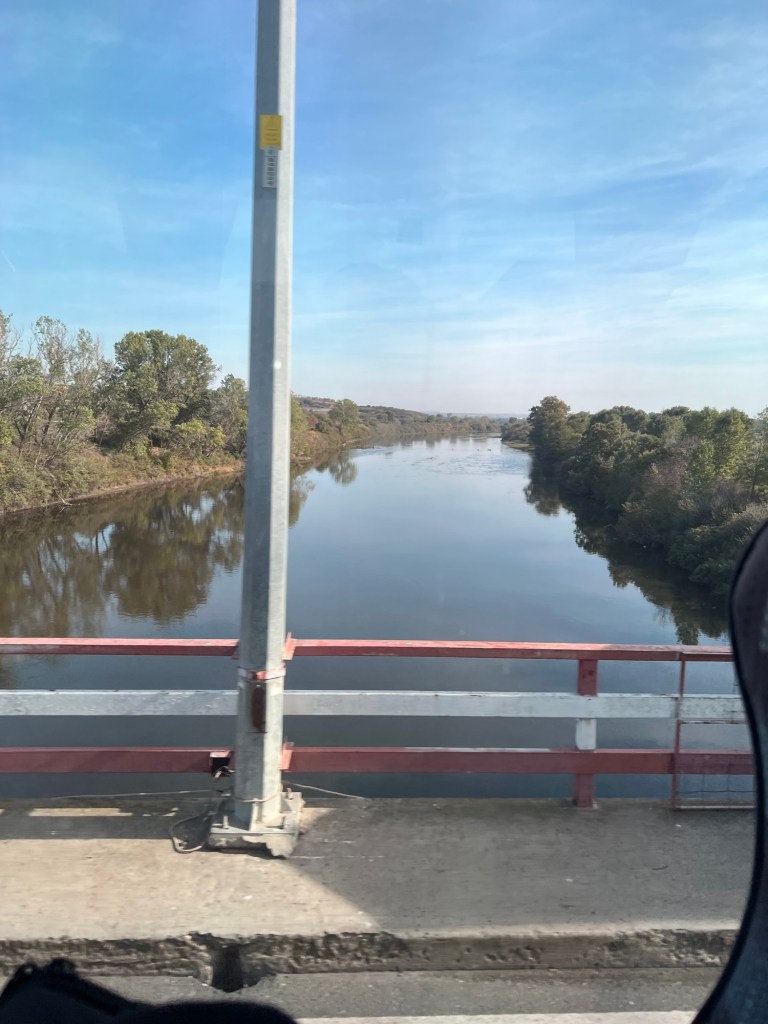
And here is the official border. Hello Greece!
We met our new tour guide and driver at a gas station, made the transition with the luggage, and then drove two hours to get to our Pauline destination of ancient Philippi.

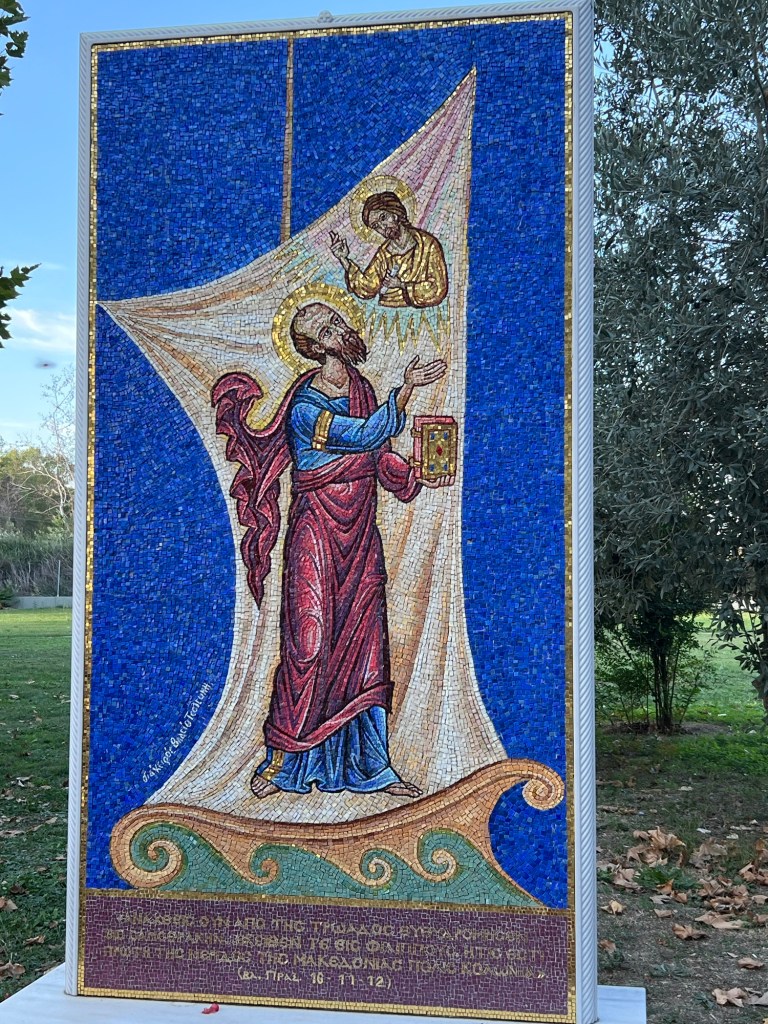
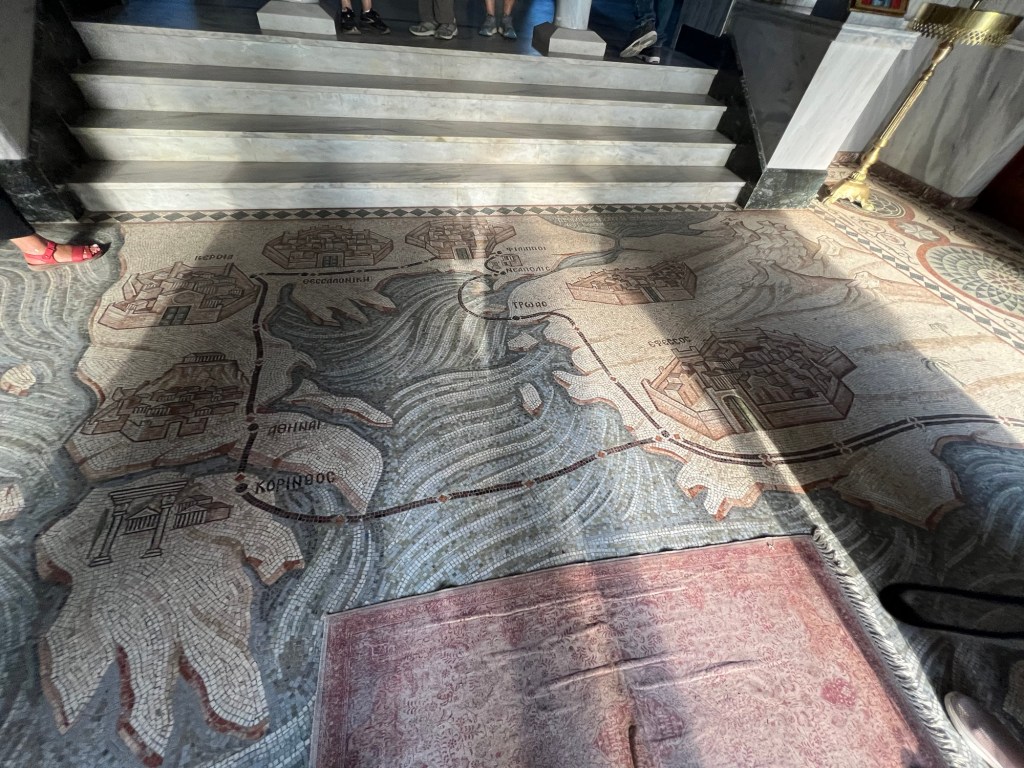
We walked up to Philippi on the same road Paul may have walked. After setting sail from Troas, he spent the night in Samothrace, an island visible from the coast, and then to Neapolis (now called Kavala where we will stay tonight) as recounted in Acts 16:11-12.

This wall was part of the city walls that surrounded Philippi.
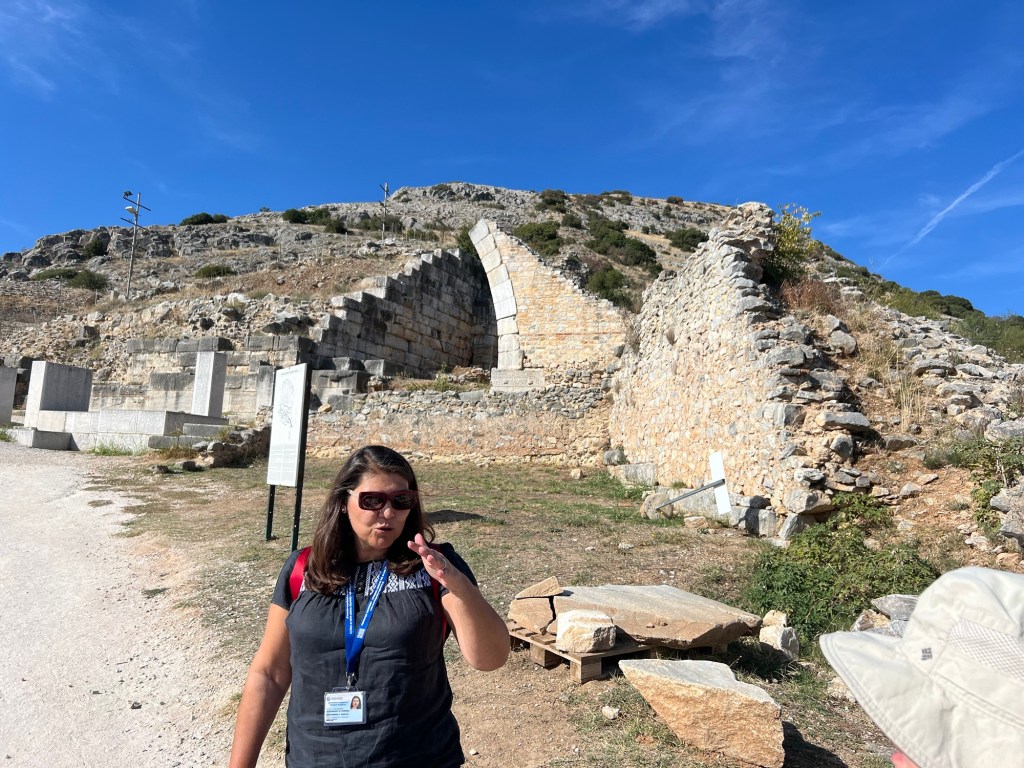
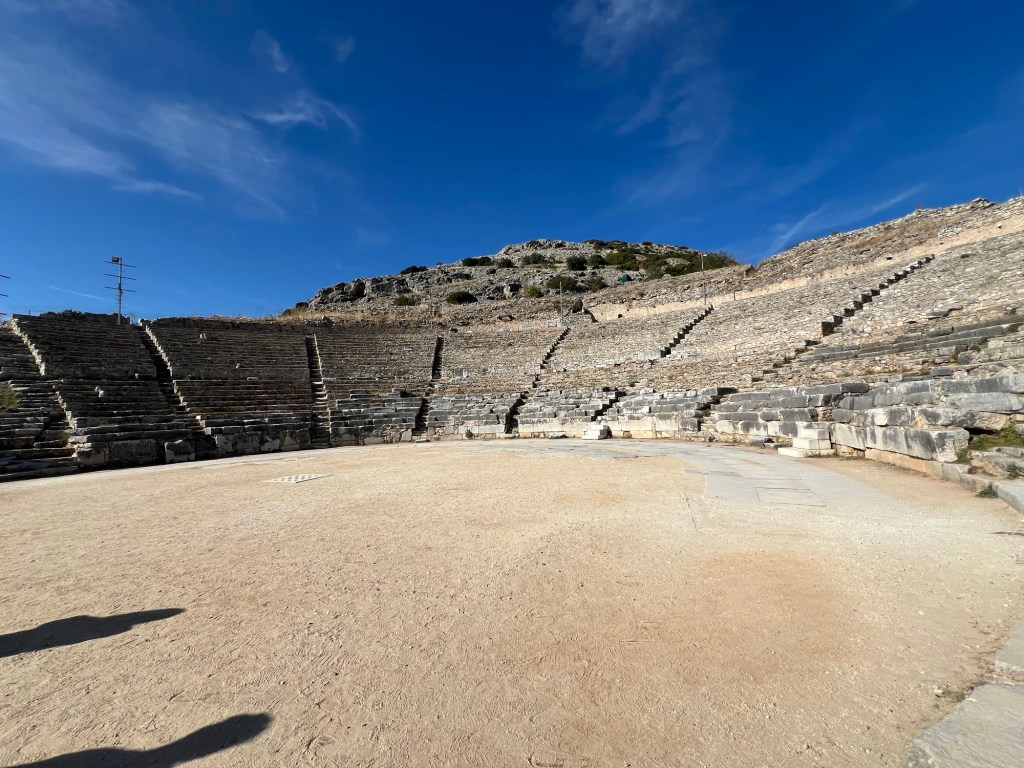
The first thing we saw was the theater
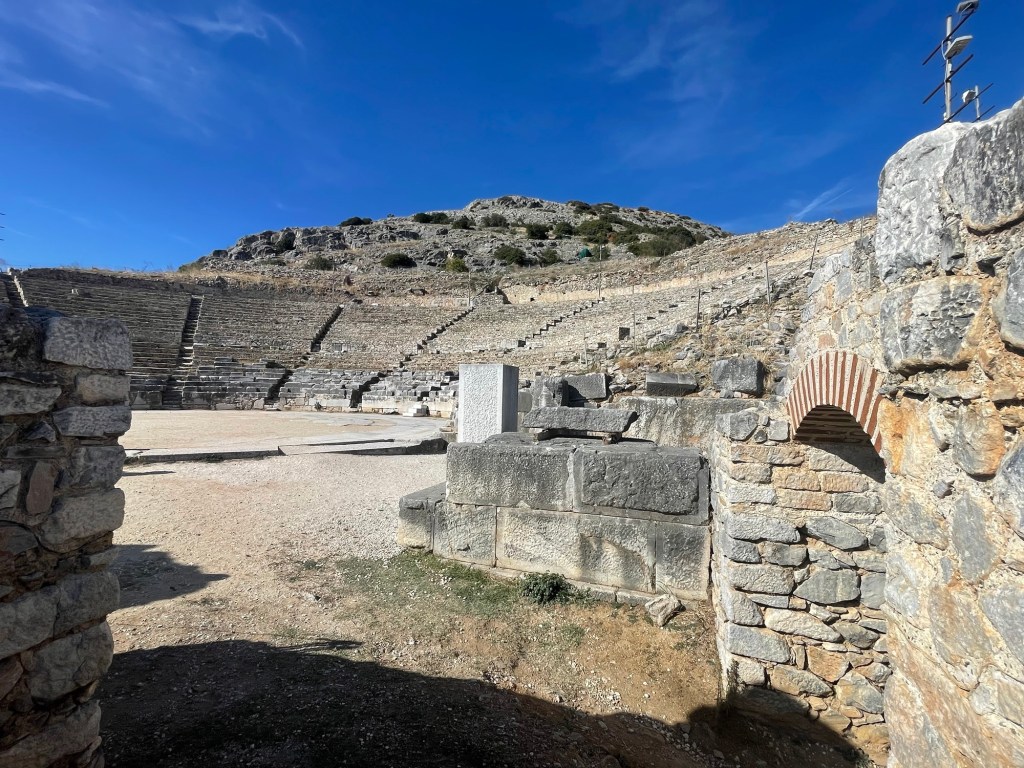
This is where the actors entered and exited the stage area.

One of the largest theaters in the ancient world, Philippi’s structure which held 10% of the city’s population is as impressive today as it was back then.
On this beautiful day, our tour guide used the maps to tell us more about the church in Philippi.


Although built in the late 500’s, due to earthquakes and outside invaders, this is all that remains of the church.
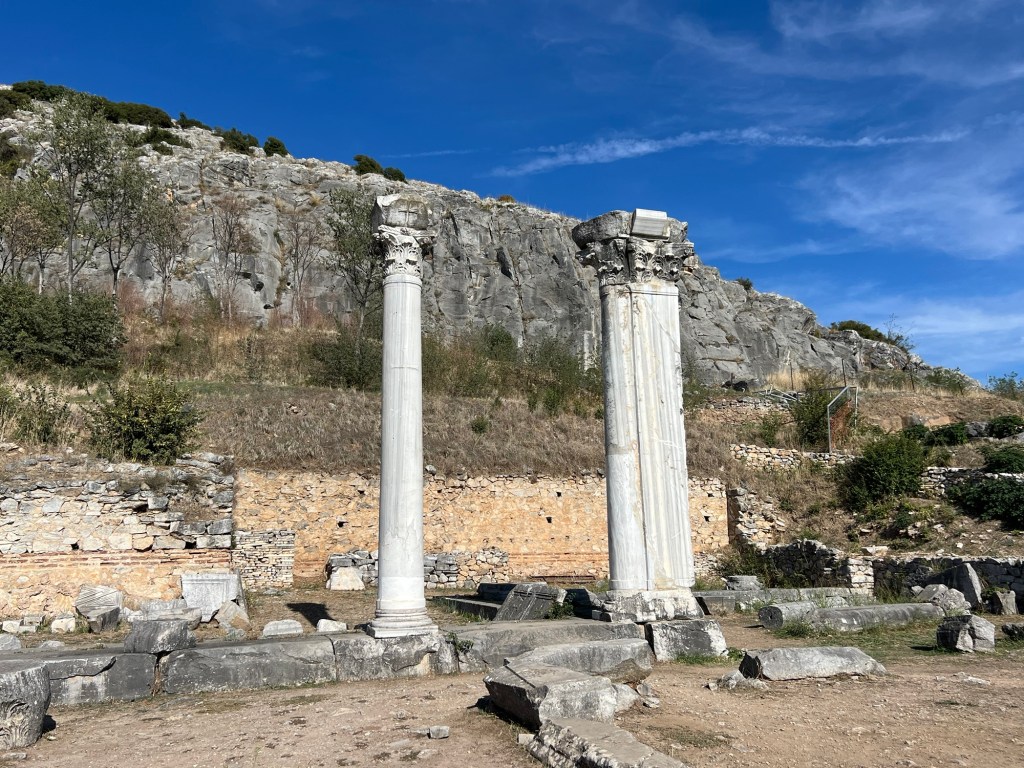
This was where the altar was.
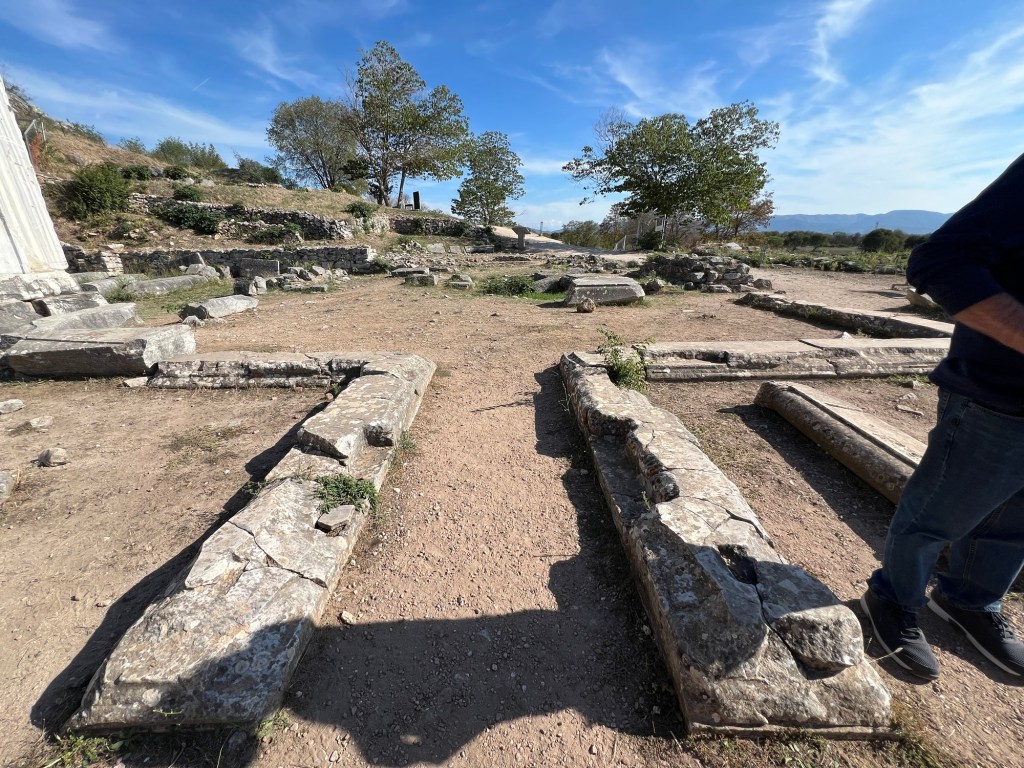
Bill is standing in the pulpit ready to give us a sermon.

This is where the congregation would have been seated.

A closer look at the pulpit

These are the three chambers where instruction and baptism took place.
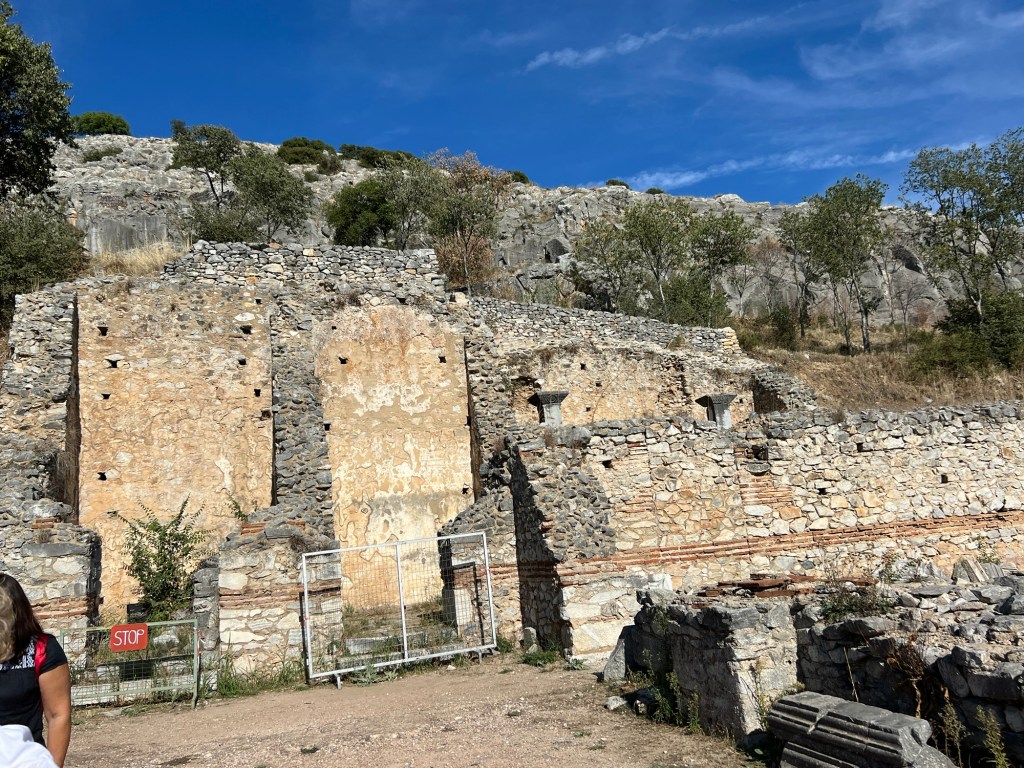
There is a great story in Acts 16:16-40 that happens in Philippi. Paul is walking through the marketplace, or the agora, a large area where open dialogue, shopping, and civic matters took place.
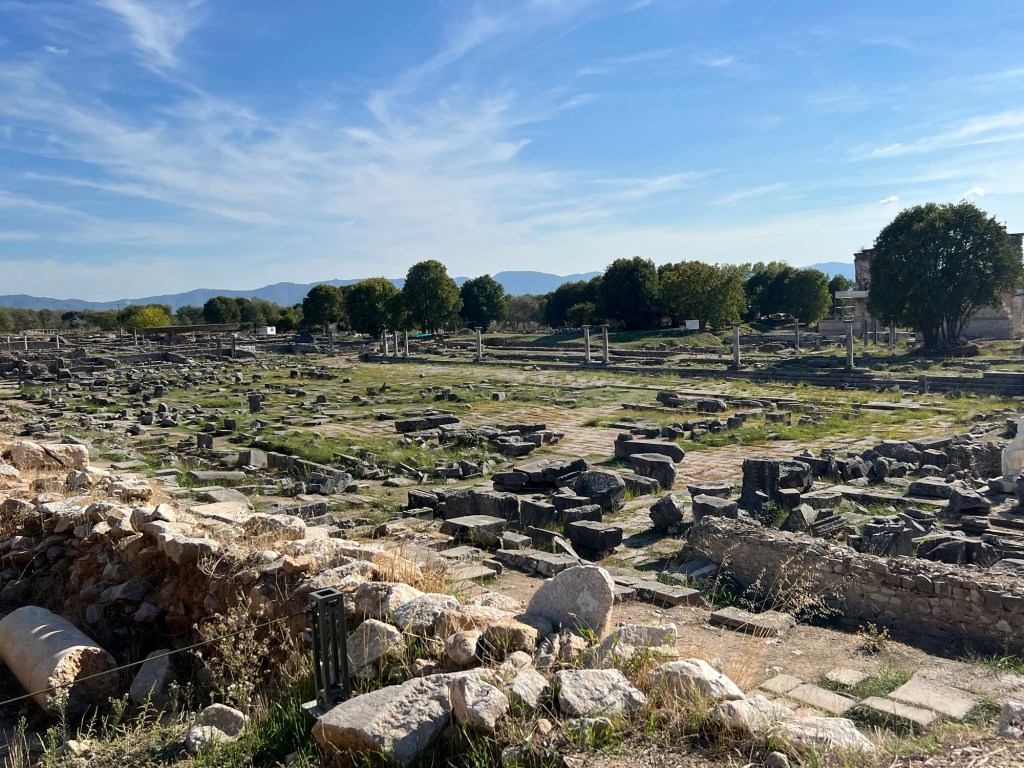
Every time he walks by, a girl possessed by a demon cries out that he is a man of God. Paul becomes agitated and casts the demon out of her. This doesn’t go over very well with her owners who made money out of her telling people’s fortunes, which now she is no longer able to do because the demon has been cast out. So Paul and Silas were beaten and thrown into prison.

From the prison, which was like a temporary jail until he could be put on trial or moved to a proper prison, folks outside could hear singing.
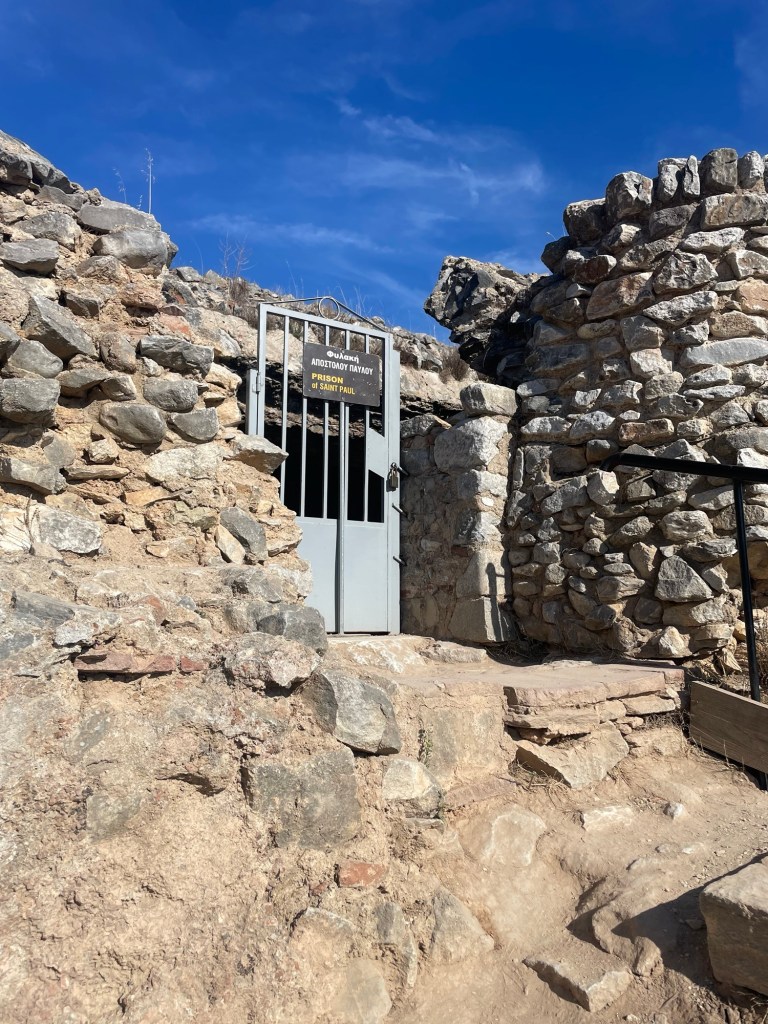
An earthquake broke open the prison door and released them from their shackles. The jailor was amazed they didn’t run away and became a believer himself along with his family. This is the space believed to be his cell.
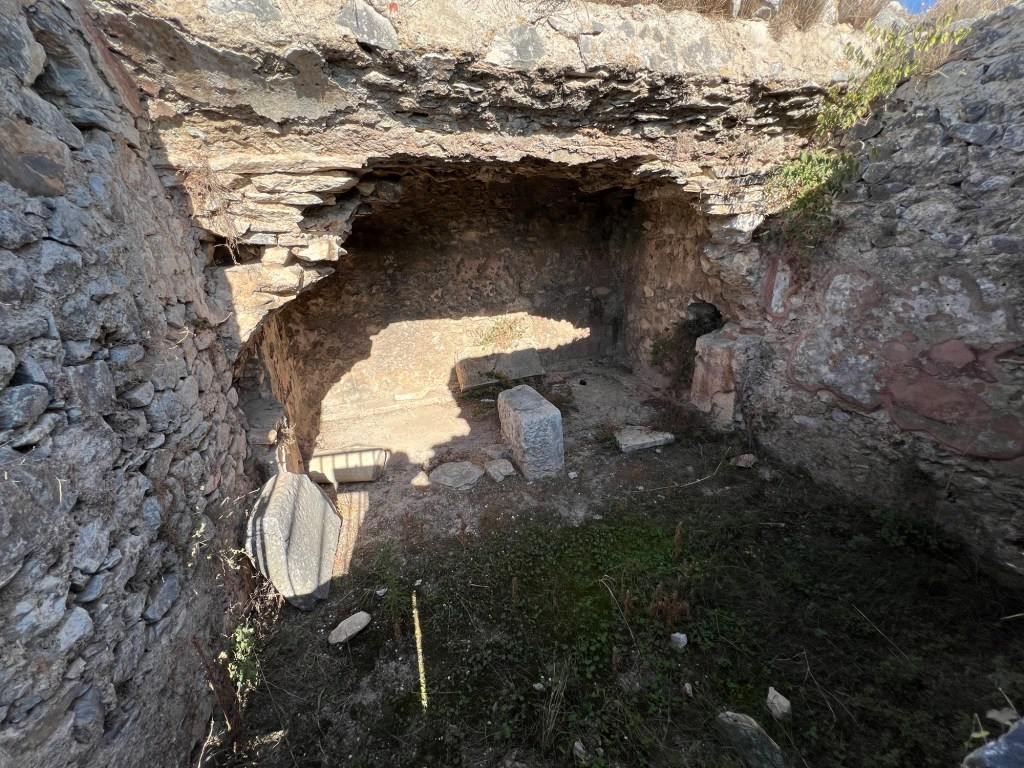
I thought it was interesting that the stones were marked when they were first put together: each letter of the alphabet gets matched with its counterpart. You can see the symbols today.

And just when I didn’t think anything could have been cooler than seeing the prison Paul was in overnight, I saw this.
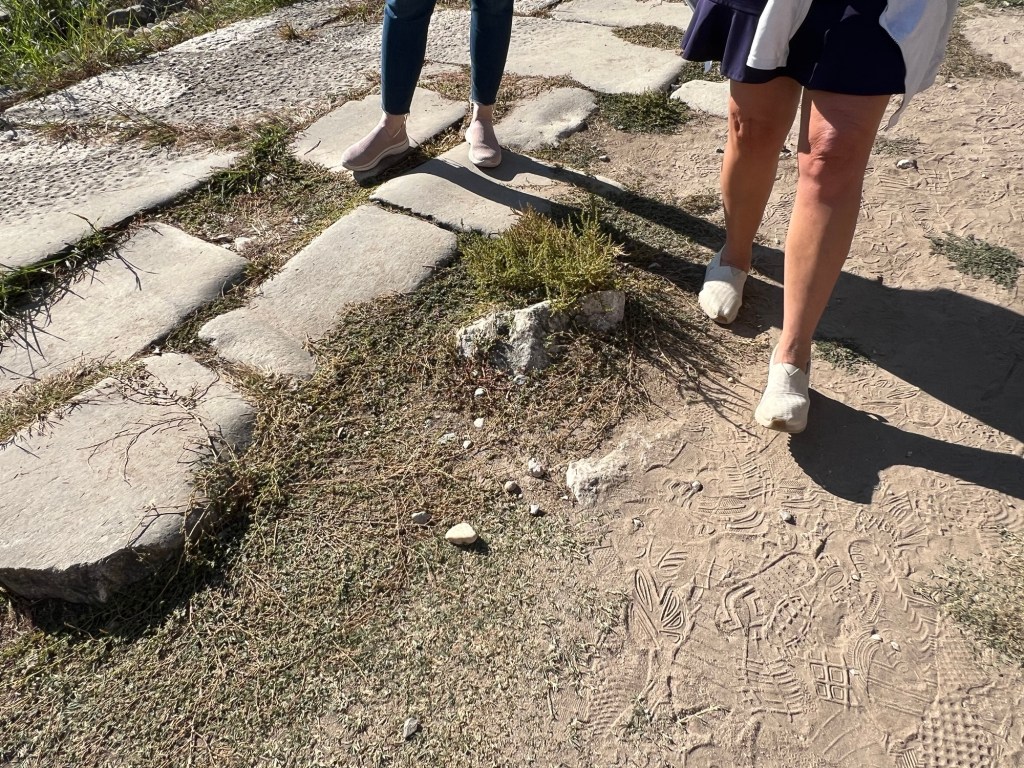
It may look just like a stone road to you, but it is part of the Via Egnatia, a road built by the Romans across Macedonia and beyond.
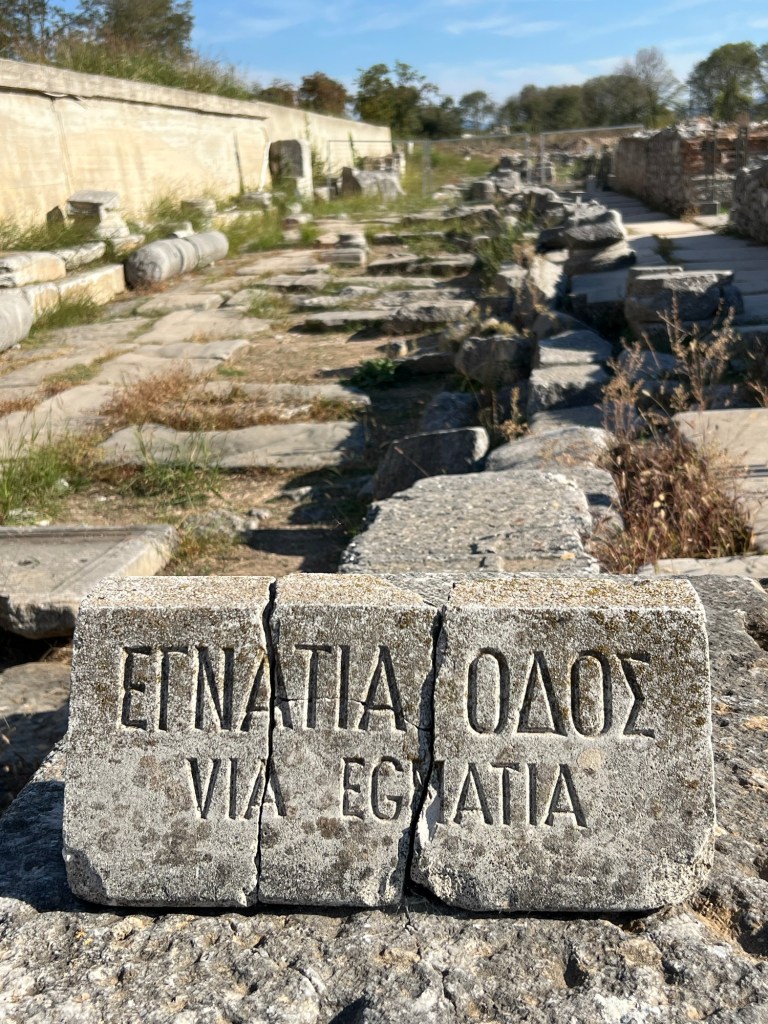
This 700 mile road constructed by the Romans in the second century BCE was 20 feet wide, allowing two chariots to pass by each other. It was the first two lane highway making travel for merchants, soldiers, and even missionaries much easier and safer.

Literally, Paul walked down this road…and now we are too.
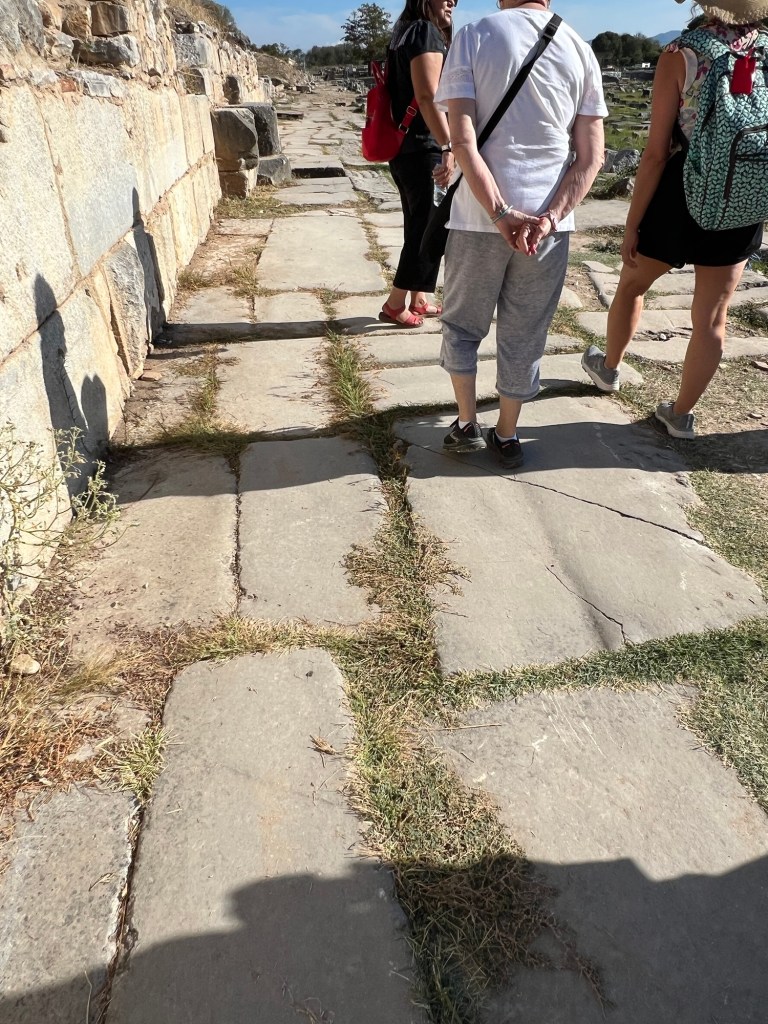
You can still see some of the ruts from the chariots.
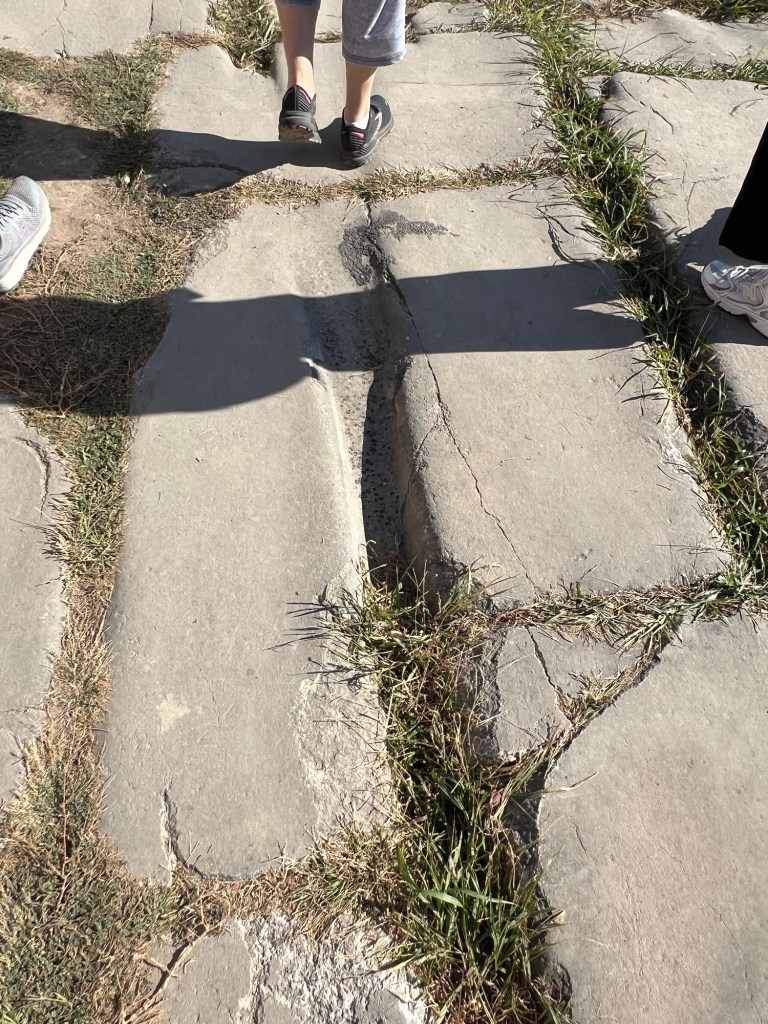
I just marveled at the fact the same road, same stones, same city that Paul walked, now I have too.

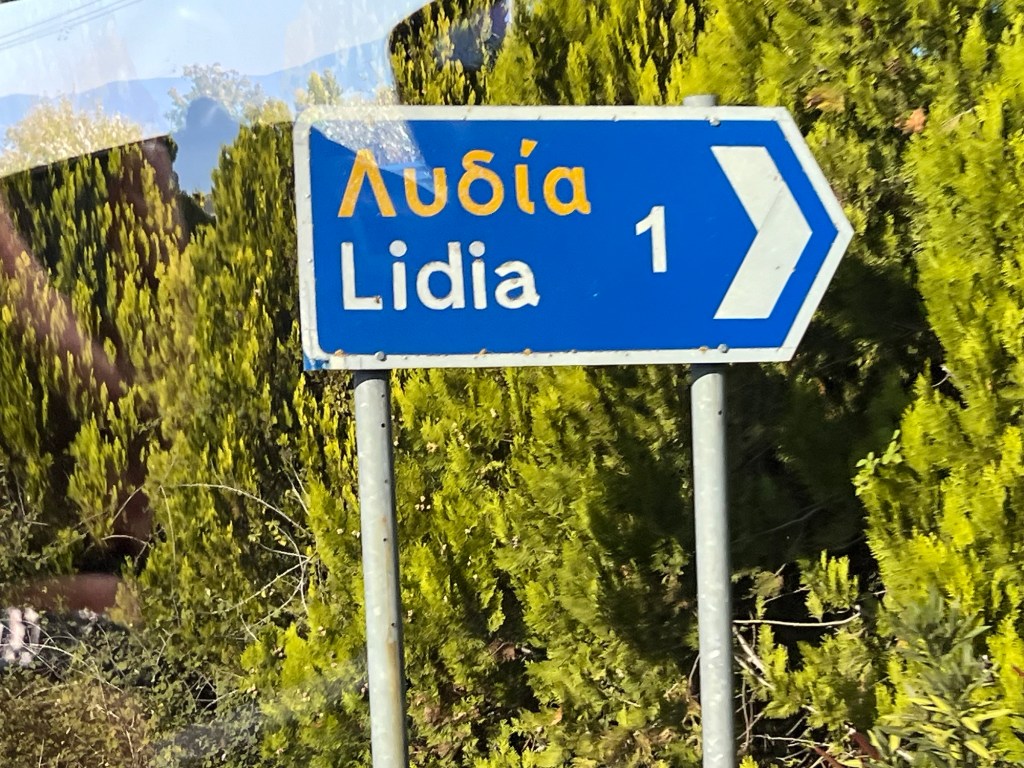
Next we got into the bus and headed for the town of Lidia.
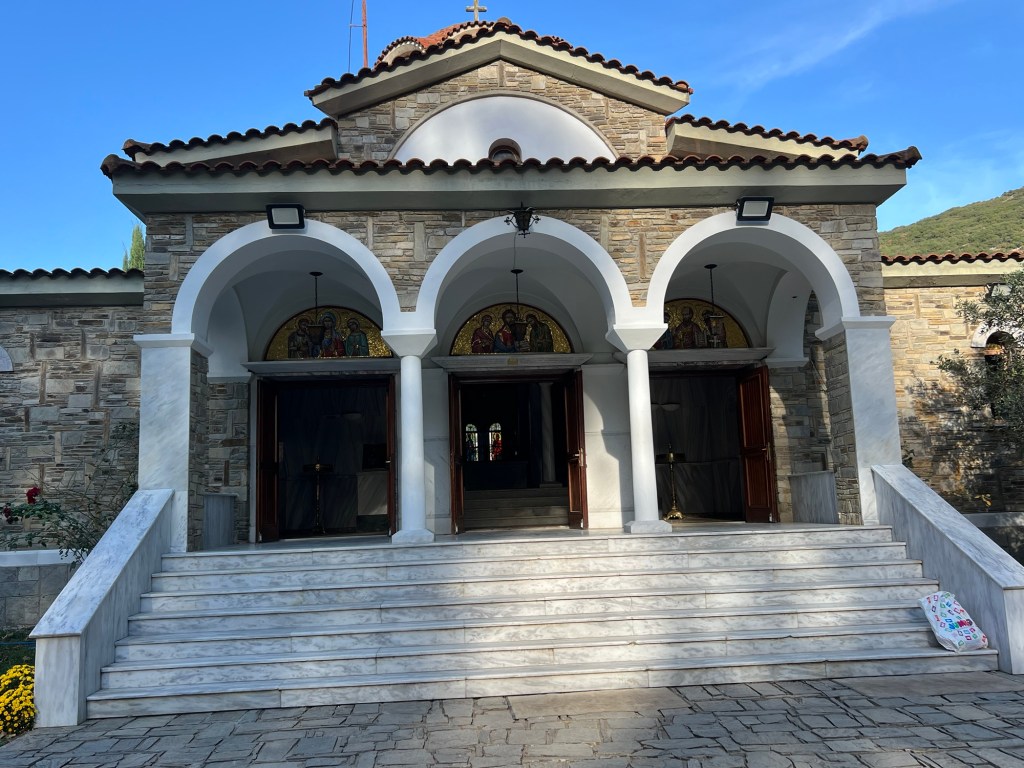
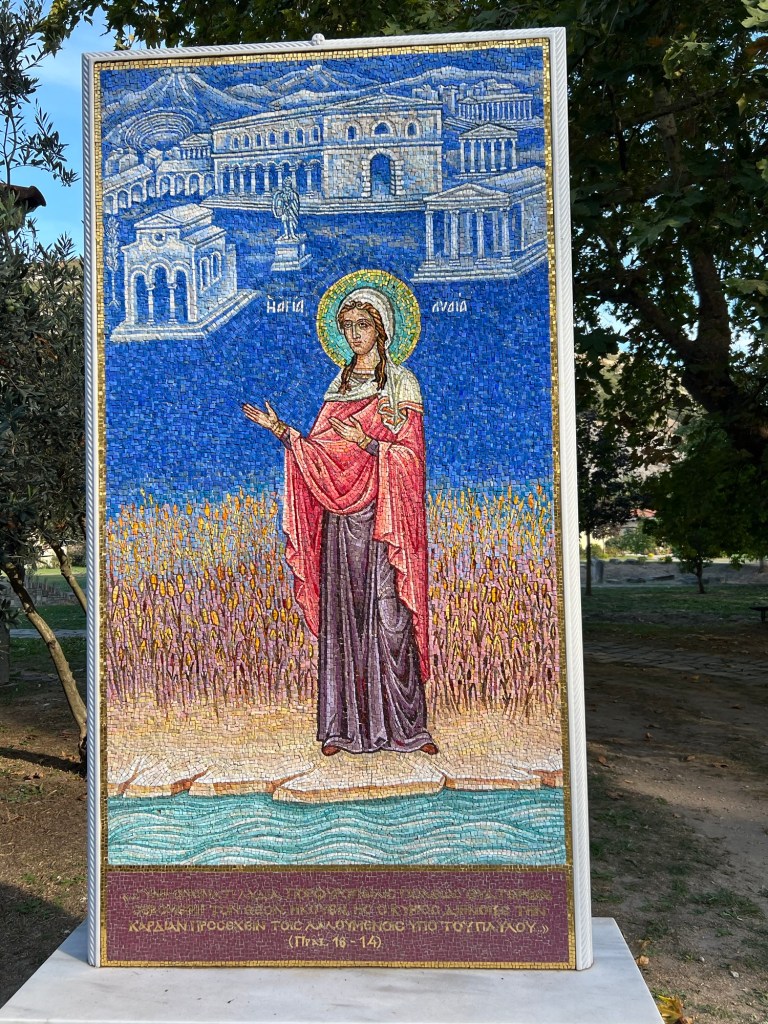
A beautiful church was built to commemorate Paul’s first conversion in Macedonia, Lydia.

The church had been newly renovated with frescoes and mosaics both outside and inside.
One outside mosaic is of Lydia.
And the other of Paul having a vision from God to go to Macedonia.
The mosaic on the floor displayed a map of Paul’s missionary journey.
That chapel area was small but lovely and so very colorful.

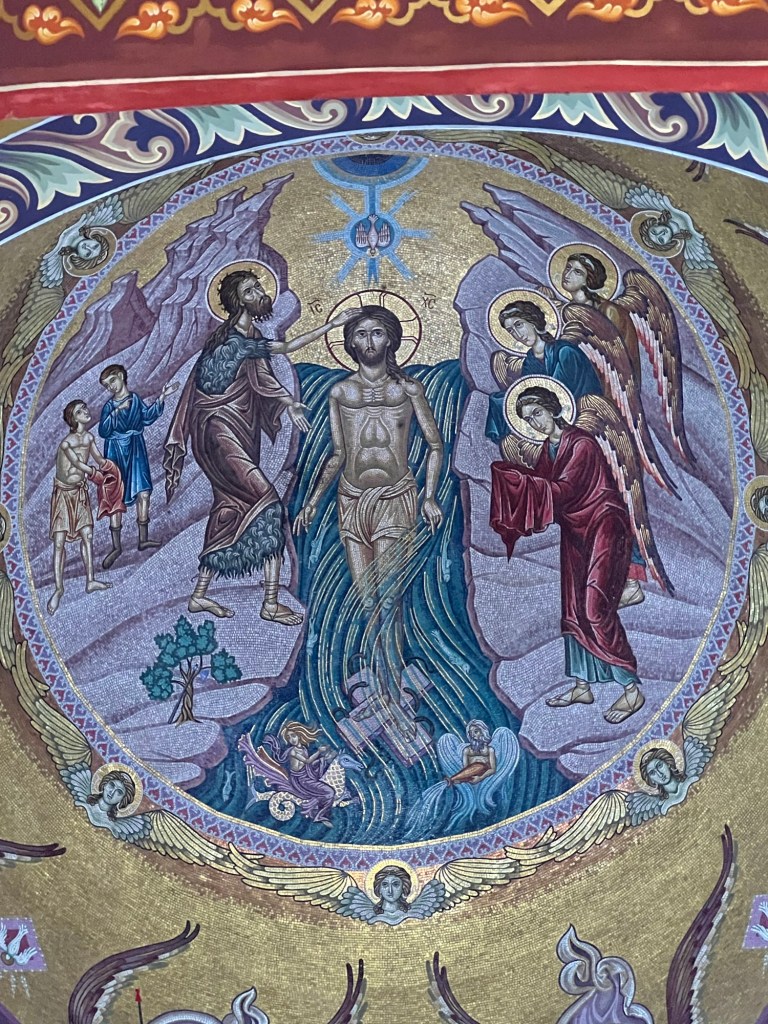
One mosaic was Jesus being baptized
And the other was Mary with baby Jesus.

Many gorgeous frescoes adorned the chapel telling the story about Lydia’s conversion and Paul’s arrest, imprisonment, and freedom. The one of Lydia being baptized was my favorite.
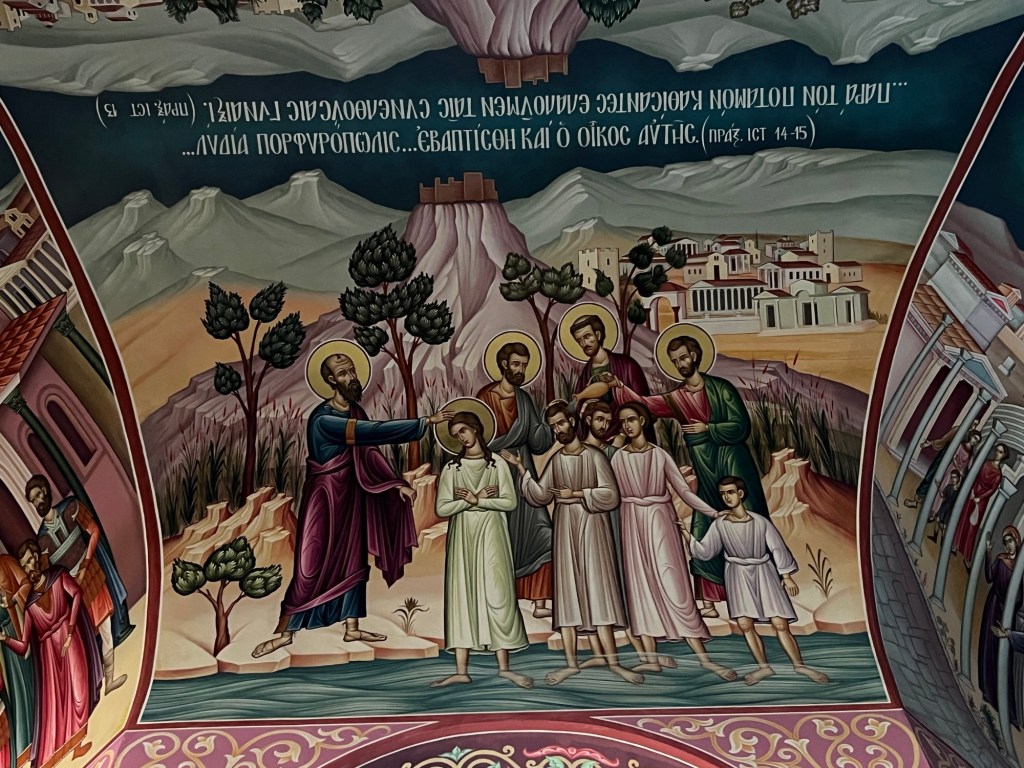
The church is built near the river where Lydia and her family were baptized. Having discovered no synagogues in Philippi, Paul went down to the river to see if he could find any faithful Jews. He met several women and preached the gospel to them. Lydia was the first to believe and she and her household were baptized that day. The story is told in Acts:13-15. A small baptismal font is built by the Gangitis River.
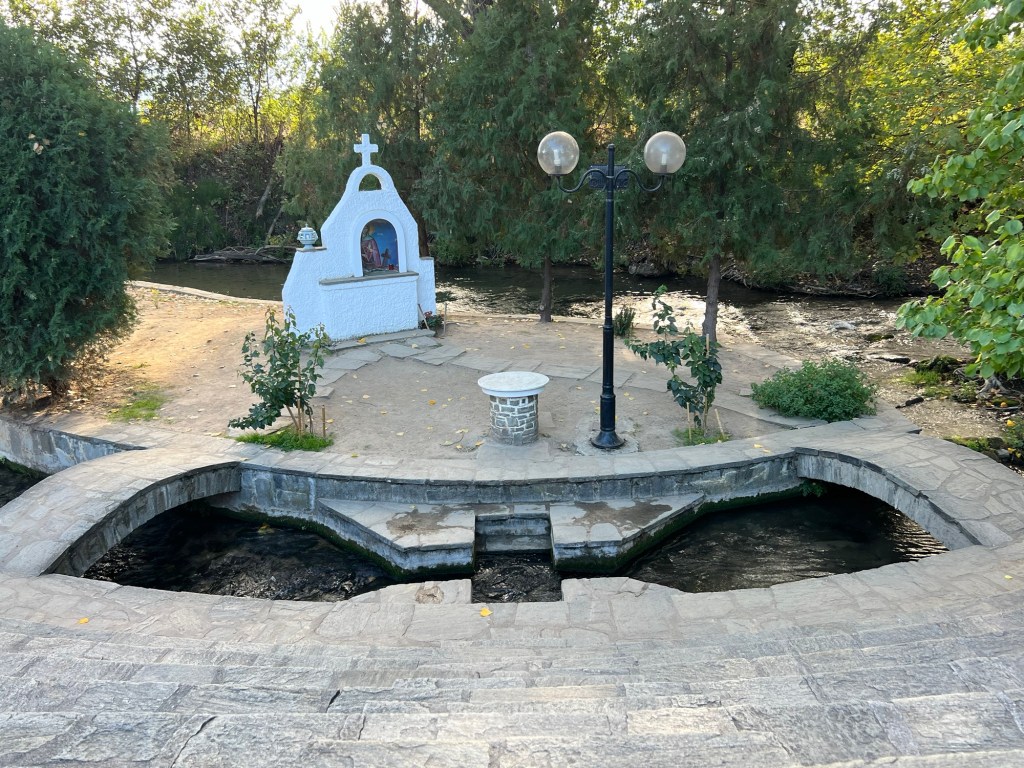
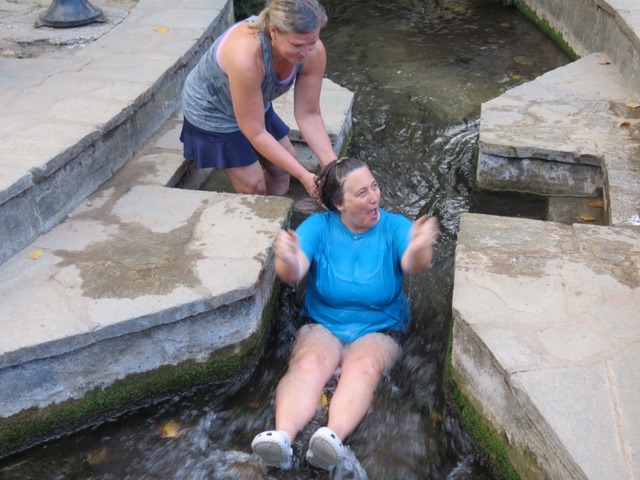
We had planned ahead to reaffirm our baptisms at this location. So we had a short service with scripture, prayer, and singing. Then one by one each person stepped into the river up to their knees and either Catherine or I put water on their head three times and said, “Remember your baptism and be thankful. In the name of the Father, and the Son, and the Holy Spirit. Amen.”
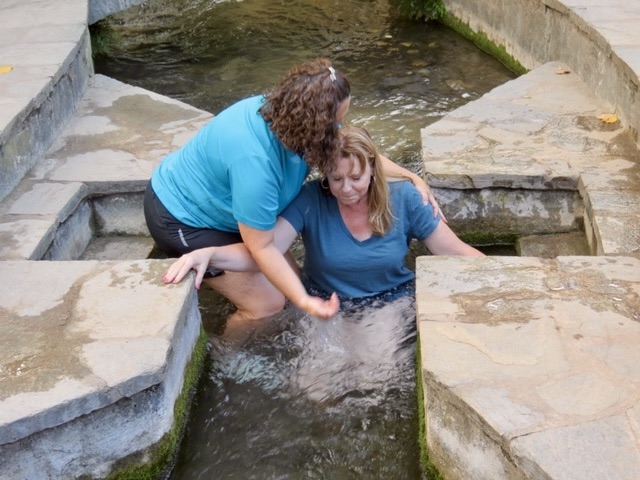
A few of us wanted to be submerged, so I sat down and Catherine tipped me back and dunked me under.
It was exhilarating.
We closed with Paul’s letter to the church in Philippi in chapter 4 verses 4-9. “…and the God of peace will be with you.”
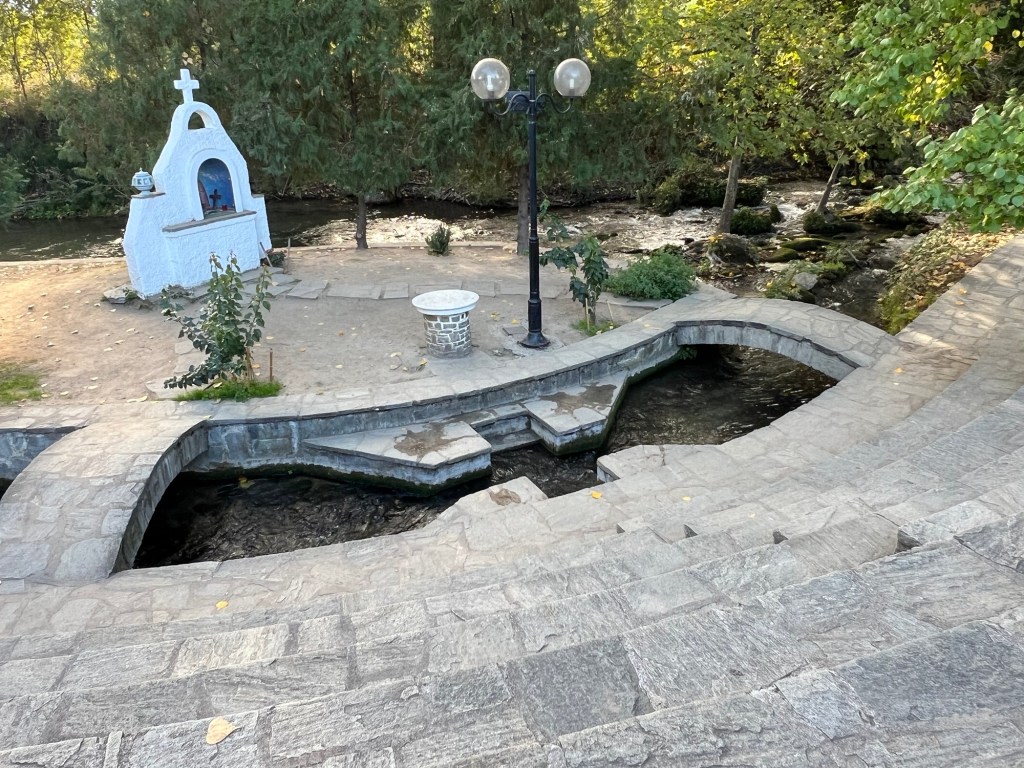
As we left we saw one last glimpse of the Via Egnatia.

On our way to the hotel we passed by the Roman aqueduct which was used to supply water as late as 1911.
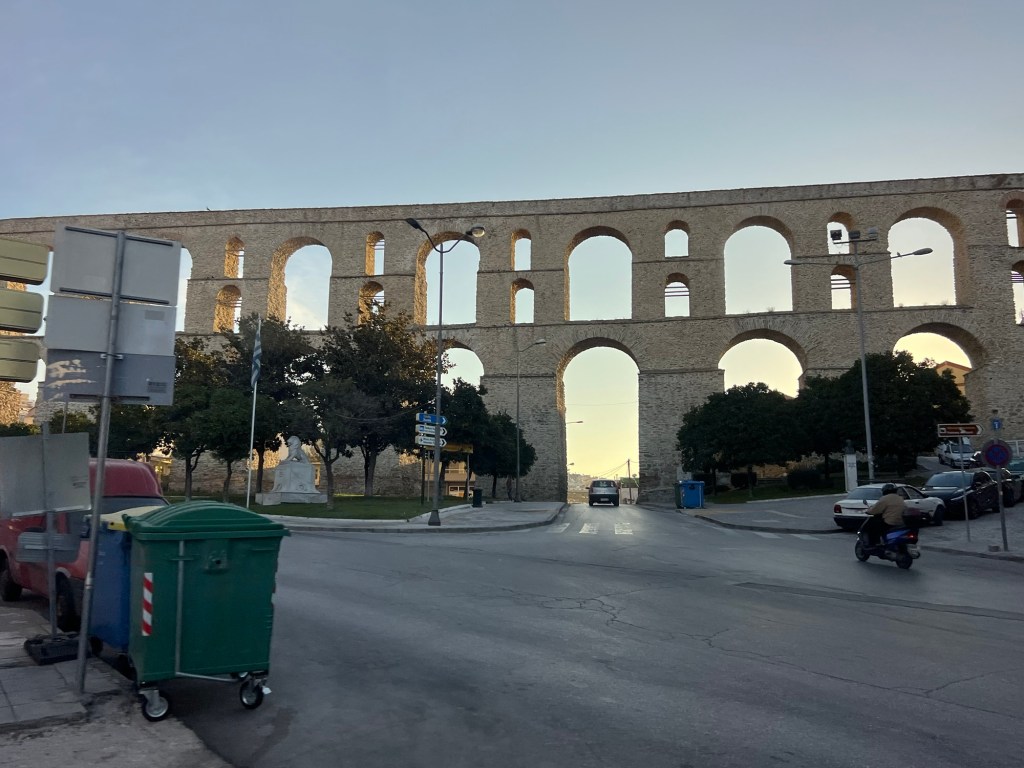
We headed to our hotel in Kavala where Paul had docked in order to walk down the Via Egnatia to Philippi. In his time the town was called Neapolis. Once again we got there just in time to see the sunset and the end of another day.

 The PCUSA Pilgrim Pastor
Leave a comment