Ephesus
Saturday, October 12, 2024
We had to say goodbye to our lovely hotel in order to keep walking in the footsteps of Paul.

But first the Apostle John stole the spotlight as we began the day visiting the St. John Basilica.
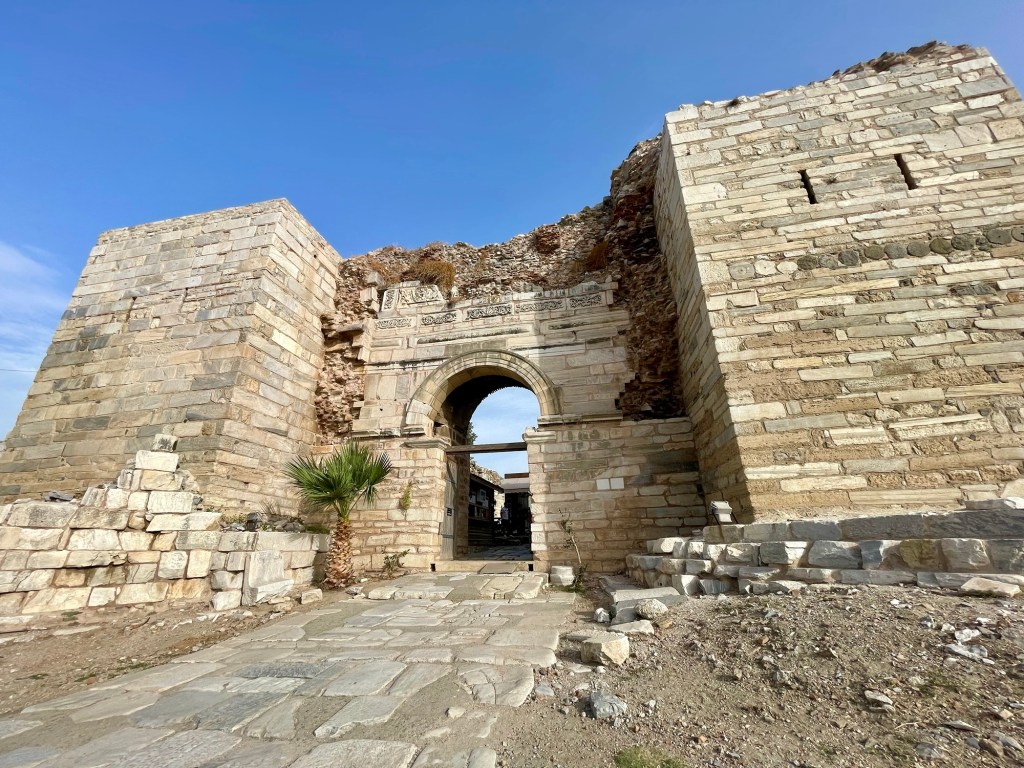
While this church is from the 6th century, archeological evidence has proven that Christians have worshipped in this space from the first or second century.

Why have they been coming here to worship for so long? Because the tomb of the Apostle John is here.

He is buried at the center of the church and has attracted pilgrims for centuries.

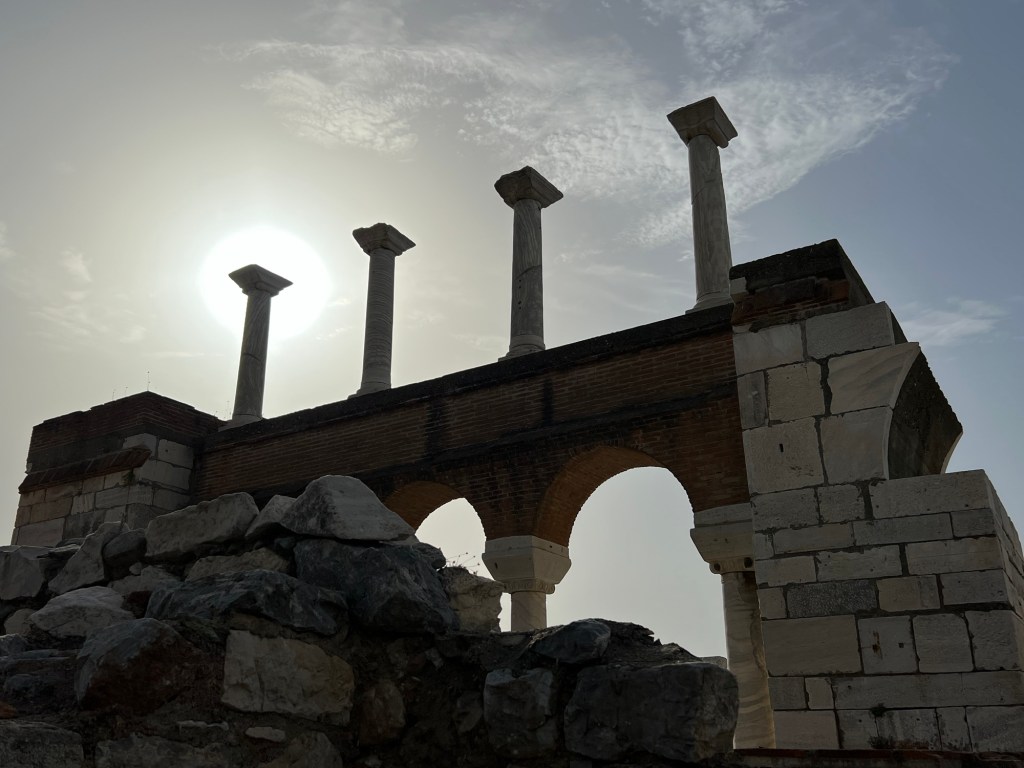
In the 6th century, Emperor Justinian built this second largest religious building in Ephesus.

It was two stories as evidenced by these columns.
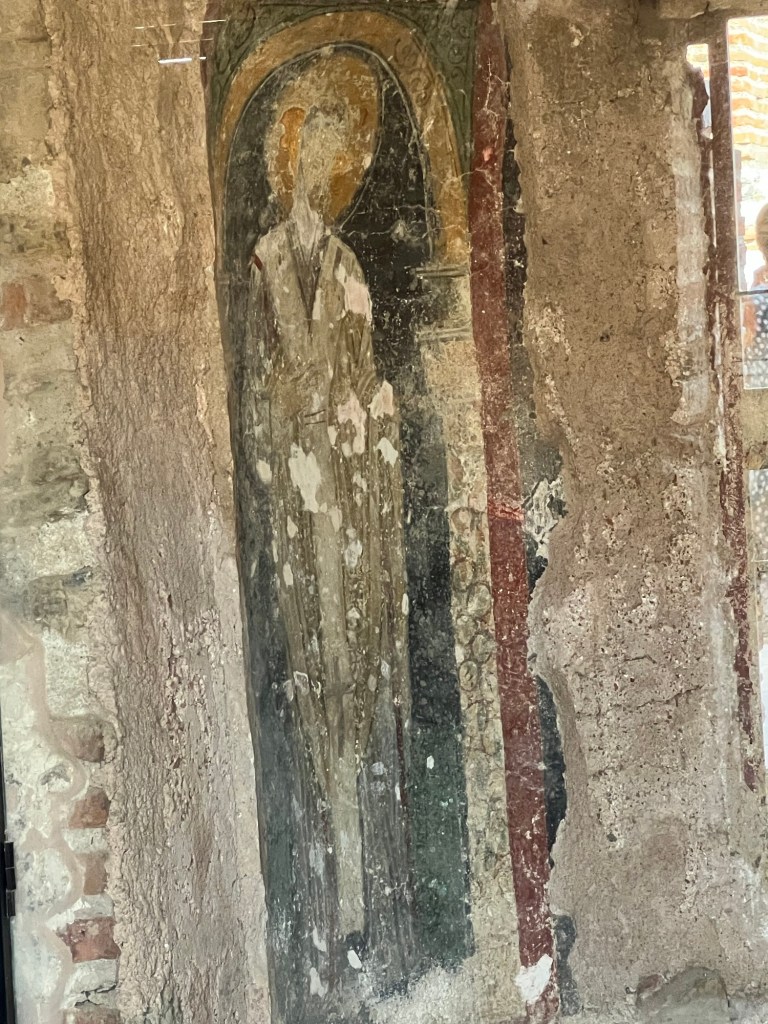
Frescoes from the 6th century are still visible
Every church has a baptistery and most of the early ones are in the form of a cross.

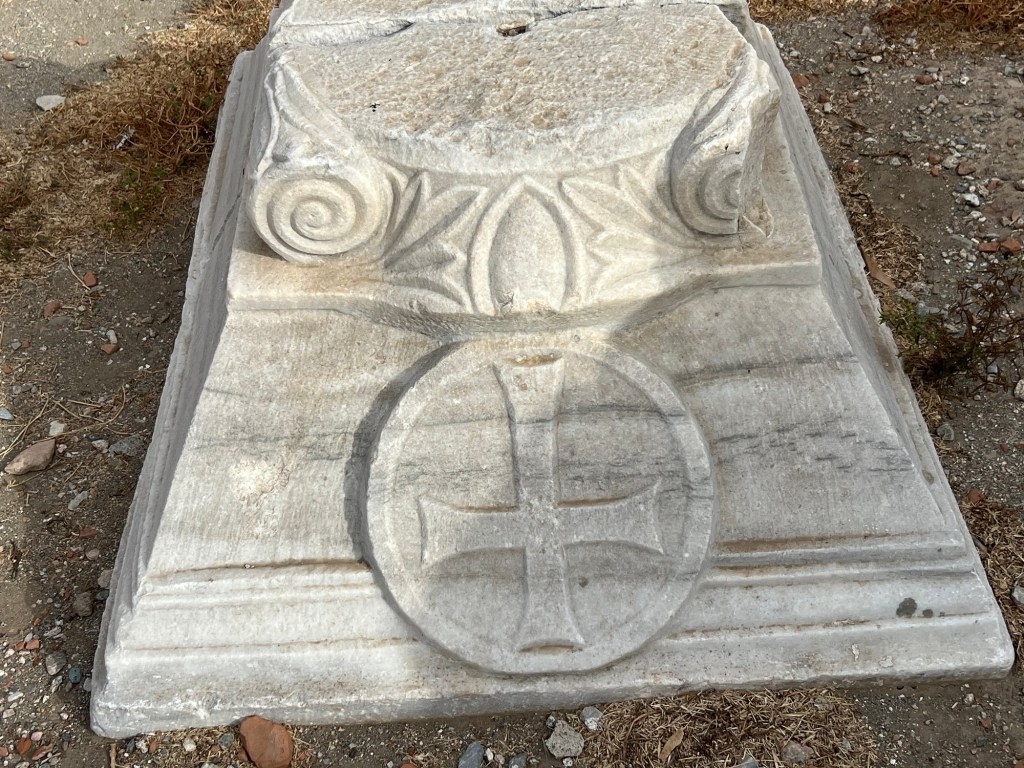
There are many ruins that are scattered throughout the site, most of these are capitals for columns.

Several of them have crosses etched in them.
Interestingly, this area has a church, a mosque, and the seven wonder of the world, the Temple of Artemis.

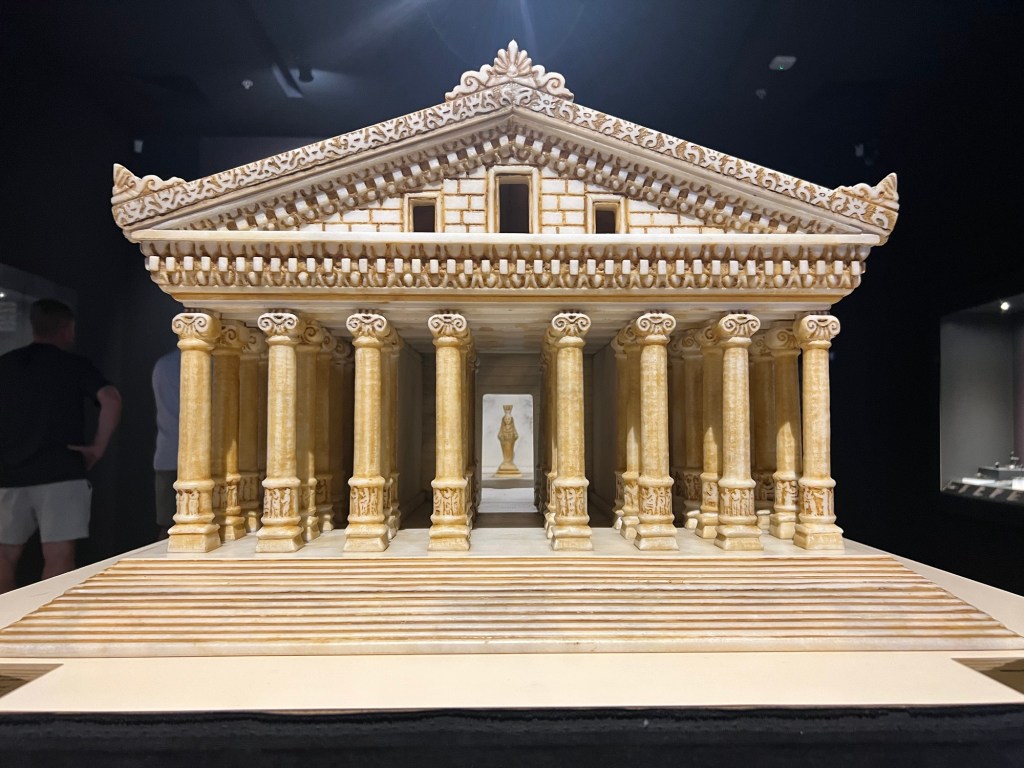
The Temple of Artemis was of utmost importance back in the first century as you will hear when we get to Ephesus later today. The Temple was the largest place of worship in all of Ephesus. This is what the Temple looked like back in its day. You can even see the Artemis statue through the doorway.
Unfortunately, today the site has been reduced practically nothing although you can still see the large footprint the temple once had.
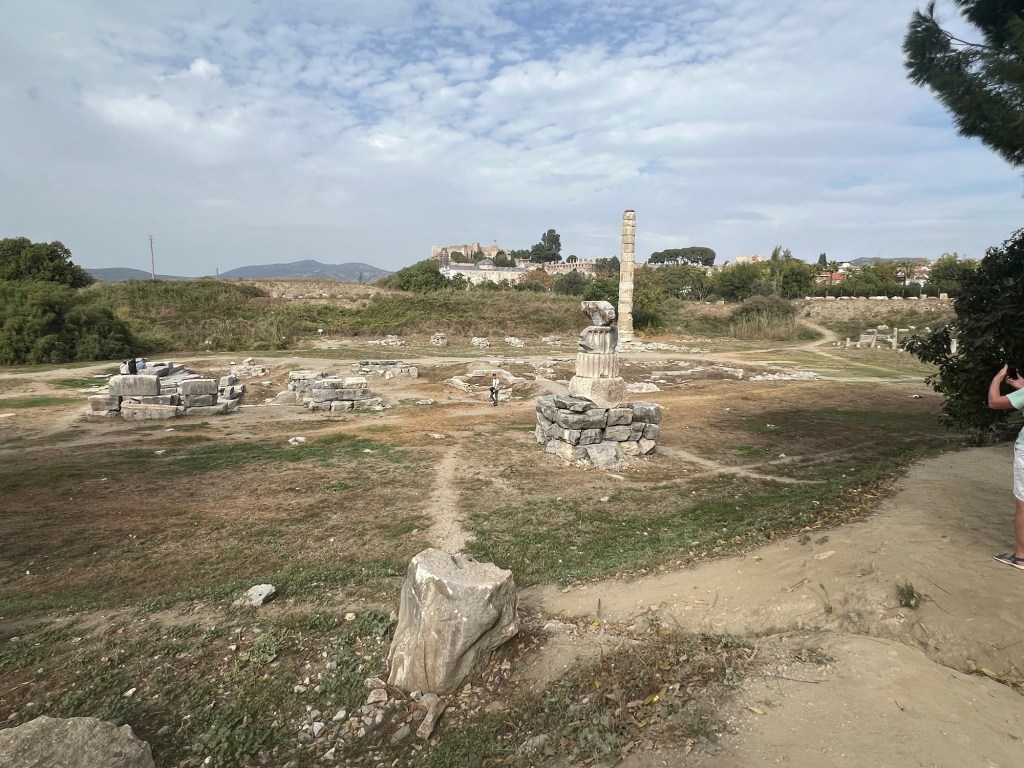
Although only one column has been reconstructed, the glorious temple of 570 BCE has over 100 columns. From this view you can see the mosque and St. John’s Basilica in the background.

Why was this seventh wonder of the world built? To honor the goddess Artemis whom many of us know as Diana. This statue from the second century was found in the ruins of that temple.

Artemis was the mythological brother of Apollo. The legend goes that Artemis was born first. A day later she helped her mother give birth to her brother and was distraught over the pain of childbirth. From then on she vowed she would remain a virgin and dedicate her life to ease childbirth pains. Here is another statue of her.

Artemis worship was huge in Ephesus. People would come from all over the world to worship in this temple and Ephesus became synonymous with Artemis. We will hear more about her when we visit the ancient city of Ephesus next.

The ancient city of Ephesus is huge and crowded, but it is also spectacular and inspiring.
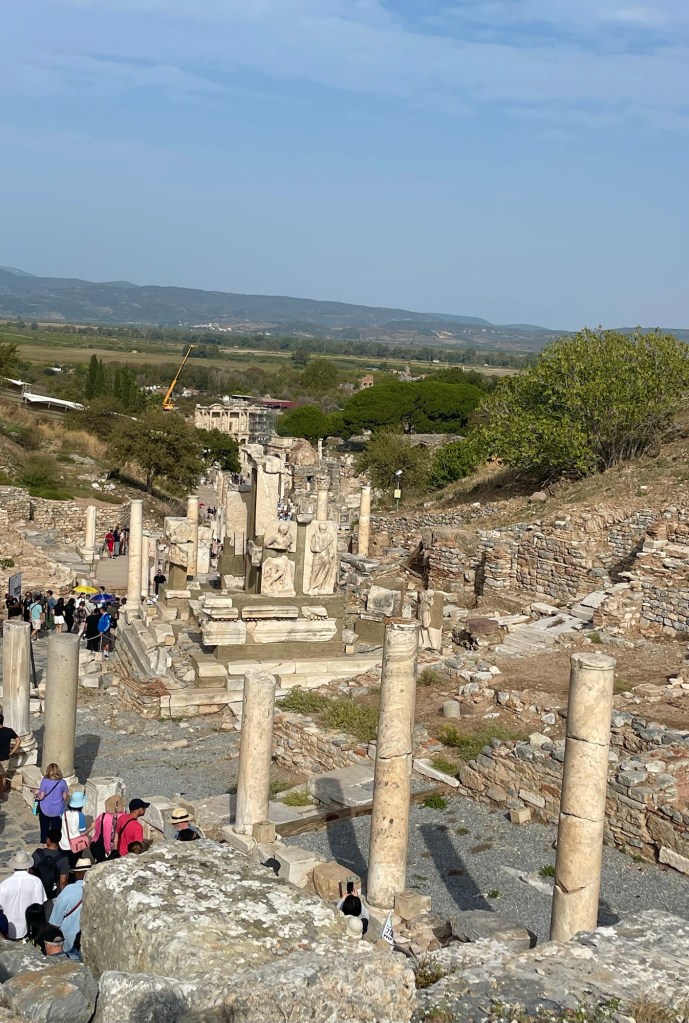
At its peak around 100, Ephesus was one of the grandest cities of the ancient world. With a staggering 250,000 residents, Ephesus was the second biggest city in the Roman Empire, after Rome itself. It had temples, baths, palaces, homes, and,as these pipes suggest, a sophisticated plumbing system for the wealthy houses and public fountains.

The Stoa was the main walkway where people passed many of the administration buildings. We (and thousands of our fellow tourists) had the chance to walk the same streets as the original residents of Ephesus.

This is the Odeon which is like a small theater that seated about 1,500. In this intimate venue the civic business of Ephesus was conducted every Thursday by 450 aristocrats.

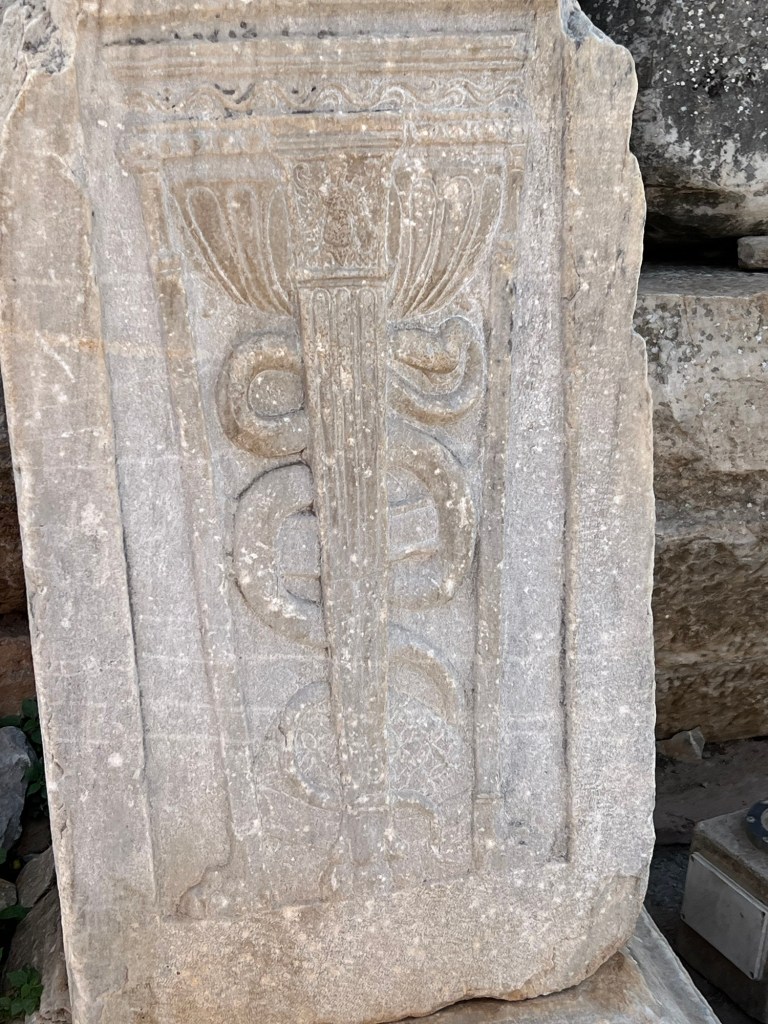
These two stone pillars with carved reliefs were directional signs. One was Hermes, the god of merchants, and pointed the way to the market. The other was of Asklepios, the god of medicine, which was across from a pharmacy. With thousands of tourists arriving in Ephesus even in ancient days, these roads signs helped people know where to go.

In fact you can even see the beginning of the symbol of medicine today with the two snakes etched into the ancient ruins.
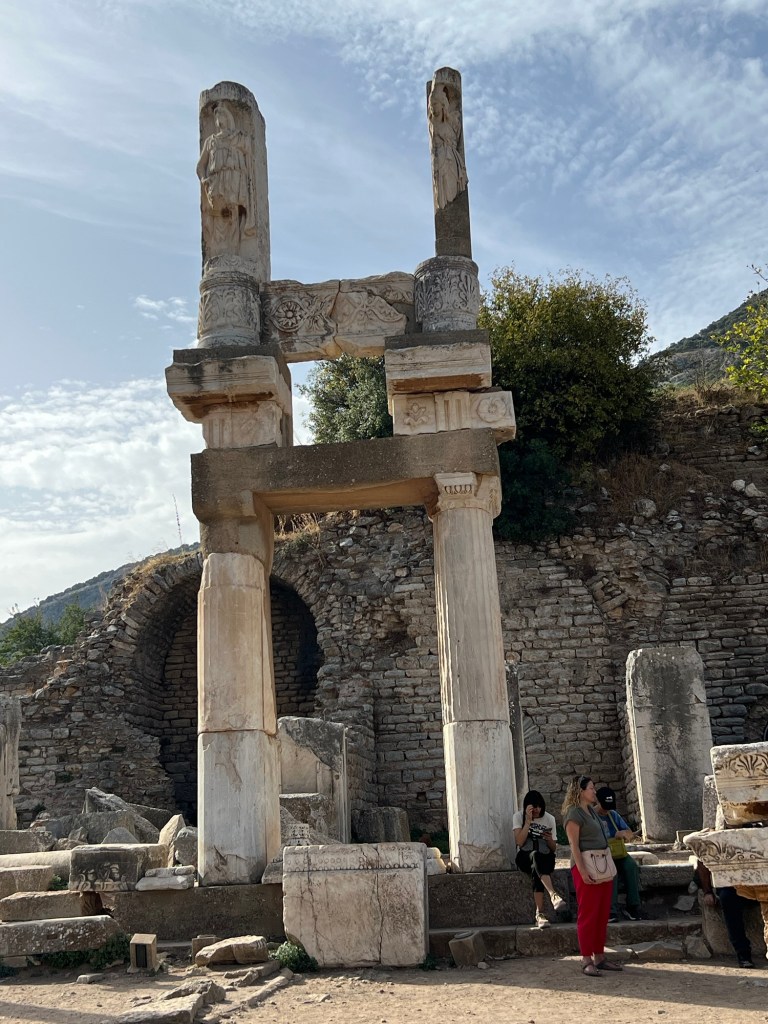
In Ephesus there were temples to all sorts of gods, including emperors. This is all that remains of the Temple of Domitian, an emperor in the first century that exiled the Apostle John to Patmos.
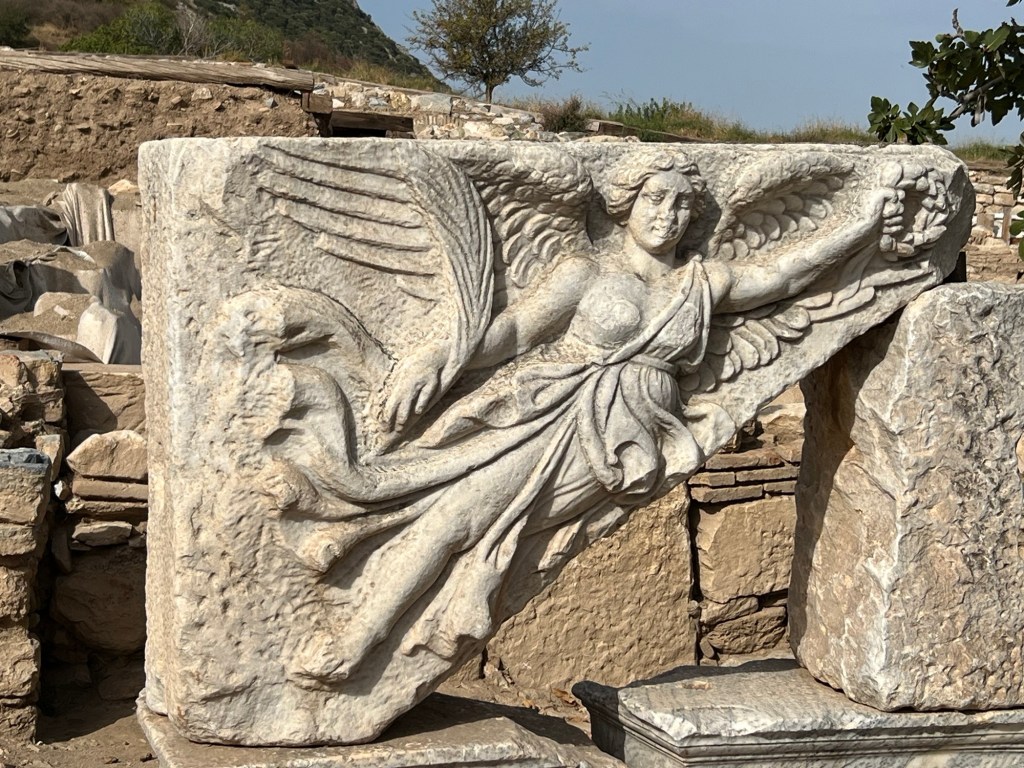
This frieze once adorned the top of another temple. Nike is the goddess of victory (no wonder a shoe company wanted this name. Wear these shoes and you will win!). She holds the wreath that will be given to the winner.
This road is called the Sacred Way and it was wide enough for horses, chariots, and vendors with their wares. (Hint: if possible don’t go on a Saturday morning or you will find yourself swimming in a sea of humanity.)

The gate into the “pedestrian only” part of the city are intentionally narrow so that chariots could not get through. This Hercules Gate was built by the Romans and was most likely travelled by Paul when he stayed in Ephesus for 27 months on his third missionary journey.

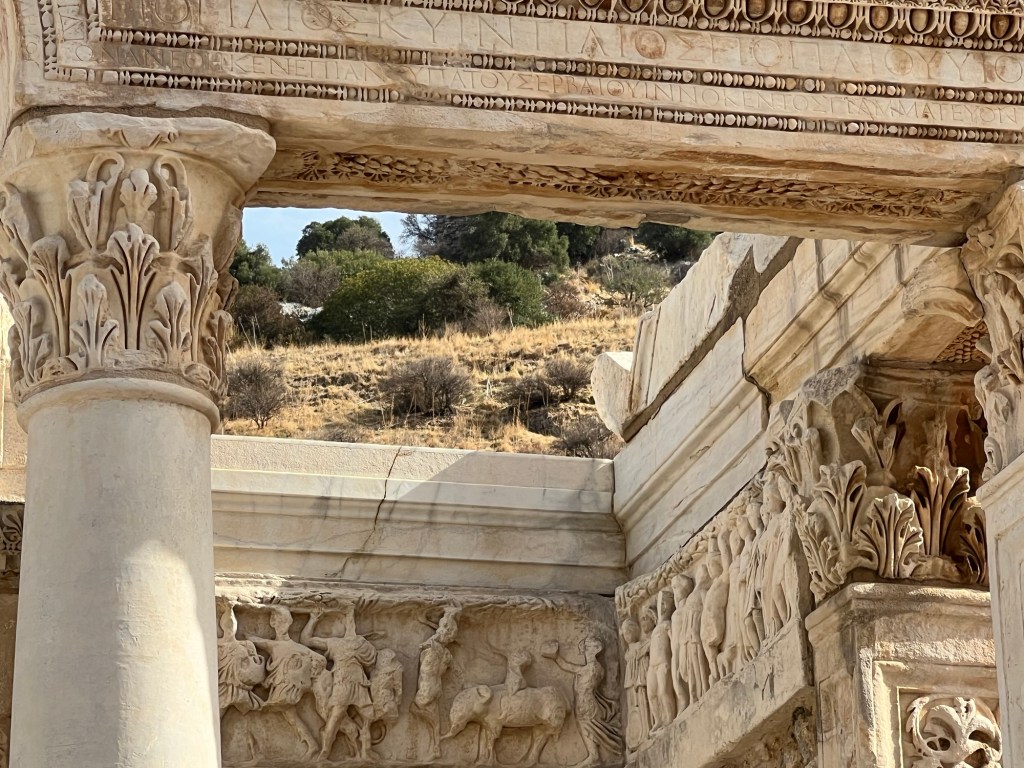
This is the temple of Hadrian with the head of Medusa protecting the temple.

The details is exquisite.
Next along the street are the Roman baths that included multiple rooms for socializing, bathing, and exercise rooms. Basically they were health clubs.

Next to the baths are the public toilets. Once again this was as much a social event as a way to “do your business.” That’s why the holes are so close together.

They didn’t have toilet paper but did have sponges on sticks to wipe themselves. Running water underneath the toilets whisked away whatever was deposited.
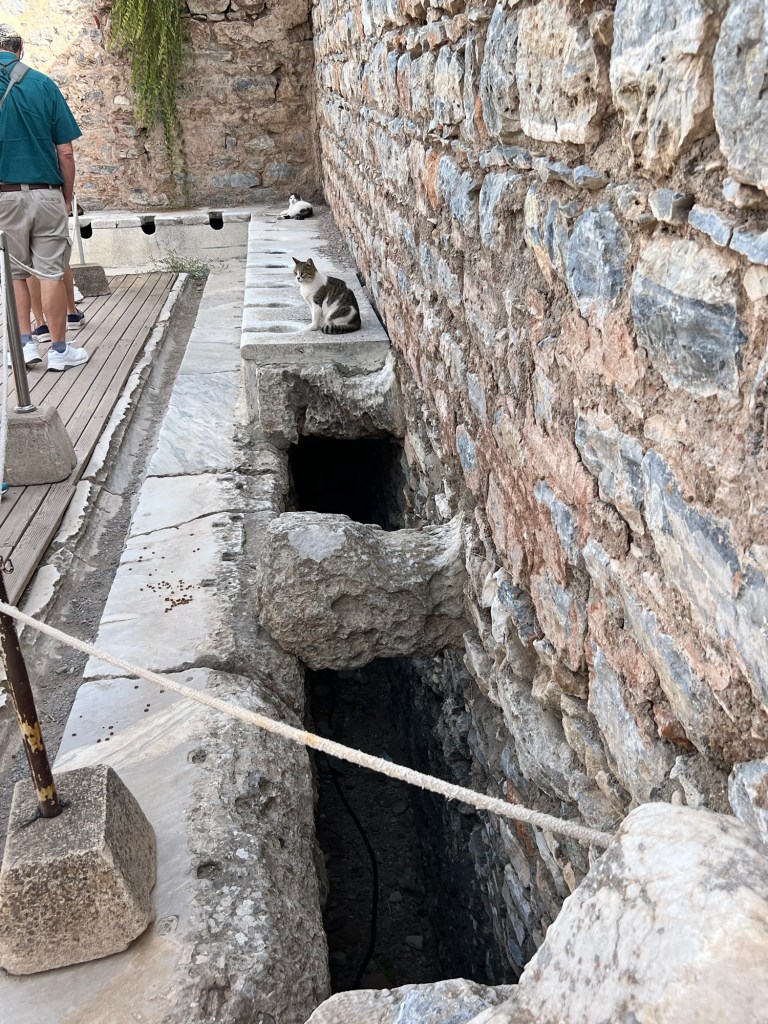
In the middle would have been a fountain.

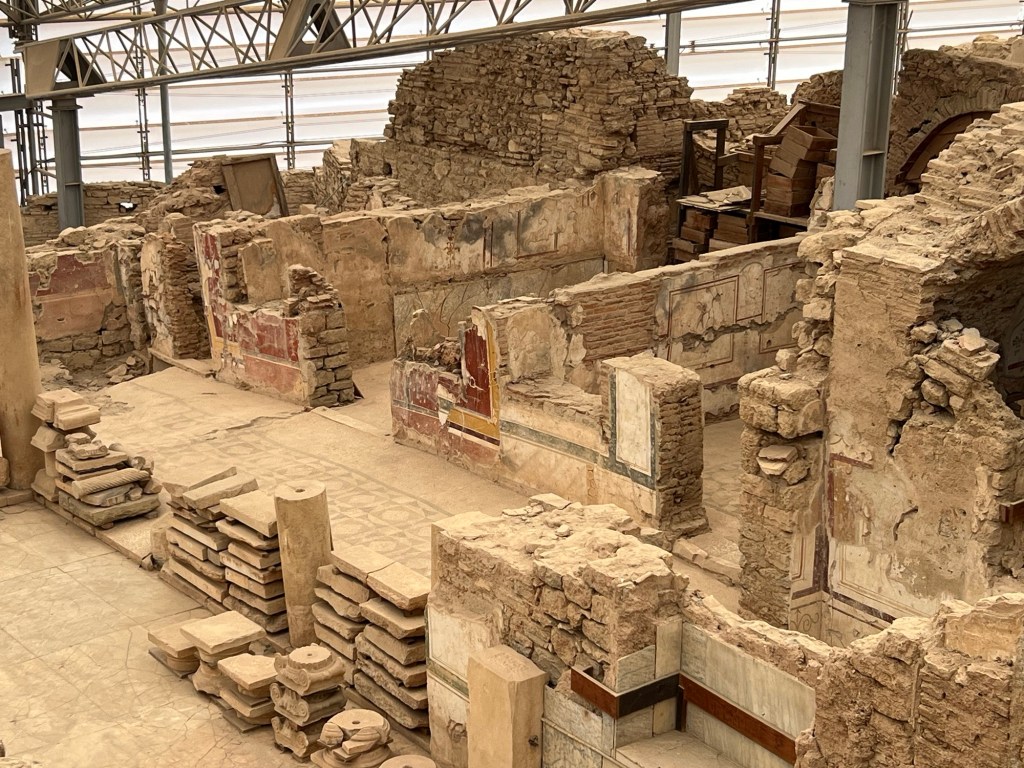
Next we went to the Terrace Houses which has been beautifully excavated and presented. These were 6 dwellings units that each had separate entrances. Even just the street outside had gorgeous mosaics.

This was the courtyard of one of the houses.
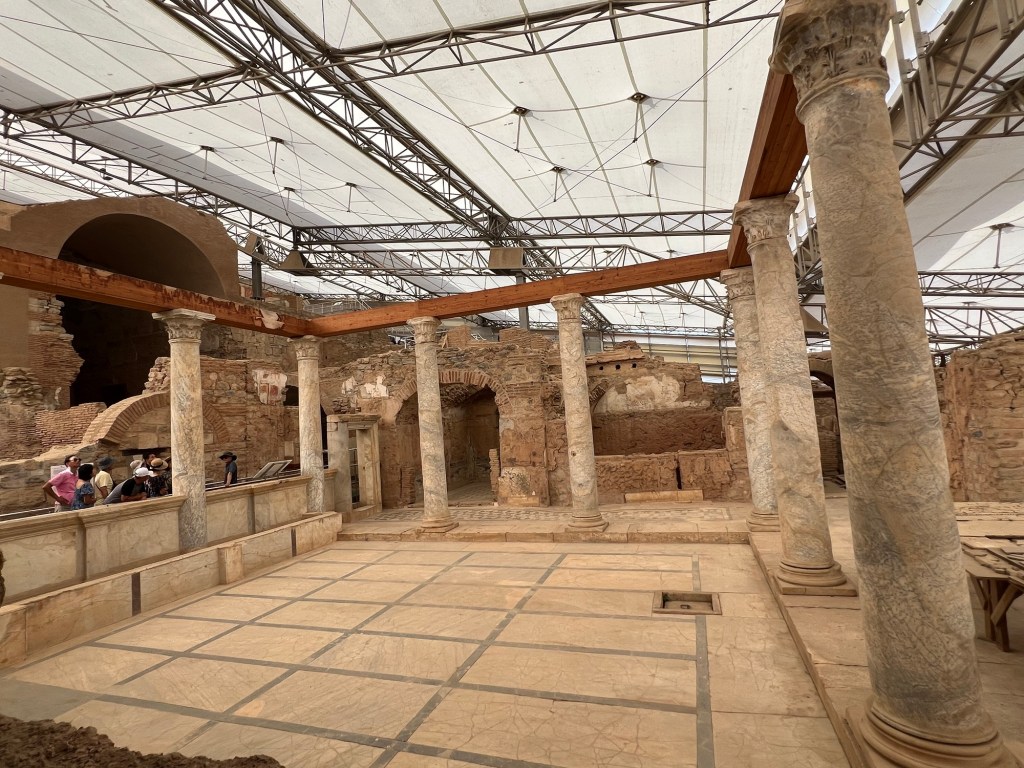
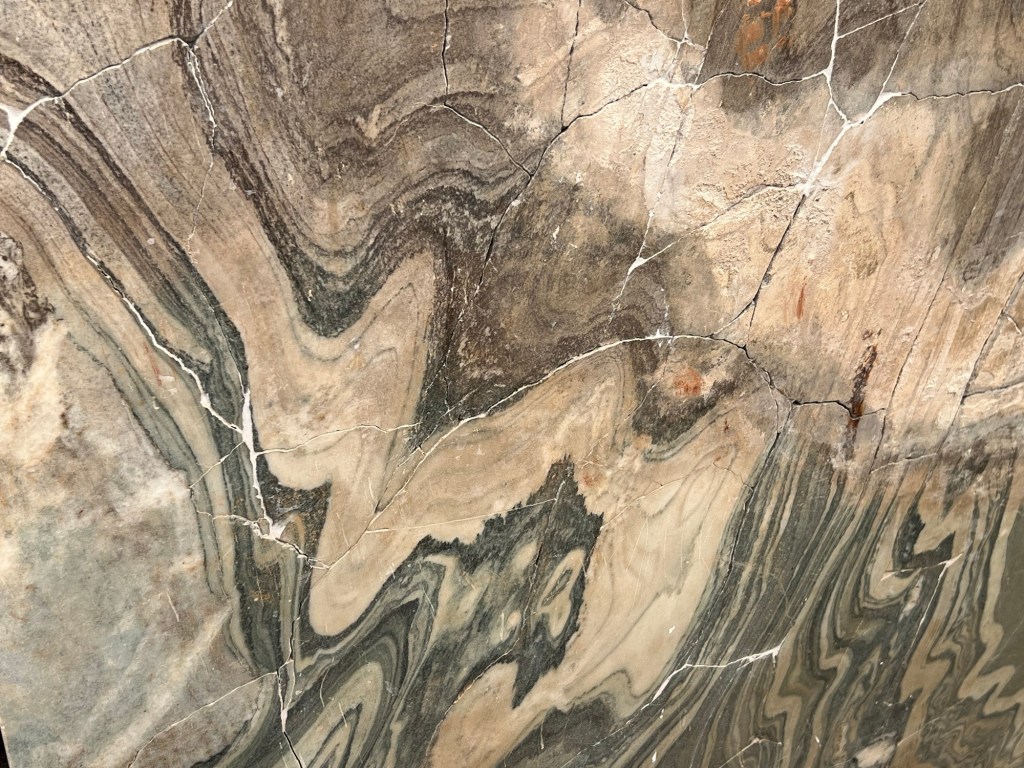
The excavation and restoration are ongoing. Can you imagine trying to put together all the small marble pieces into one piece? It was one big jigsaw puzzle.

But it sure was worth it as you can see in this completed puzzle.
You can still see the frescoes which gives the impression of just how colorful these houses were.

Truly the site is huge and very impressive.

This was most likely the dining room.

The many rooms of these houses.
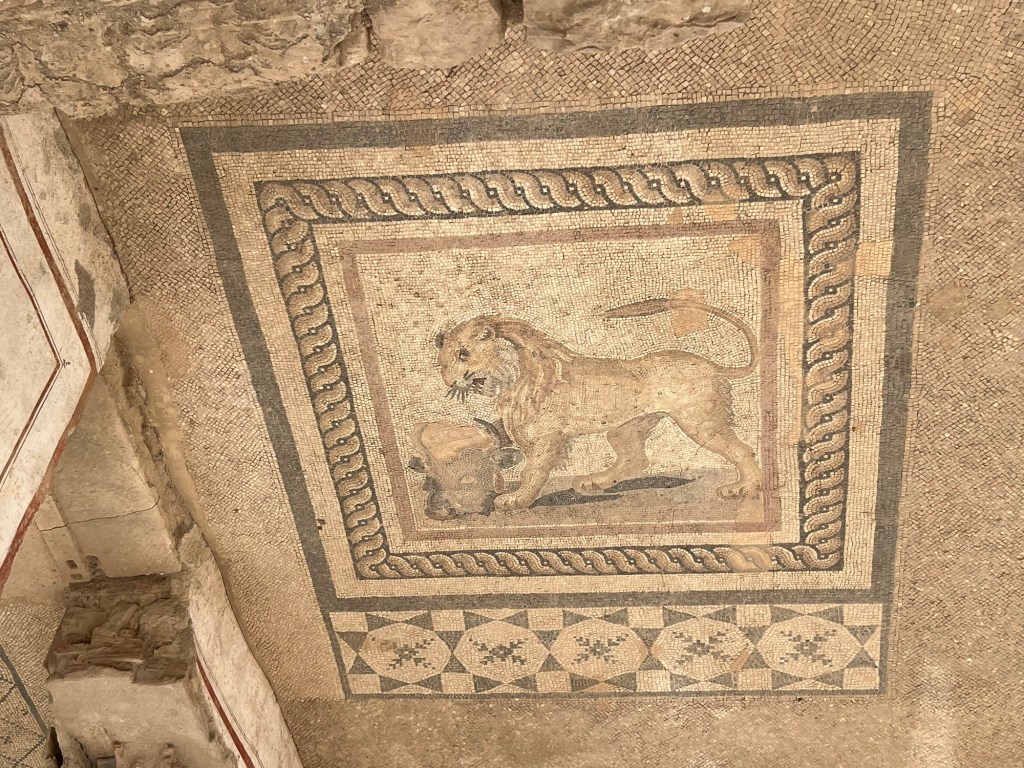
The details on this mosaic lion are stunning.
Just look at all the original frescoes.
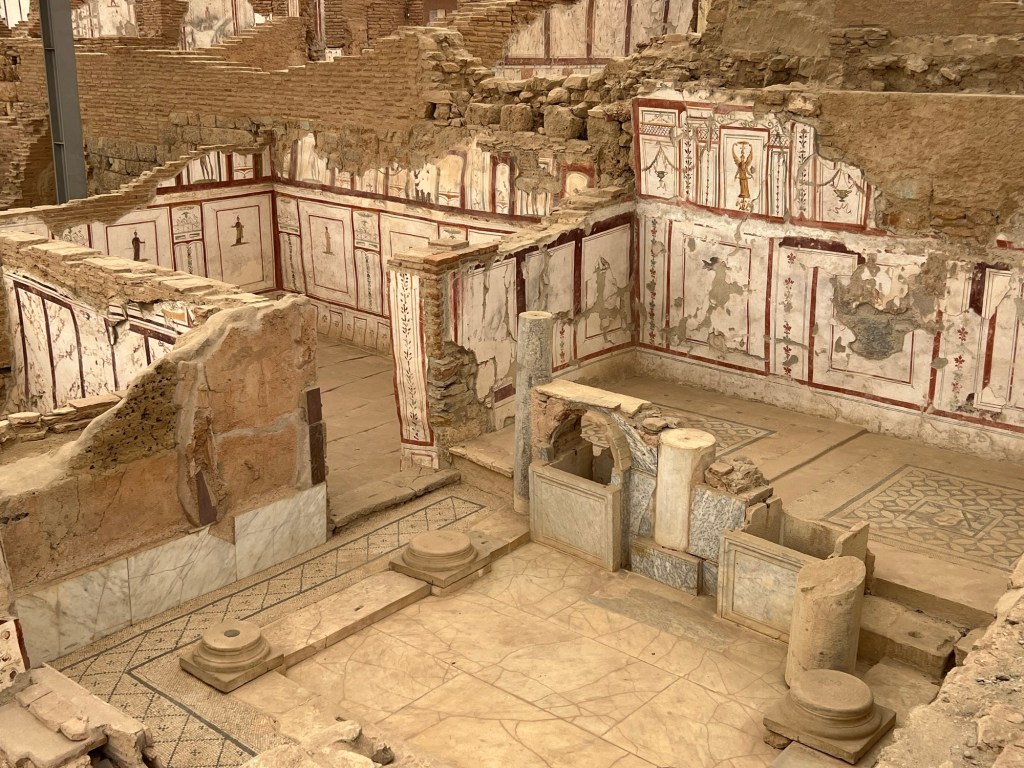
One last look at these beautiful houses.

Back outside it’s time to admire the most iconic structure in all of Ephesus…the Library of Celsus (even with scaffolding).
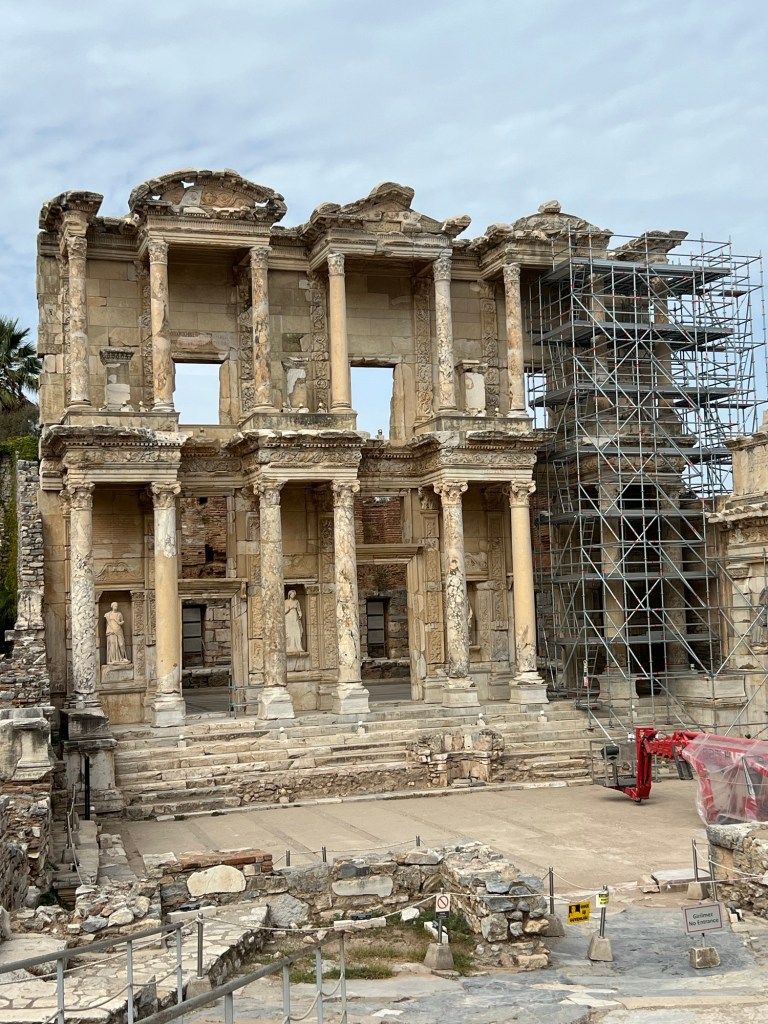
Who is Celsus? Glad you asked. He was a well-read governor. We ran into him earlier in a museum.

Celsus’s son wanted his father buried in Ephesus, but in order to do that, you had to do something for the city. A quid pro quo. So he built a library. But not just any library. The third largest library in the ancient world with some 12,000 volumes. The father is buried in the library but today access was restricted so we just took a picture with it.

Just beside the library is the agora, the main supermarket and mall where most of the buying and selling took place.
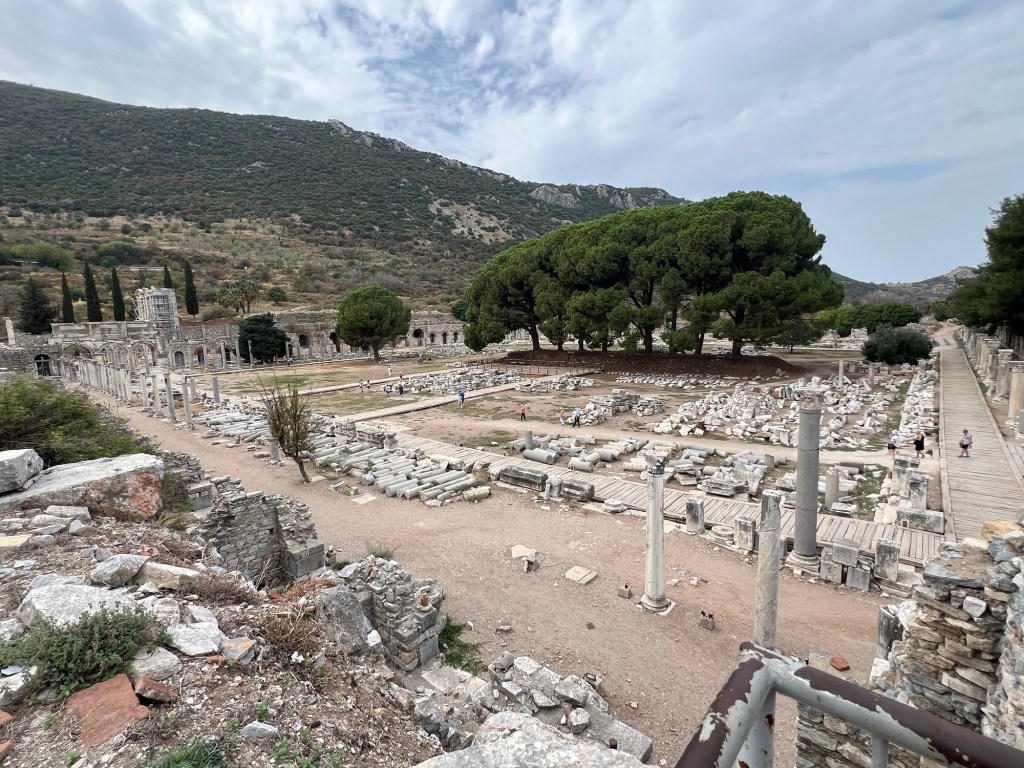
The marble walkway leads to the great theater.

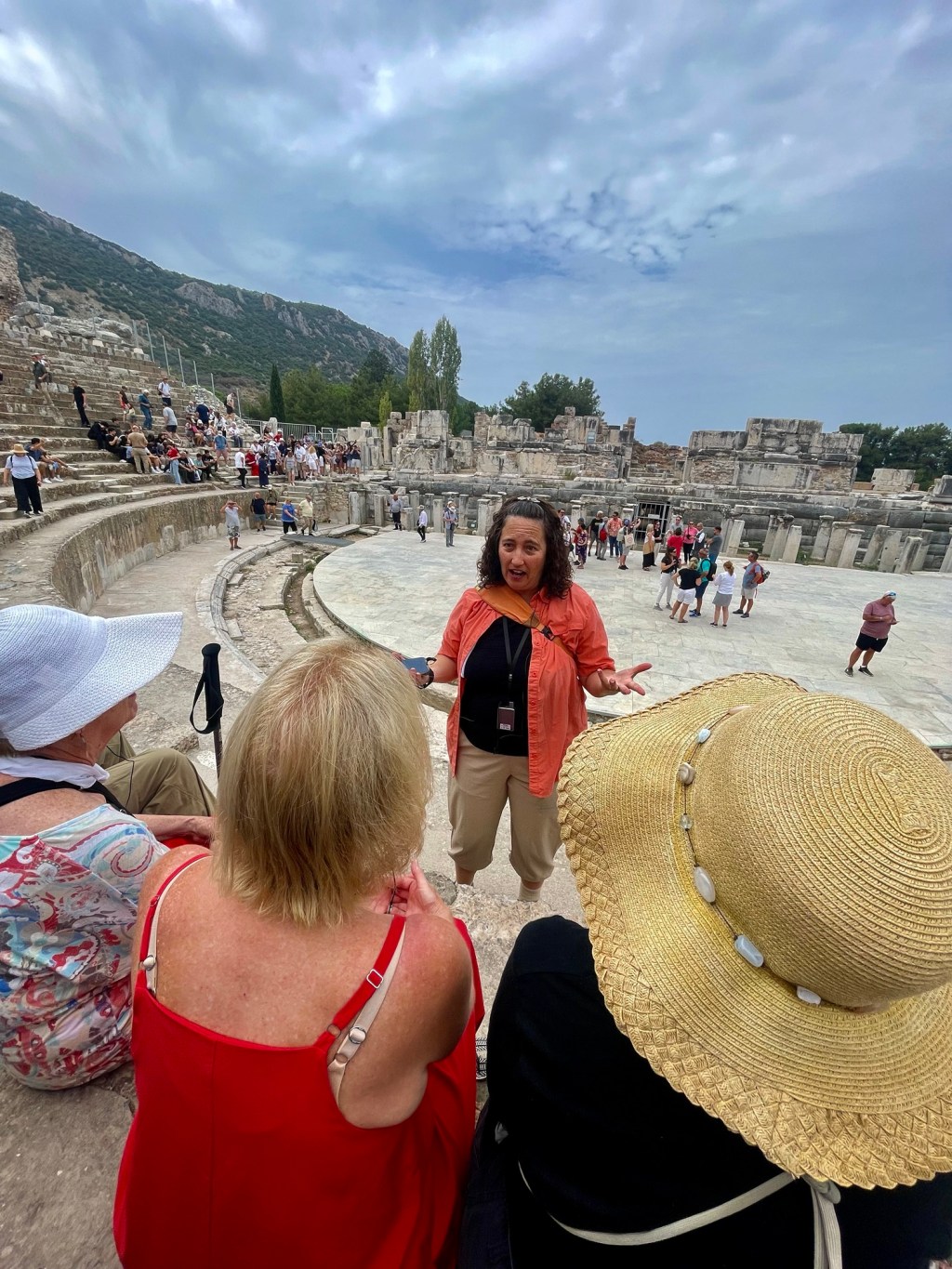
This theater is specifically mentioned in Acts when silversmiths of Artemis (you remember her and her incredible temple) were upset at Paul for converting so many people to Christianity that they stopped buying the silver statues of Artemis. They dragged some Christians to this theater that held 25,000 people, the largest in Asia Minor.
Paul’s friends kept him from going into the theater fearing he might be killed. For two hours they mob in the theater shouted, “Great is Artemis of the Ephesians.” We read the story as we were seated in that very theater. Acts 19:1-40 narrates his time in Ephesus.

In modern times it has hosted singers like Sting, Diana Ross, and Pavarotti. The acoustics are incredible. It was fun to just be on the stage.
Of course we had to take a picture here.
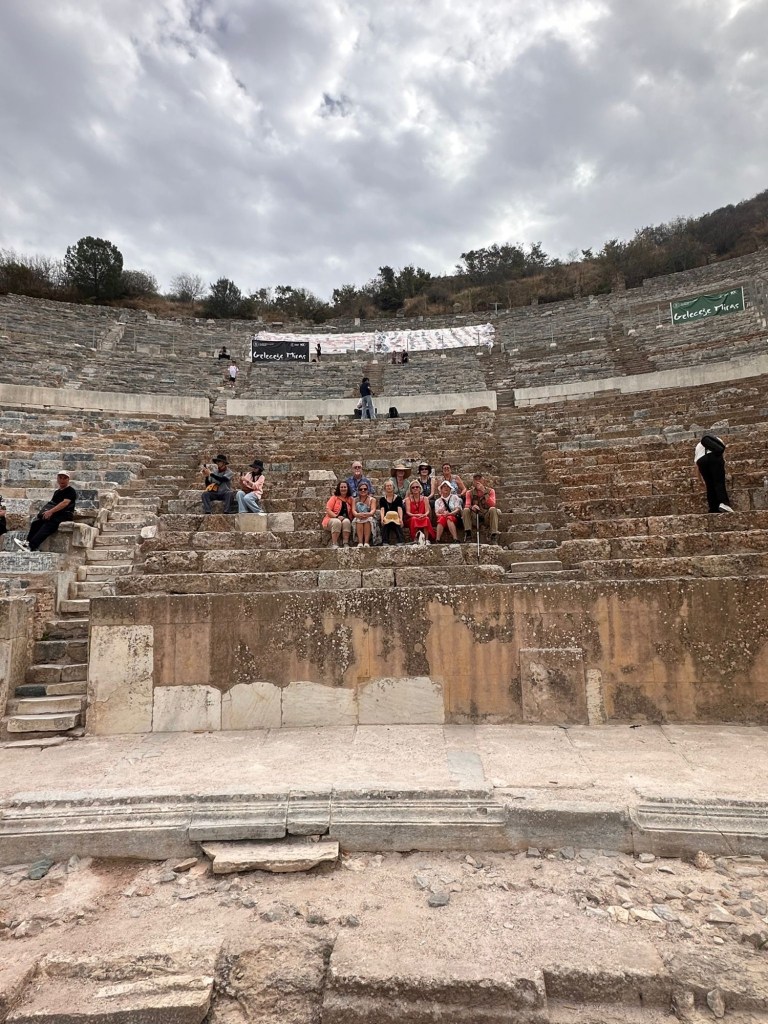
What a wonderful place and memory to watch the Bible come alive before our eyes.

On our way out we walked down Harbor Street, which (you guessed it) led to the harbor. That’s what made Ephesus such a successful city. It was located by a harbor where goods came in and were shipped abroad.

Ephesus was a city Paul loved. He spend more time here than any other city on his missionary journeys. He wrote a letter to the Ephesians which is included in our scriptures. It was also one of the seven cities referred to in Revelation 2:1-7. It became a stronghold of Christianity, all because Paul came, lived, and preached here for a little over 2 years.

While we are here primarily to walk in Paul’s footsteps, we also are here to learn about the culture. One of the traditional and most well-known crafts in Turkey is handmade rugs.
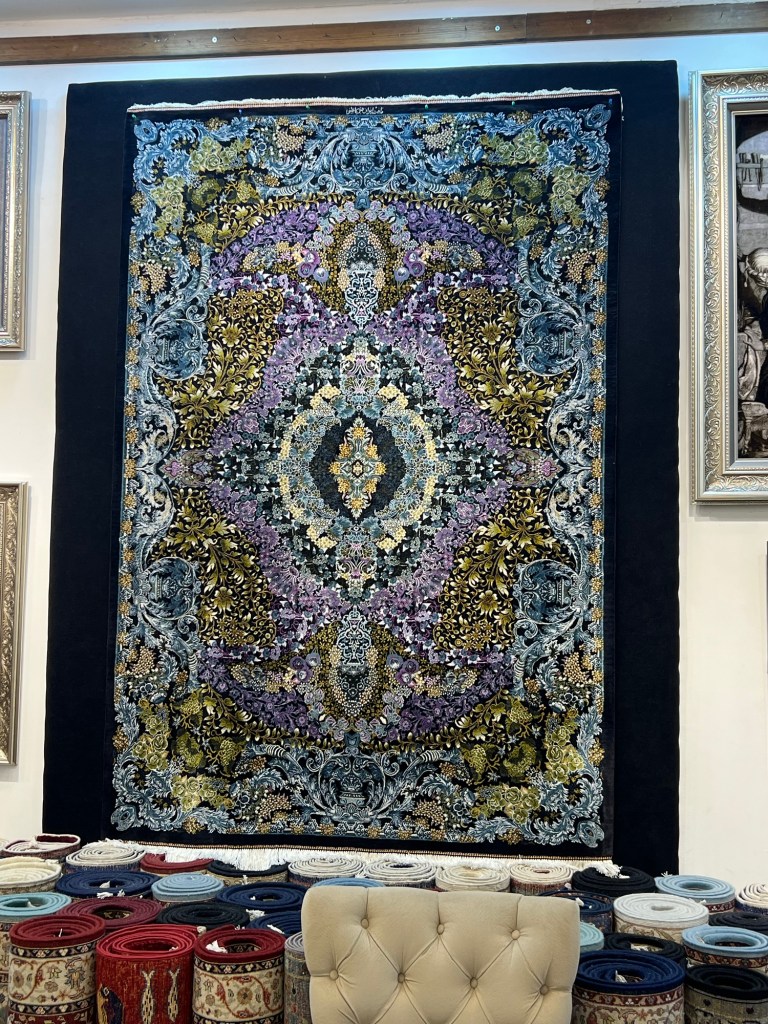
We were taught how these rugs are made and the ways they provide a living for many women in the surrounding area. All the dyes are naturally and locally sourced to make the bright vivid colors.

Each woman has a pattern they follow as they wrap the cotton or silk threads around the loom, pull them down, and then cut them. It takes them about 6 months to complete one average sized rug.
Of course, I had to try my hand at it. Actually, once I got the hang of it, the process was pretty simple.

Next we learned about where the silk comes from. The cocoons are gathered from moths and soaked in water.

Then the fine threads come together and put through a simple contraption to create the silk thread for the carpets.
The next step was the sales pitch to show us all the carpets.

The panda looked almost like a picture

And the 3D one seemed as if it was going to come out of the carpet.
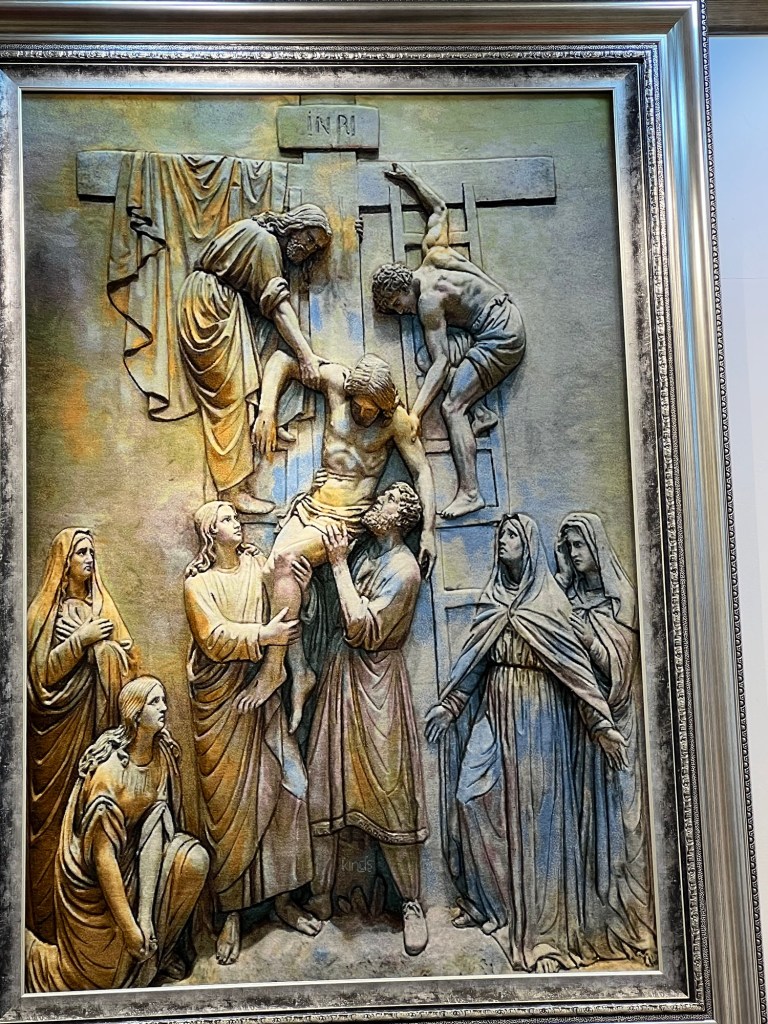
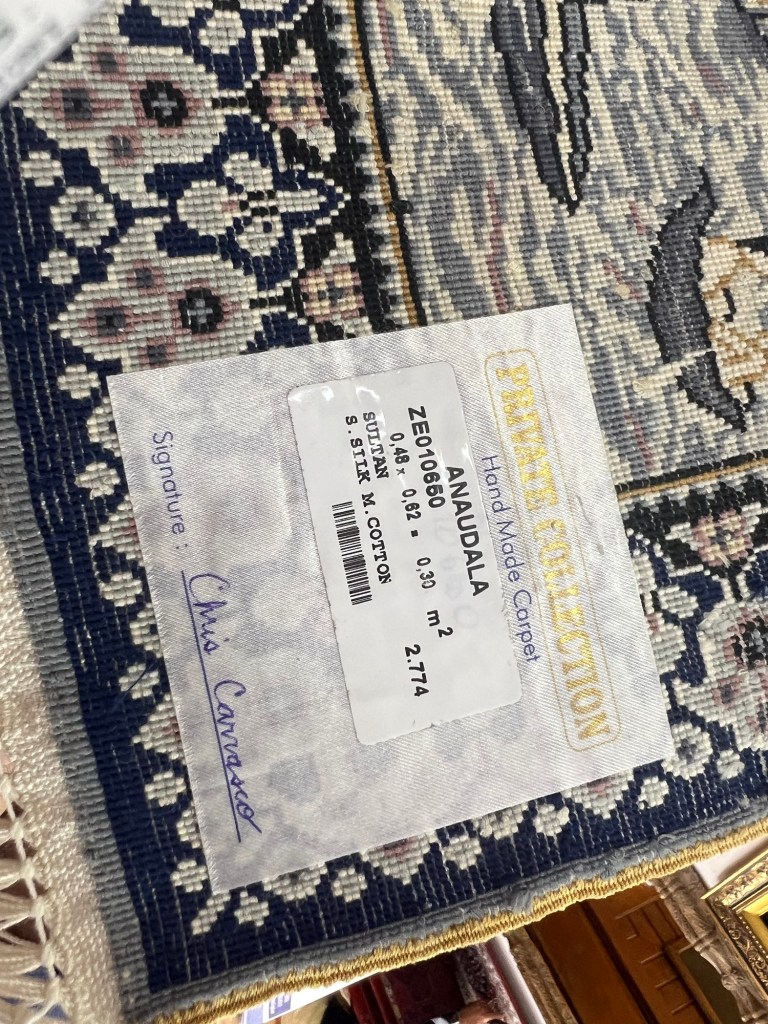
I asked to look at the smaller ones and found this one I fell in love with.

After some negotiation and contemplation, I decided to get it. I could never use it as a carpet to walk on but it will make a gorgeous wall hanging. What a meaningful souvenir!
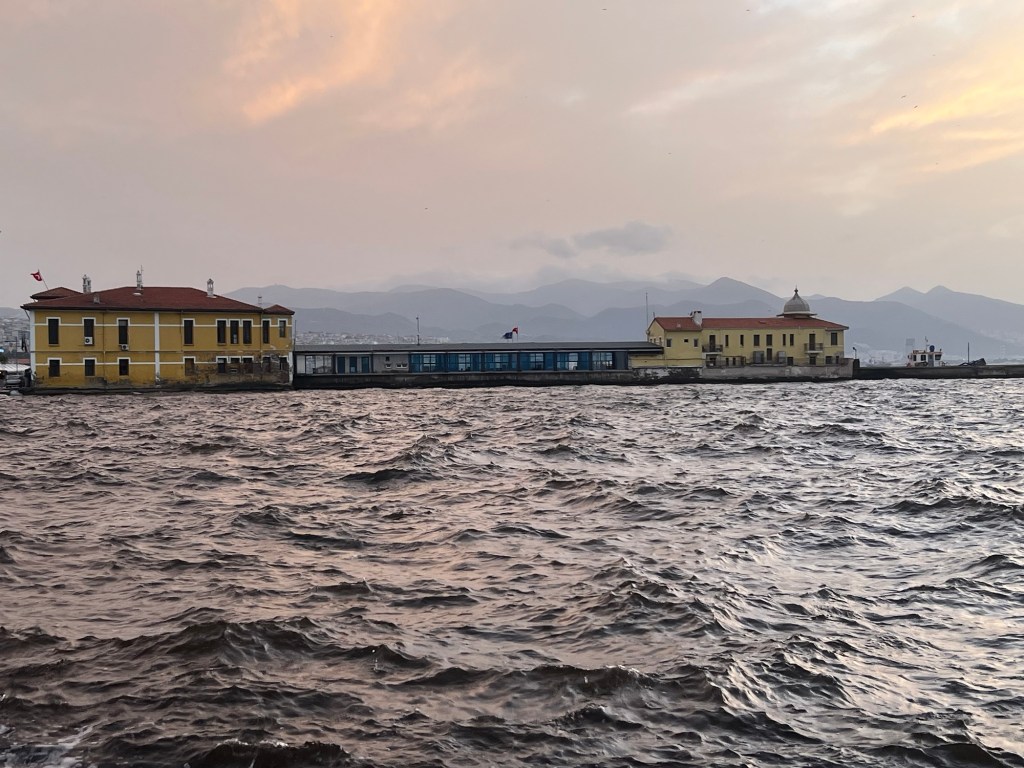
After one of the busiest days on the trip, we got back to hotel in time to soak in the sunset.

We enjoyed the local architecture
Walked down flower lined paths
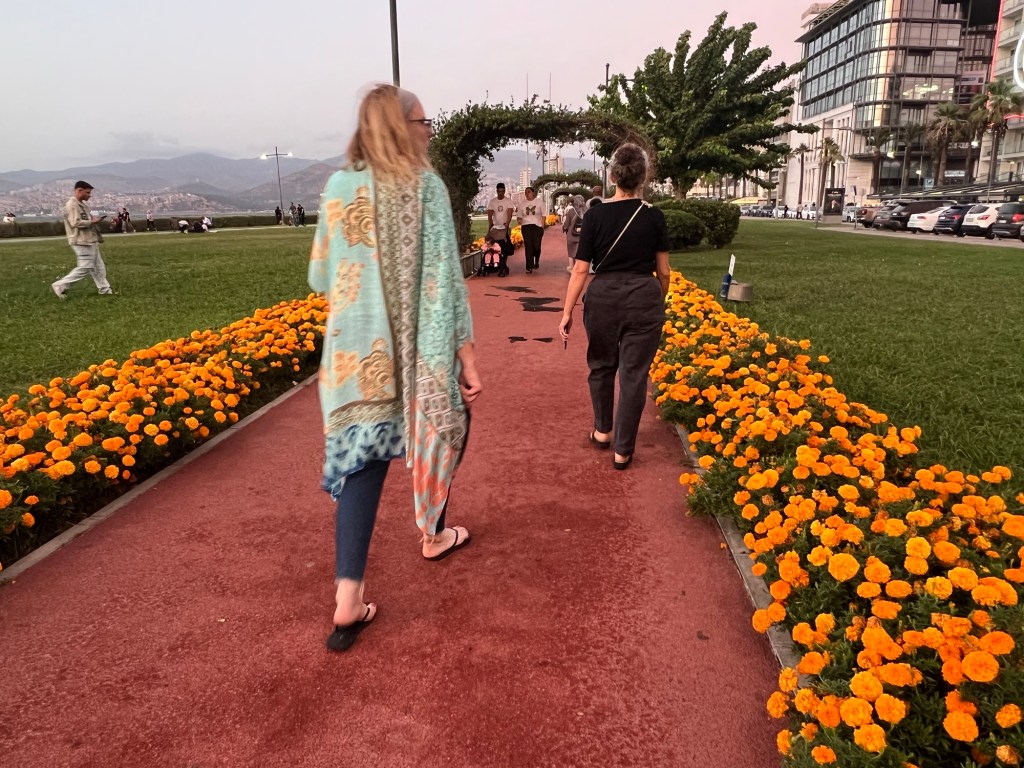
And even stopped to appreciate their beauty before returning the hotel, enjoying dinner, and getting a good night’s sleep.

 The PCUSA Pilgrim Pastor
Leave a comment