
June 19, 2024
A spiritual pilgrimage would not be complete without a trip to Rome. Most people walk to Rome as their pilgrimage and have been doing so from about the first or second century. The main motivation is to visit the bones of Paul and Peter. As time went on Jubilee Years were established by the Catholic Church (in fact 2025 is one of them) and thousands of pilgrims arrived at Rome’s holiest sites to receive an indulgence. Well, I didn’t have the time or inclination to walk TO Rome, but I did discover there is a pilgrimage WITHIN Rome.
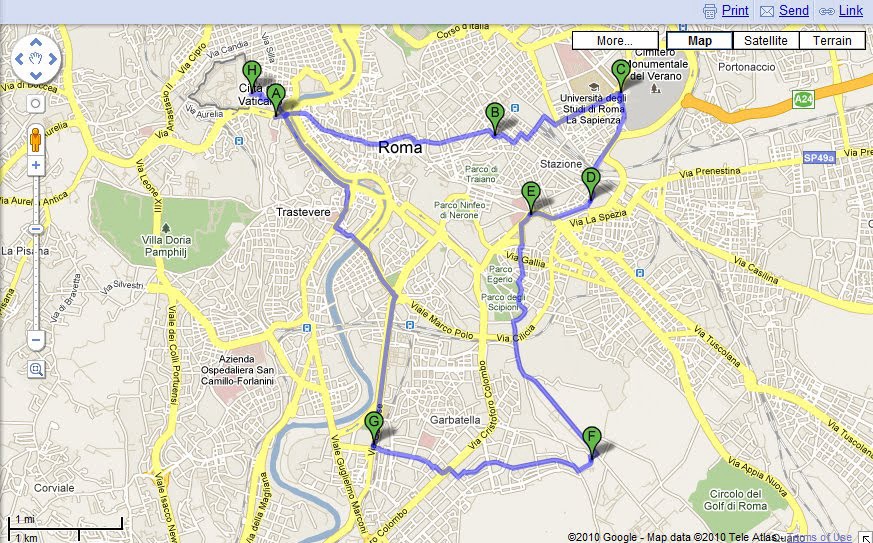
In 1547 Philip Neri created “The Pilgrimage of the Seven Churches.” He and fellow pilgrims would start visiting the bones at St. Peter’s Basilica, go to the bones of Paul at the Basilica of St. Paul Outside the Walls. After that he added the two other major basilicas of Santa Maria Maggiore and St. John Lateran. Then he continued with the 3 minor basilicas of the St. Sebastian, Holy Cross of Jerusalem, and St. Lawrence Outside These Walls. This Seven Church Pilgrimage was walked in one day covering 25 km or 15.5 miles. After researching the opening and closing times as well as the distances, I thought, “I could do that!” I mean after the Camino de Santiago of 500 miles with a 22 pound pack, this should be easy. (Famous last words.)
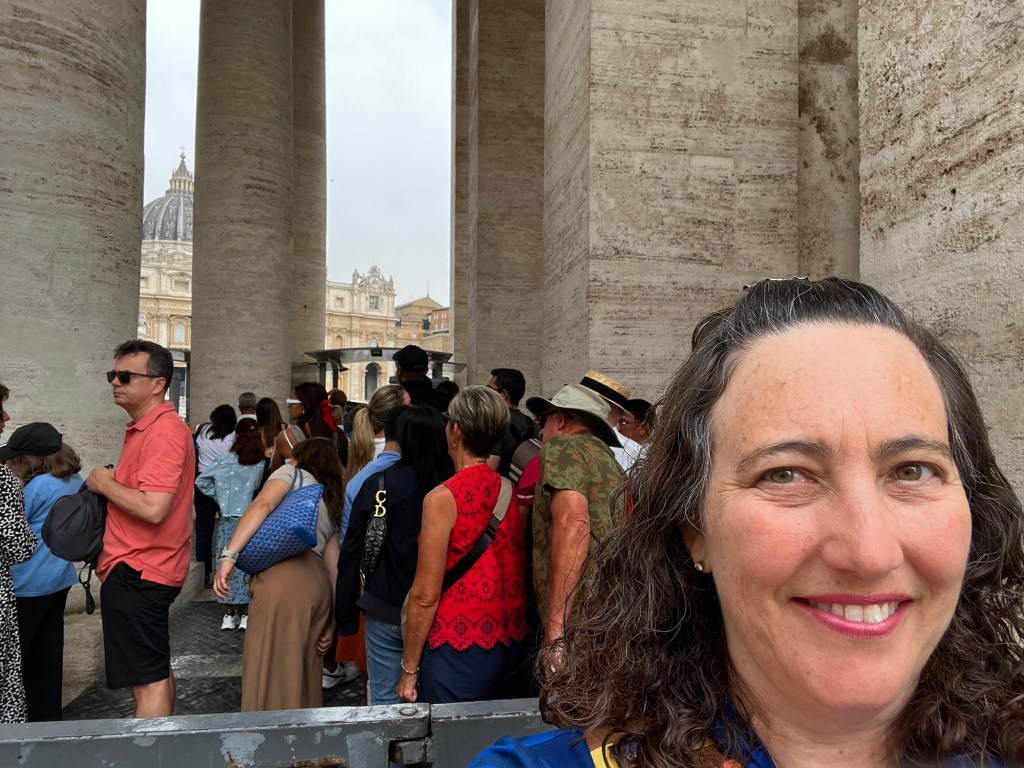
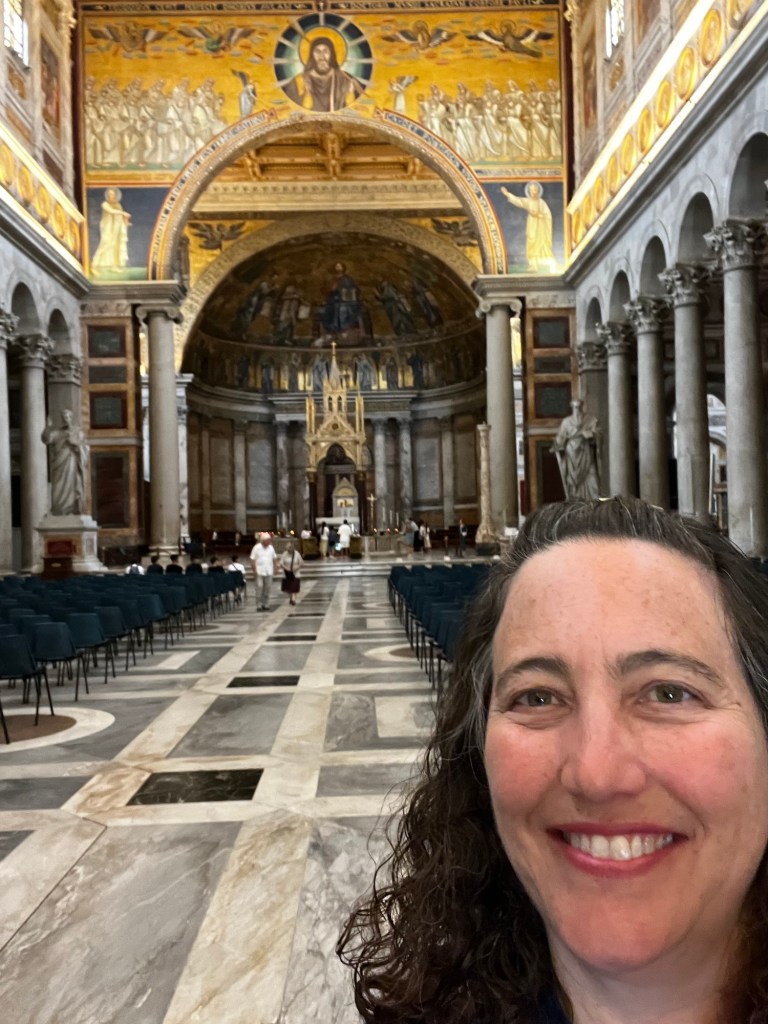
So I set out around 7:30 and took the bus to St. Peter’s Basilica. I had spent a few hours here the night before so I’ll save the details of St. Peter’s for the following post. Feeling connected with the millions of pilgrims who have walked this exact route since 1547, I began the journey at 8:00 am and set out on the ancient 15.5 mile pilgrimage to the most important churches in Rome.
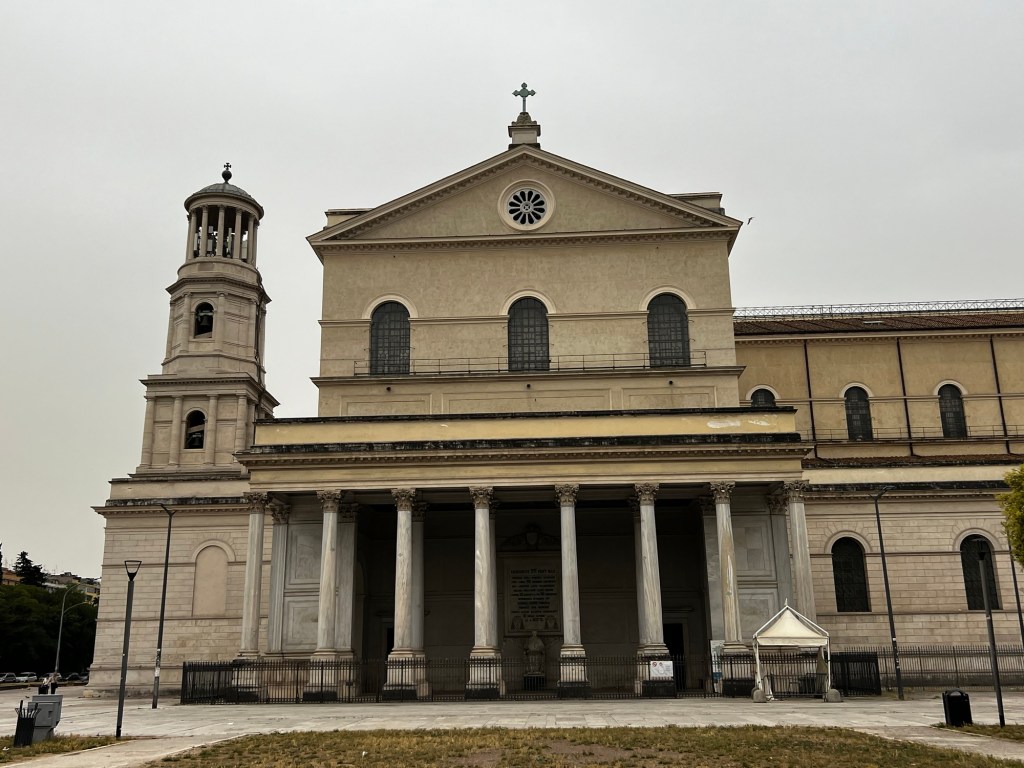
The first leg was the longest and took 1.5 hours to walk 5.8 km. I arrived at St. Paul Outside the Walls at 9:30.
This Basilica is the burial place of Paul. The mosaics are exquisite…
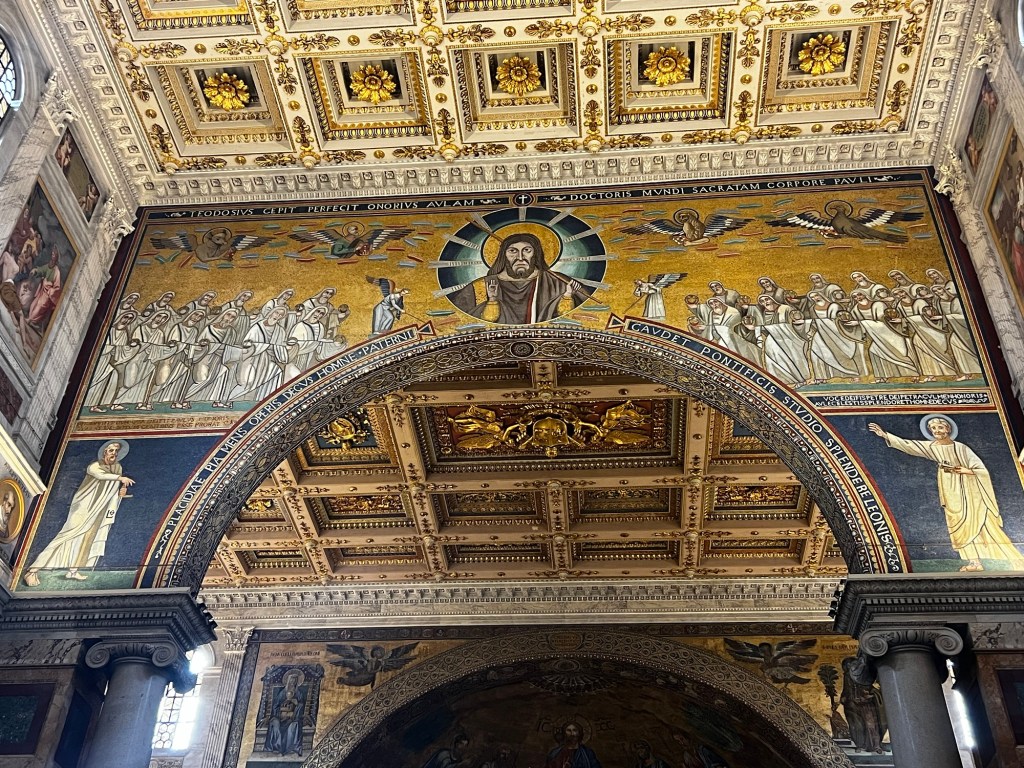
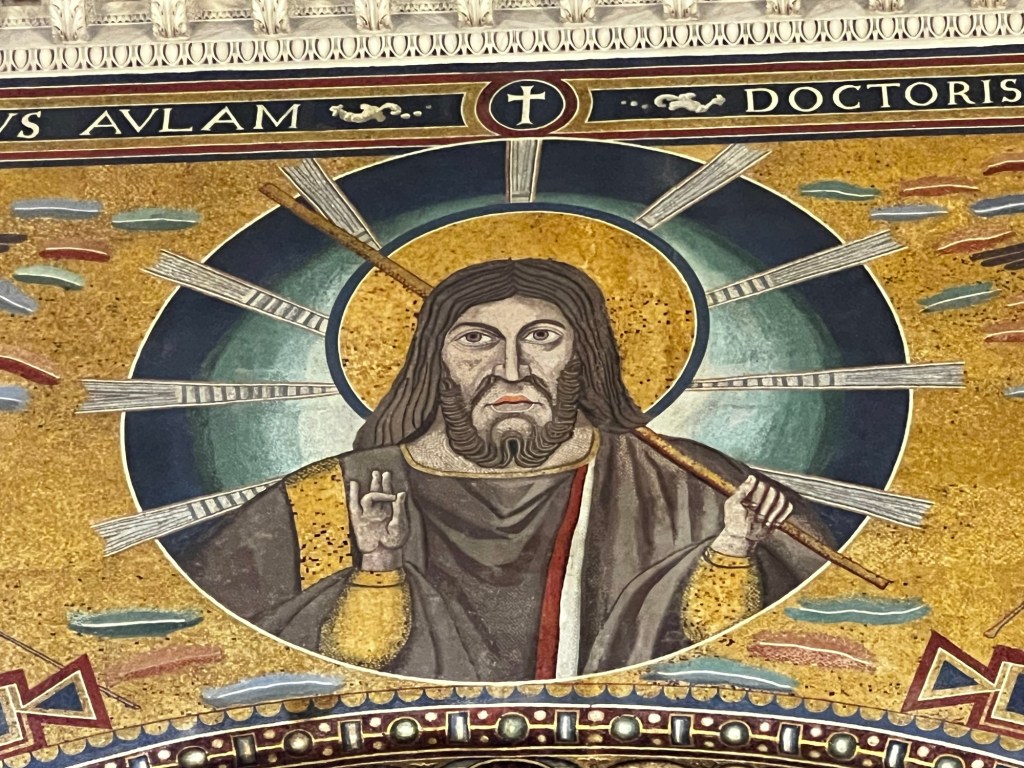
but Jesus looks a little scary to me.
Three things are of note in this church and they are all placed together, one above the others.
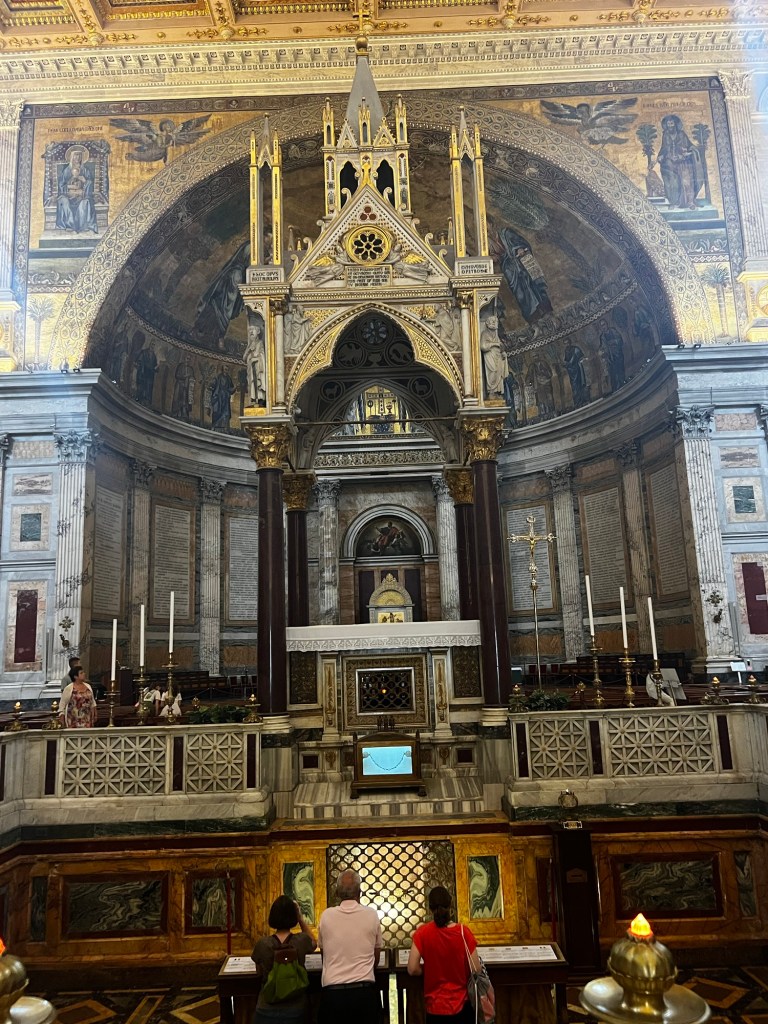

At the top is a chain made of 9 rings. “An undisputed ancient tradition refers to be the chain which compelled Saint Paul to live as a prisoner in Rome.”
In the middle behind the grate is the sarcophagus of Paul.

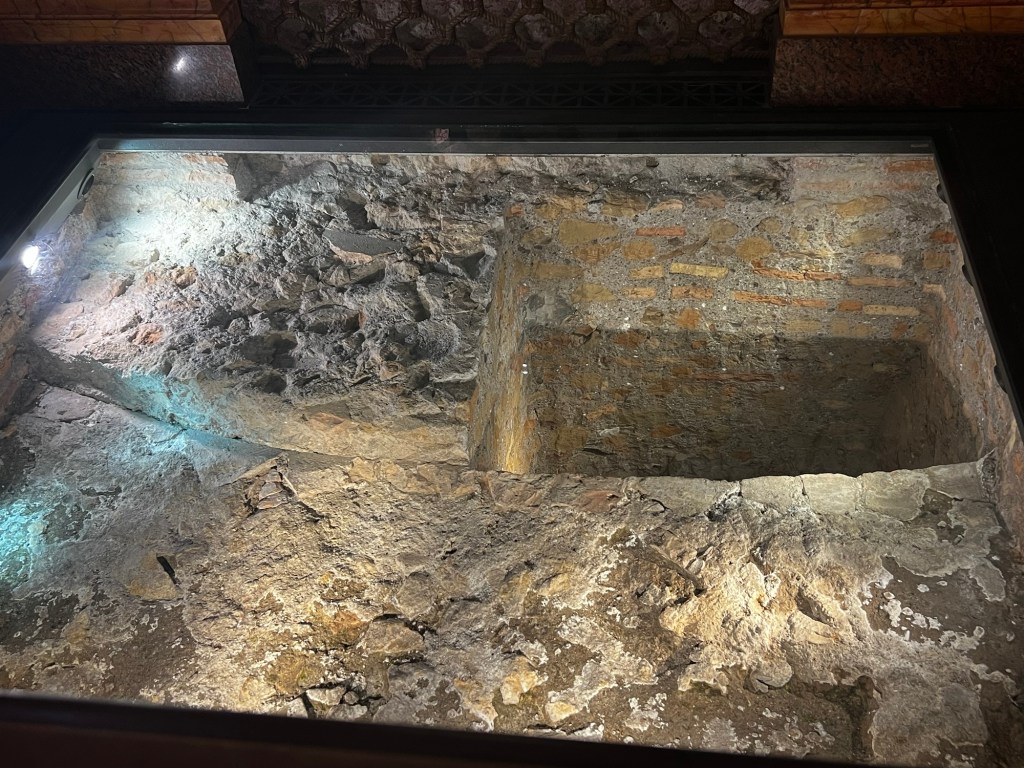
Finally, a clear glass reveals the excavation of an ancient church or place of worship.
Fun fact: portraits of all the Popes dating from Peter line the Basilica walls. As you can see, there are only 6 open portraits left. Folklore says that when the last portrait is filled then Jesus will come back. So now we know!
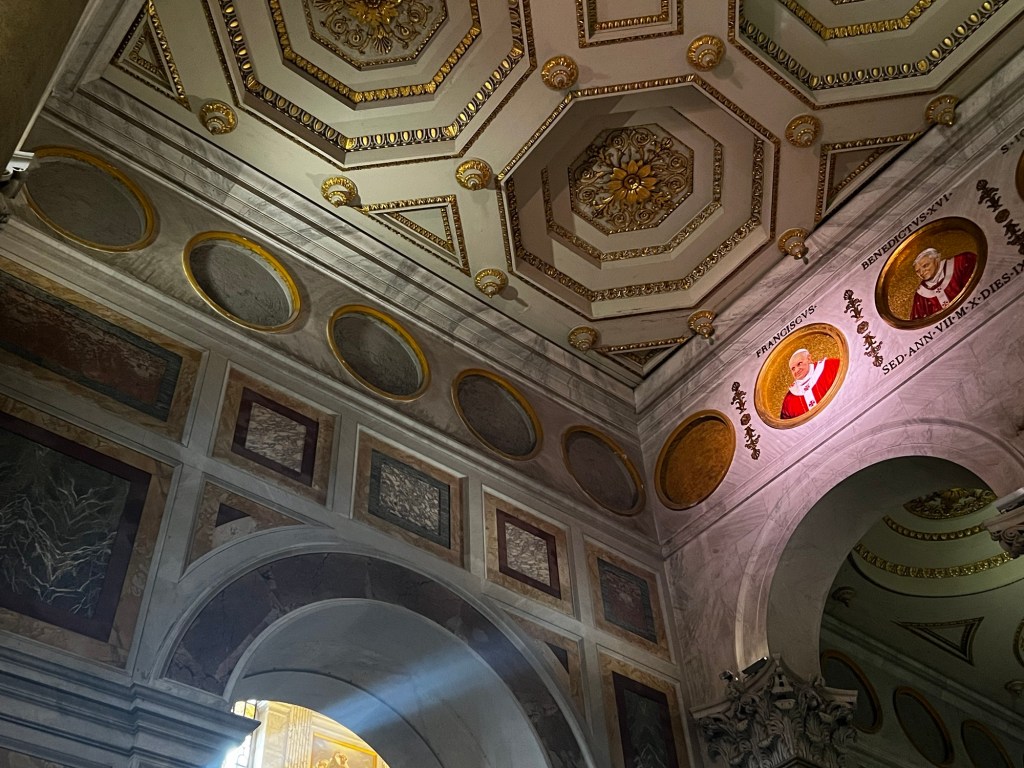
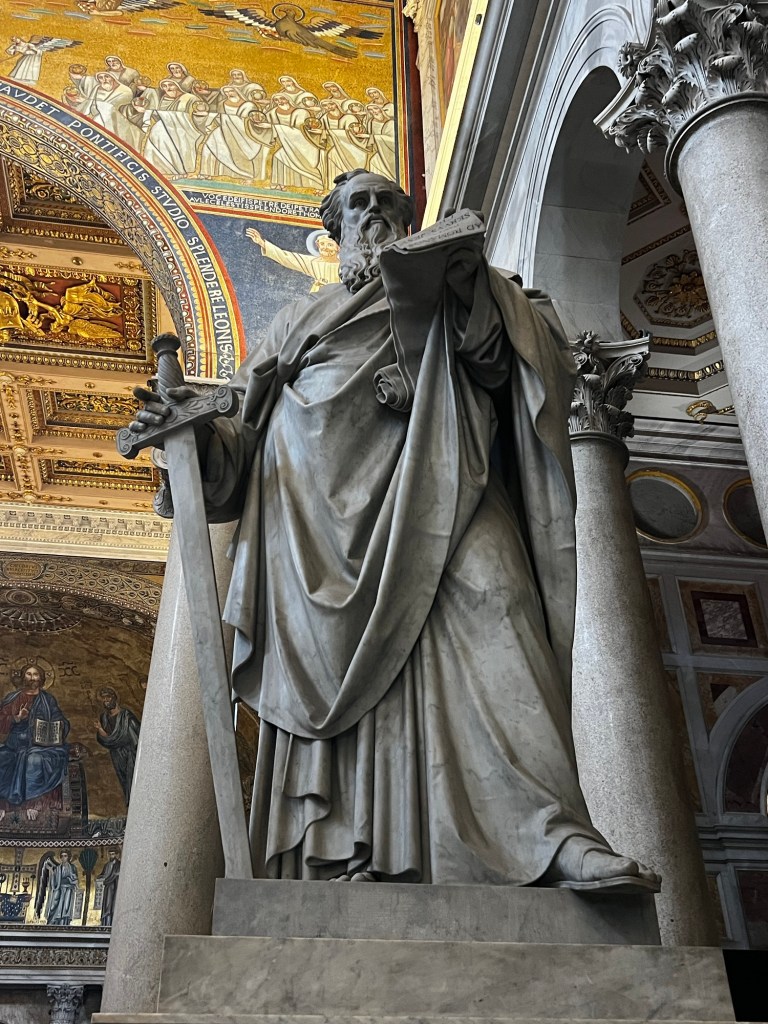
The sculpture of Paul,
The ceiling,


and mosaics are stunning.
I love this last mosaic because the pope who commissioned it both wanted to be recognized but didn’t want to seem prideful. So he is pictured in the mosaic cleaning the pinky toe of Jesus. That’s one way to humbly be recognized!

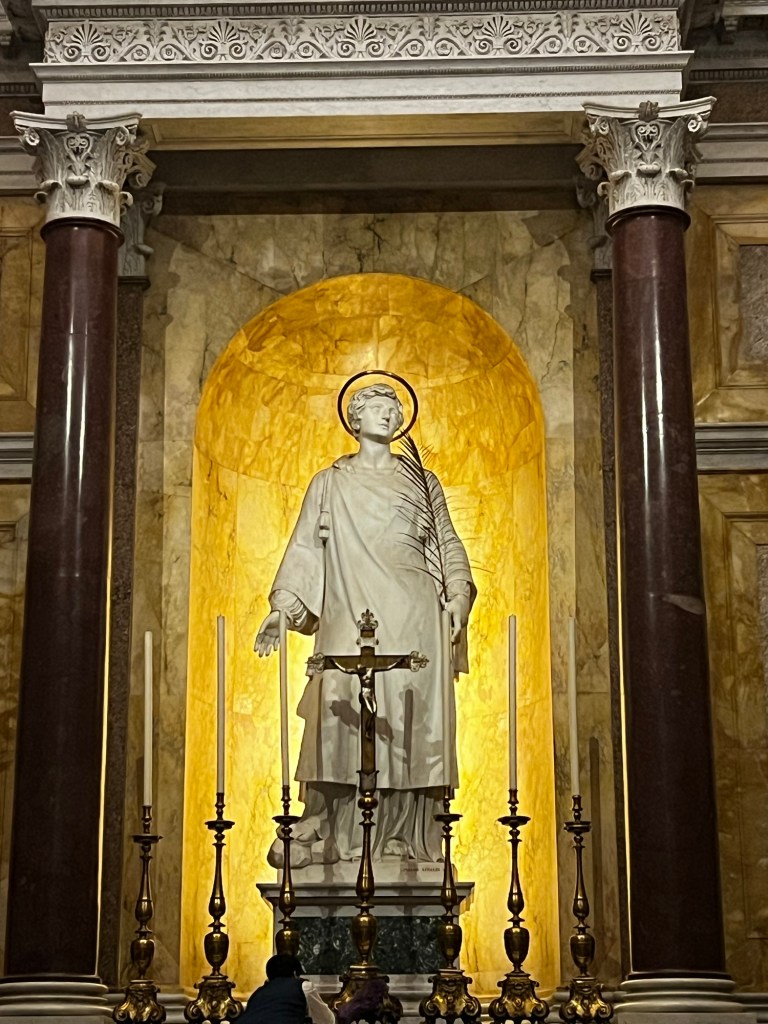
I also found it interesting that St. Stephen has a chapel here. You may remember Stephen is the one Paul watched and approved as he was being stoned to death. Kind of reminded me of how our past, even our regrets, continue to follow us along the way.
So that was church #2. 5 more to go.

Next stop was Basilica of St. Sebastian Outside These Walls which took about an hour to walk to. I arrived a little before noon. Since there are catacombs associated with this church, I decided to get a tour while I was there.
I learned (now don’t quote me on this) that the fish was the sign of Christianity for the first several hundred years, not the cross. I think he even said the first 600 years, but I’m not sure. In these ancient catacombs you won’t find crosses, but rather fish. The word for fish, ICHTHUS, became an acronym for Jesus Christ Son of God Savior


Also the prayer posture was not folded hands, but hands raised to God so ancient etchings in marble included pictures like these.
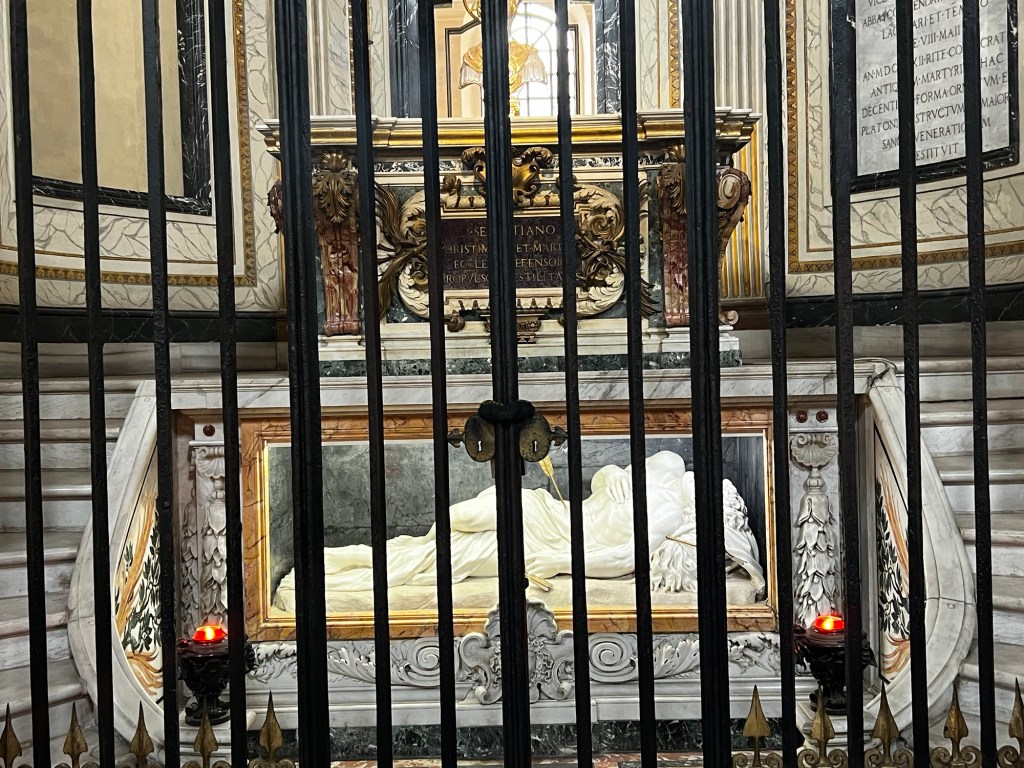
St. Sebastian lived during the reign of Emperor Diocletian and was one of his body guards. When he became a Christian, he felt he could no longer pledge complete allegiance to the emperor. Well emperors don’t like that very much so he was sentenced to death. He was tied to a pole, shot full of arrows, and left for dead. Miraculously he survived and was nursed back to health by some women. But instead of leaving the city, he went back to the emperor to warn him of the judgment that will come upon him. As you can imagine, the emperor made sure he was dead the second time around. This is Sebastian’s grave.
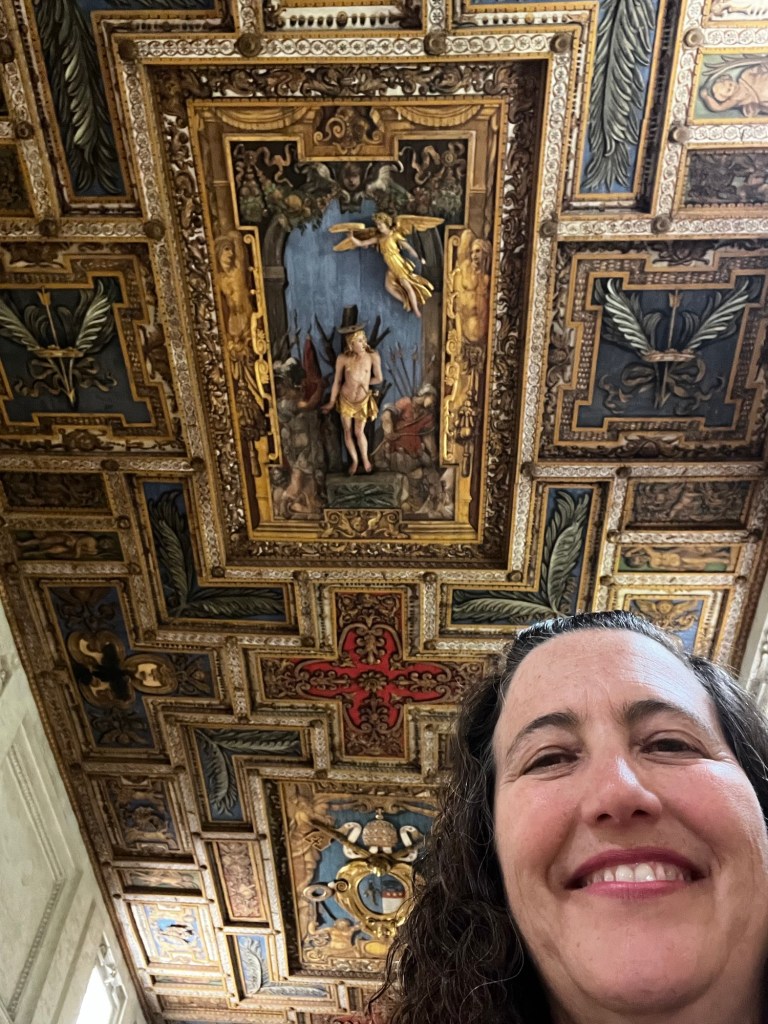
This is the ceiling of the church that commemorates the event…
And there’s even an arrow preserved from the failed execution.

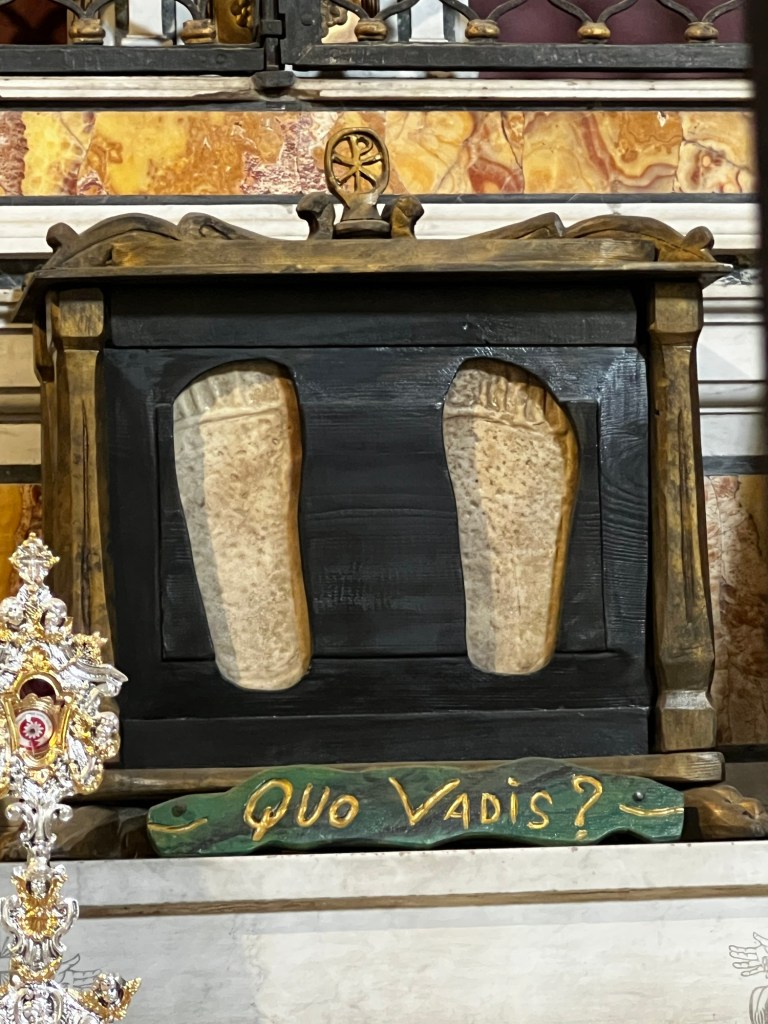
They also have Jesus’ footprints when he appeared to Peter who was leaving Rome to escape Nero’s persecution. Jesus was coming toward Peter who asked, “Lord, where are you going?” Jesus responded he was going to Rome to be crucified once more. Peter turned around and understood that he was to do the same. “Quo Vadis?” Means, “Where are you going?”
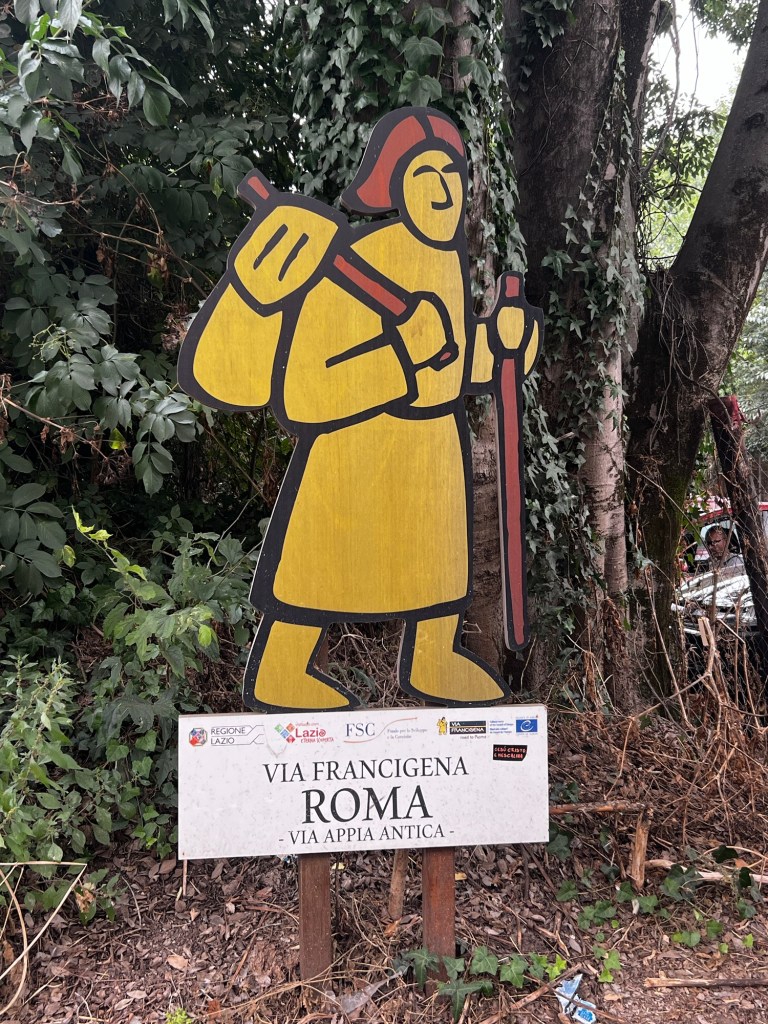
I then set off to church #4, Basilica of St. John Lateran which would take about 45 minutes arriving around 2:30. Along the way I was walking the ancient Appia Antica where pilgrims for millennia would walk to go to one of the most holiest cities in the world. I met a fellow pilgrim along the way.
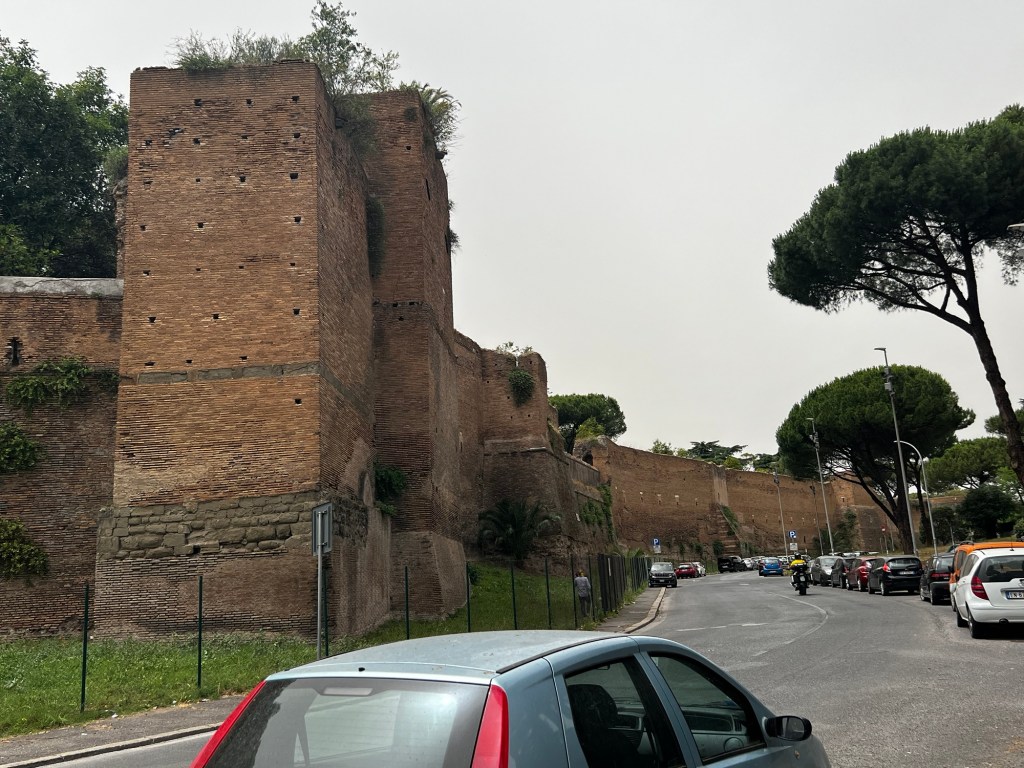
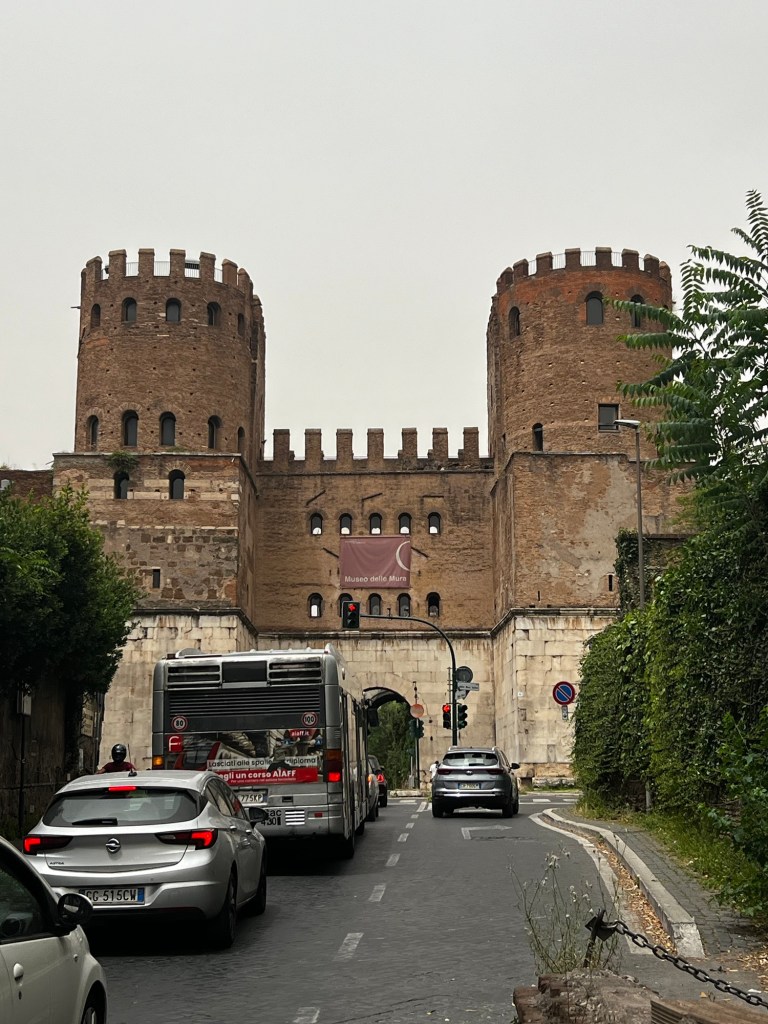
We’ve heard of churches being called “outside the walls” which was a literal reference to the walls that surrounded Rome. Bodies and bones were not allowed inside the city so catacombs and Paul’s bones had to be laid to rest outside the walls. Here are a remnant of some of the walls..
And the gate in the walls that allowed entrance and exit.
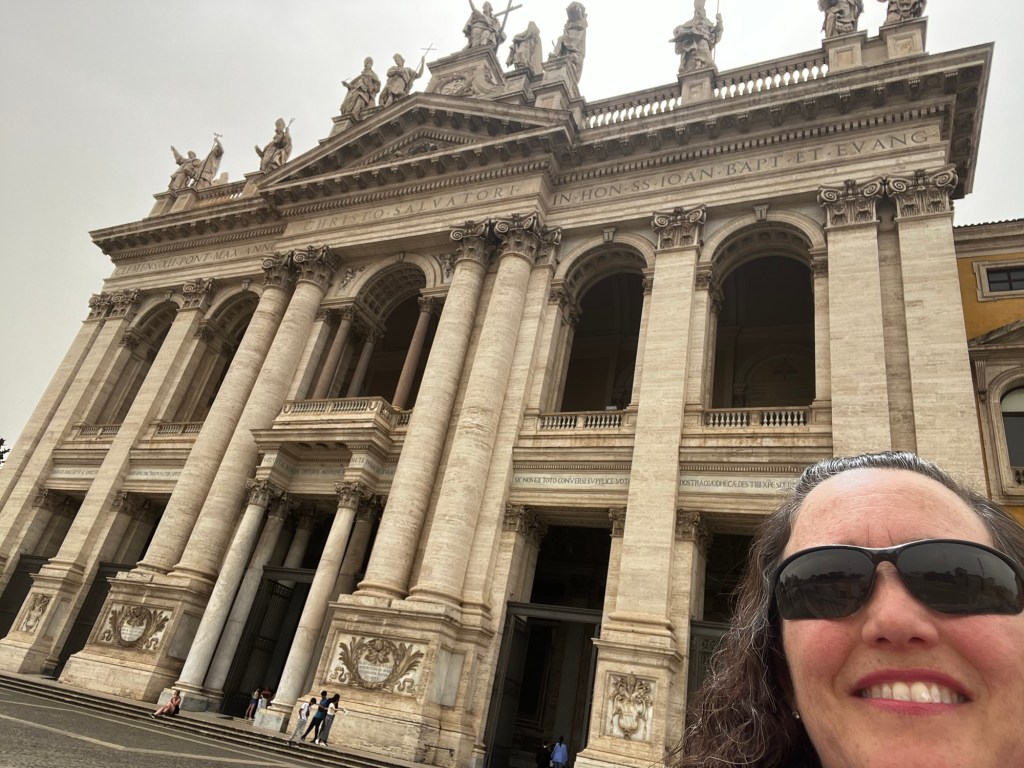
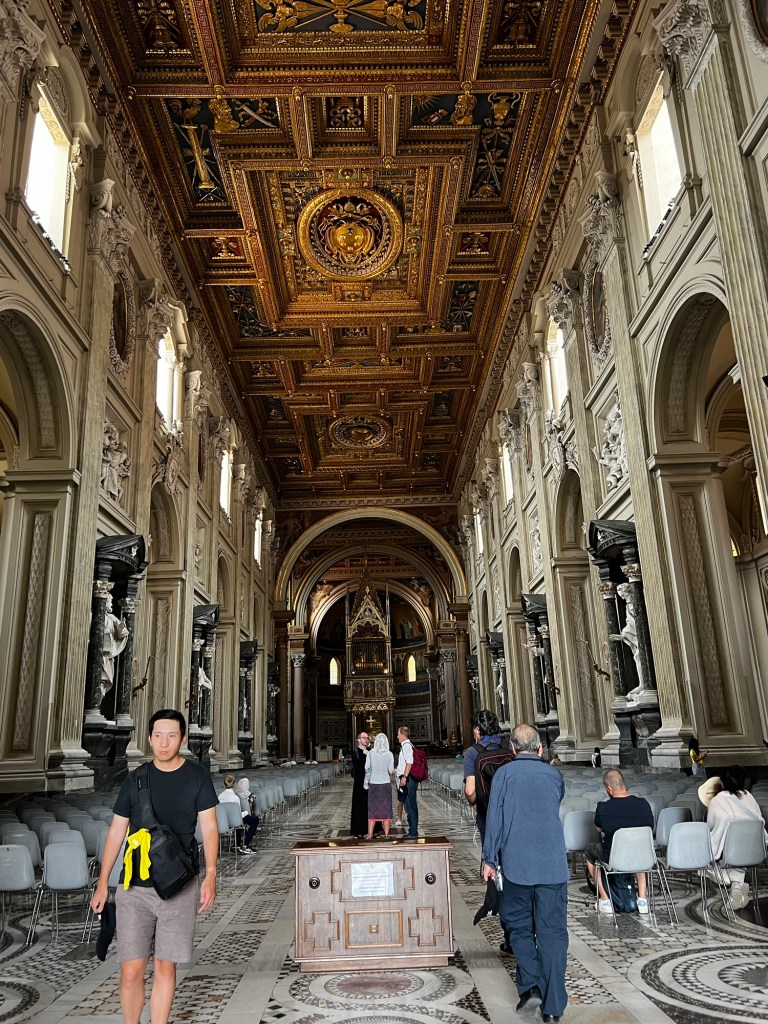
Now all these churches are just huge, but the Basilica of St. John in the Lateran beats them all.
This is the flagship church of the Catholic faith, called “Mother and Head of All Churches in Rome and in the World. Founded in 324 it is the oldest public church in the city of Rome and holds the unique title of archbasilica. It ranks superior to all other churches in the Catholic faith, including St. Peter’s Basilica. Basically, it’s a BIG DEAL. As you can see it is phenomenal.
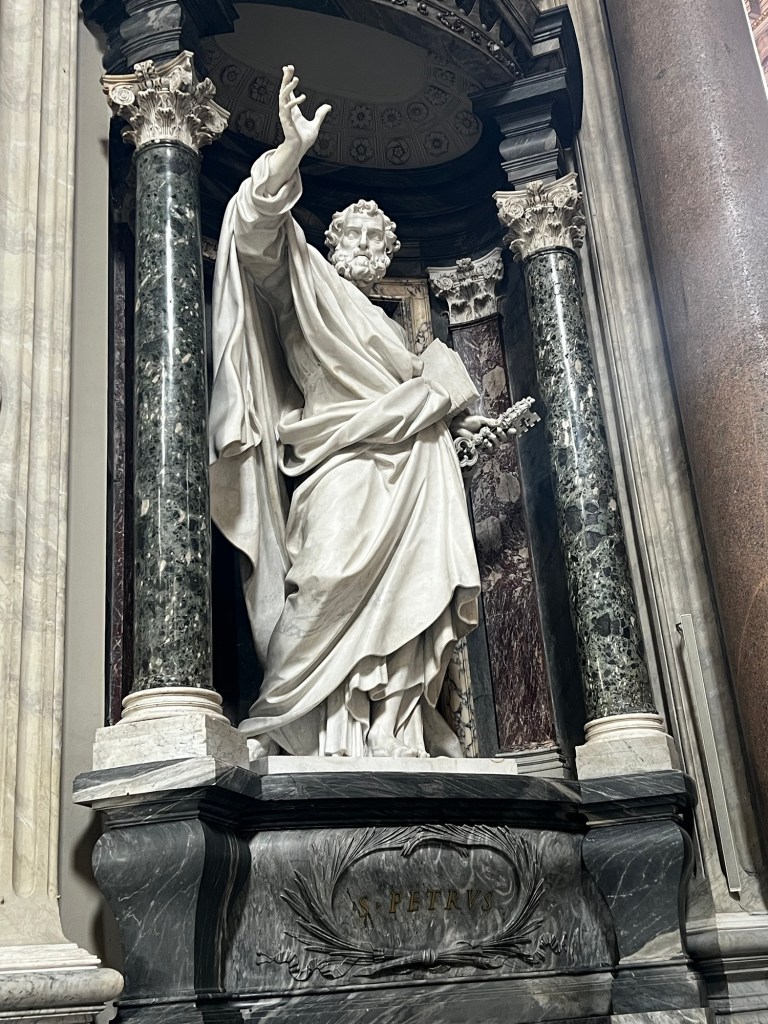
There is a statue of each apostle and it got me thinking, how would I portray each of Jesus’ original disciples? This is how Peter, Matthew, and Bartholomew were immortalized in this church.


The canopy over the high altar dates back to 1369. The upper part contains the busts of Apostles Peter and Paul and are said to contain a portion of the skull of each man.
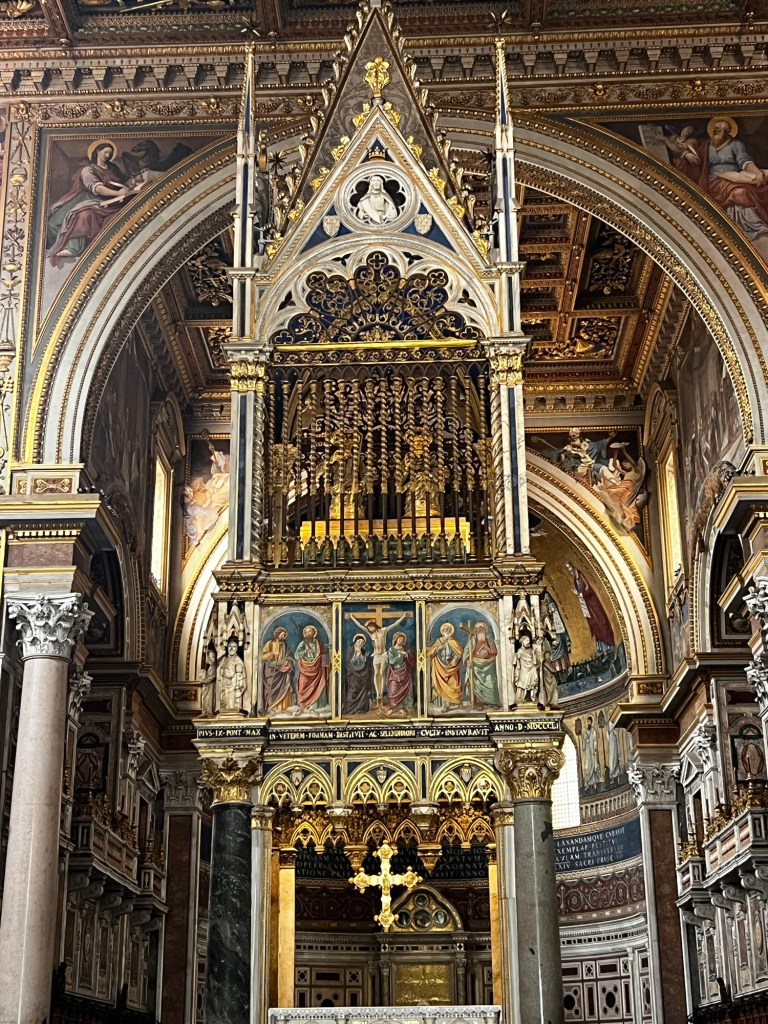

The lower part of the canopy is the papal altar that encloses the ancient wooden altar used for the first 300 years of Christianity and first 13 Popes.
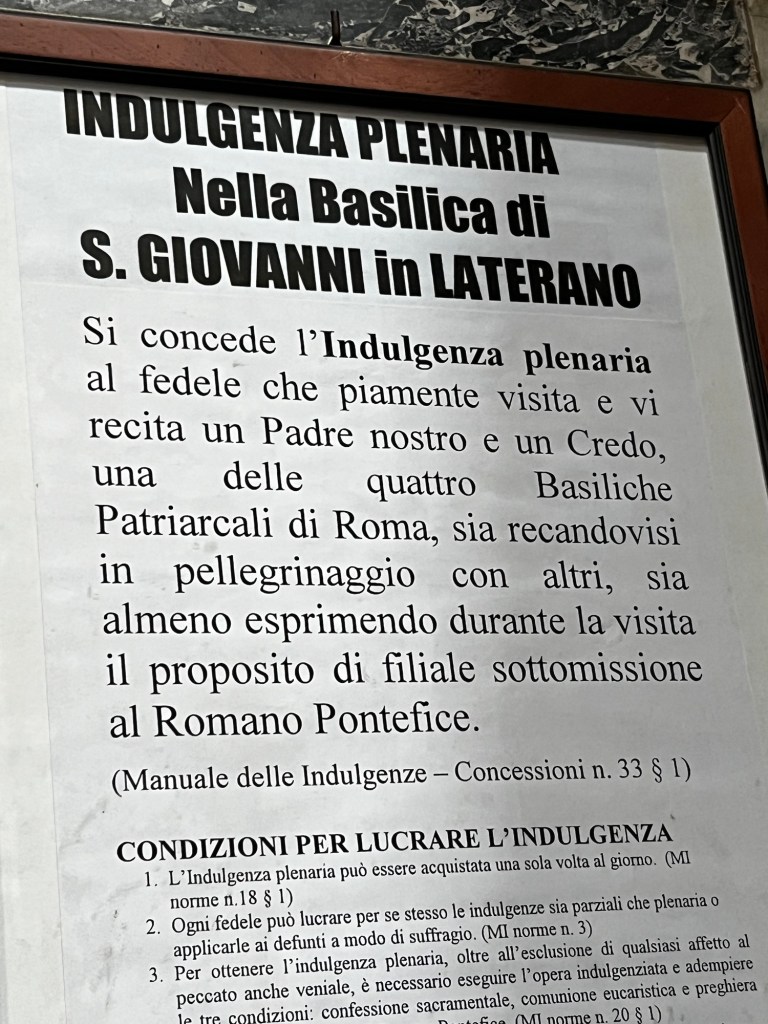
Just when you thought indulgences were a thing of the past, here are instructions on how you can get one as a pilgrim visiting this basilica.
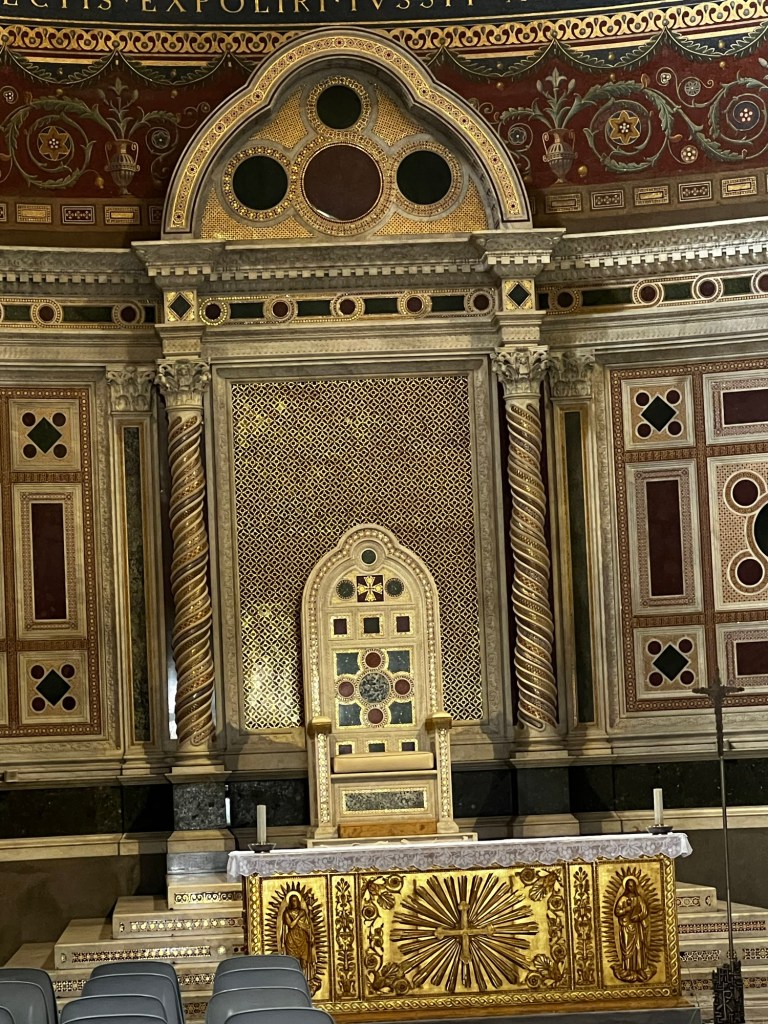
Finally, there is the special chair (kind of looks like a throne) called the Chair of St. Peter and represents the unbroken succession of Popes throughout the past 2,000 years. Since this church is literally the home church of the bishop of Rome, otherwise known as the Pope, as Pope-elect he must sit in this chair to become the Pope. There is even a Catholic feast day for this chair. So, let’s just say it’s pretty special.
Across the street from St. John are the Holy Stairs. These stairs were confiscated by Constantine’s mother, Helena, and are the steps of Pilate’s palace that Jesus walked up during his trial.
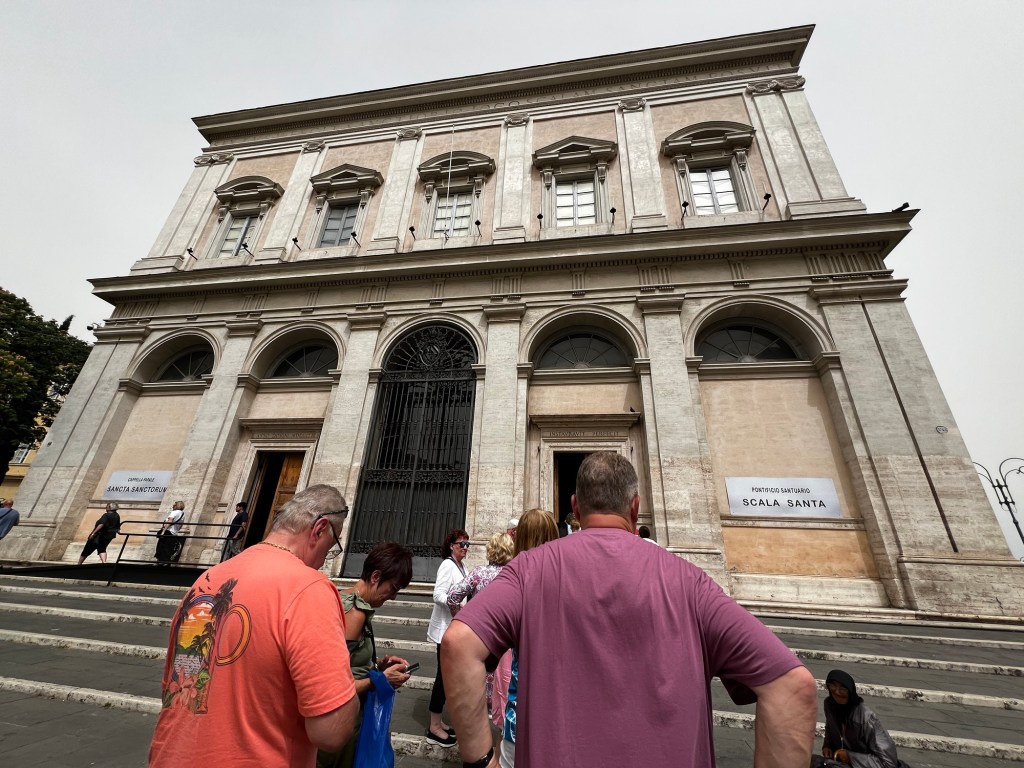
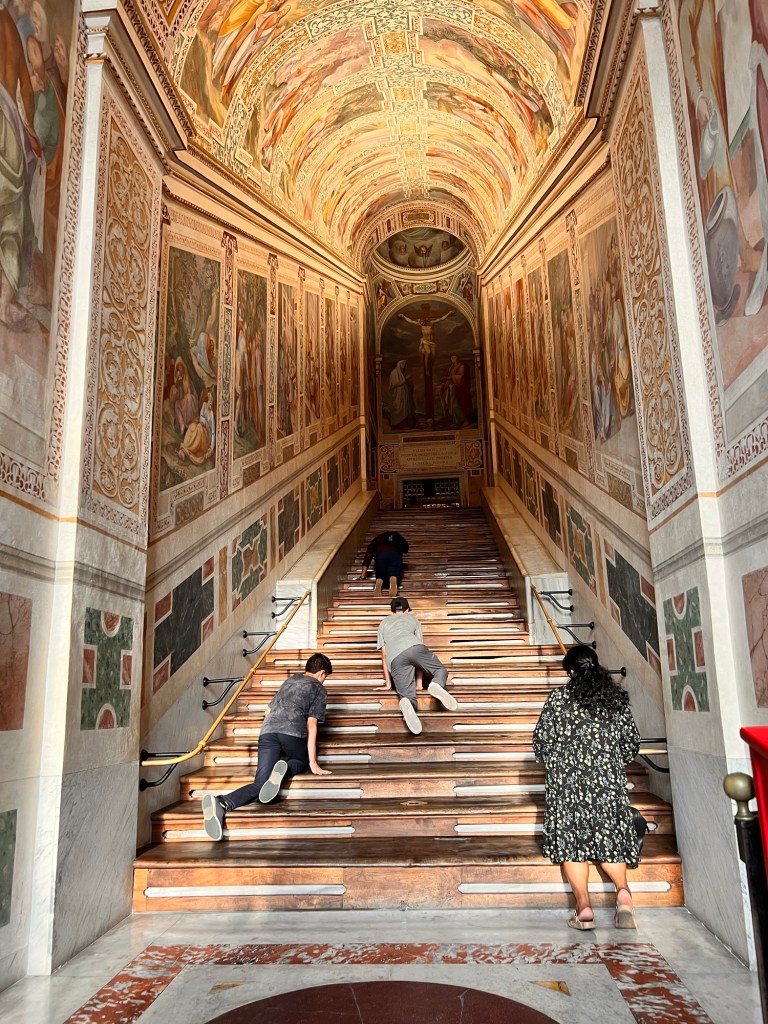
To actually go up the stairs, you have to do it on your knees. And yes, I did do it on my knees. Now I learned from the first time I did it two years ago and positioned myself next to the handrails on the right so I could take some of the pressure off my knees by pulling myself up on the rail. But it still hurt.
For those who don’t want to go through the pain, there are side stairs to walk up.

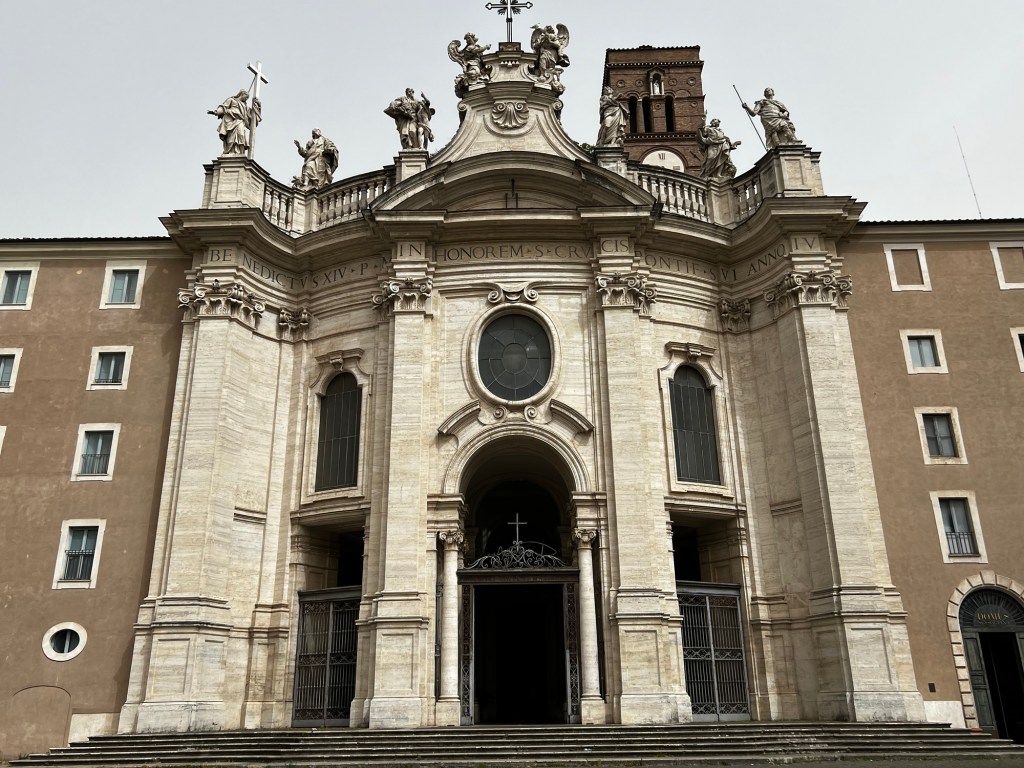
Next stop was church #5 which was only 15 minutes away, Santa Croce en Gerusalemme (Holy Cross in Jerusalem). I arrived there around 4:15.
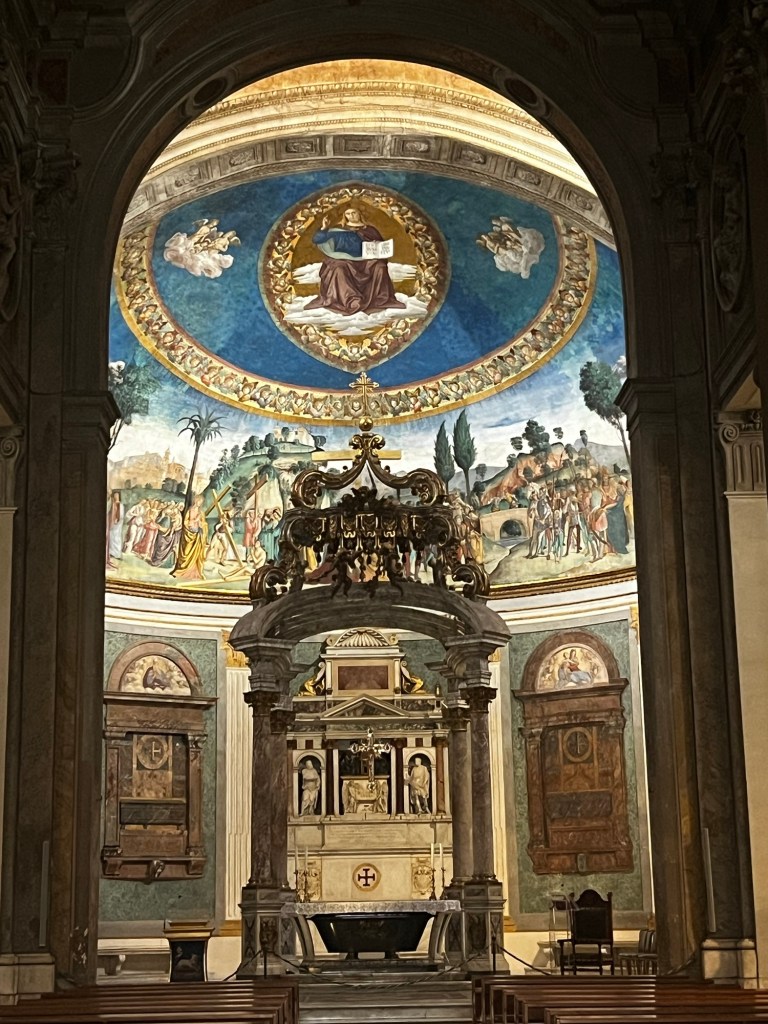
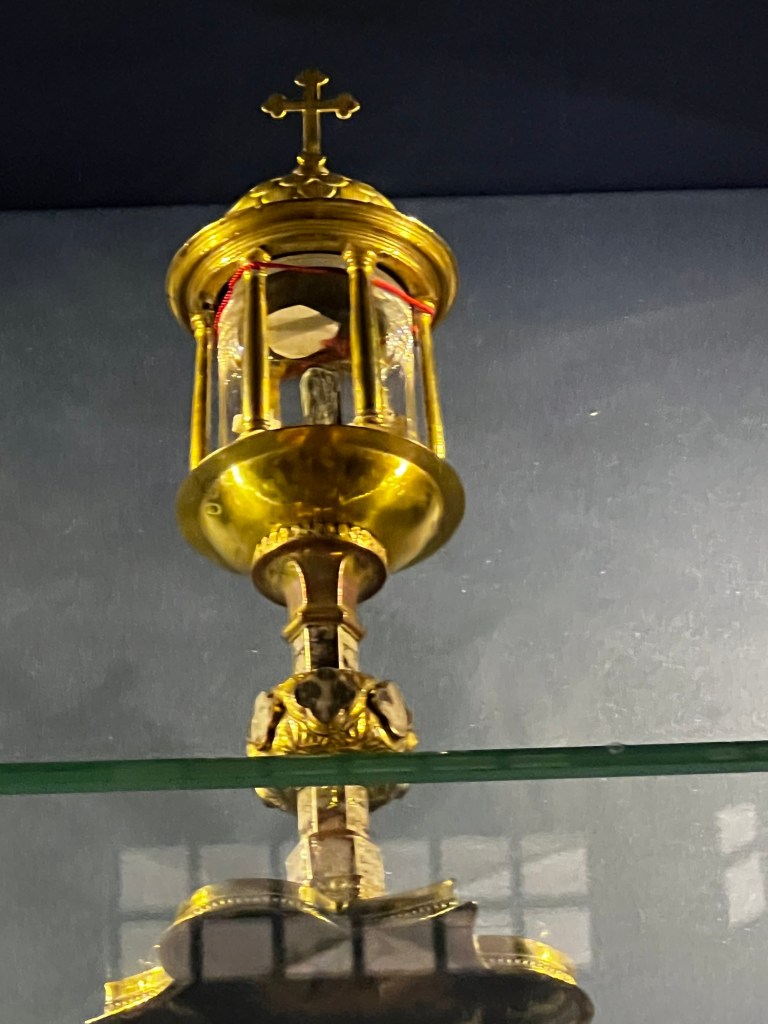
The interesting thing about this basilica is the many relics they have displayed. There are fragments of the cave at Bethlehem and the column of the scourging, among others.
There’s Thomas’ finger


Two thorns from Jesus’ crown
A nail from Jesus’ crucifixion
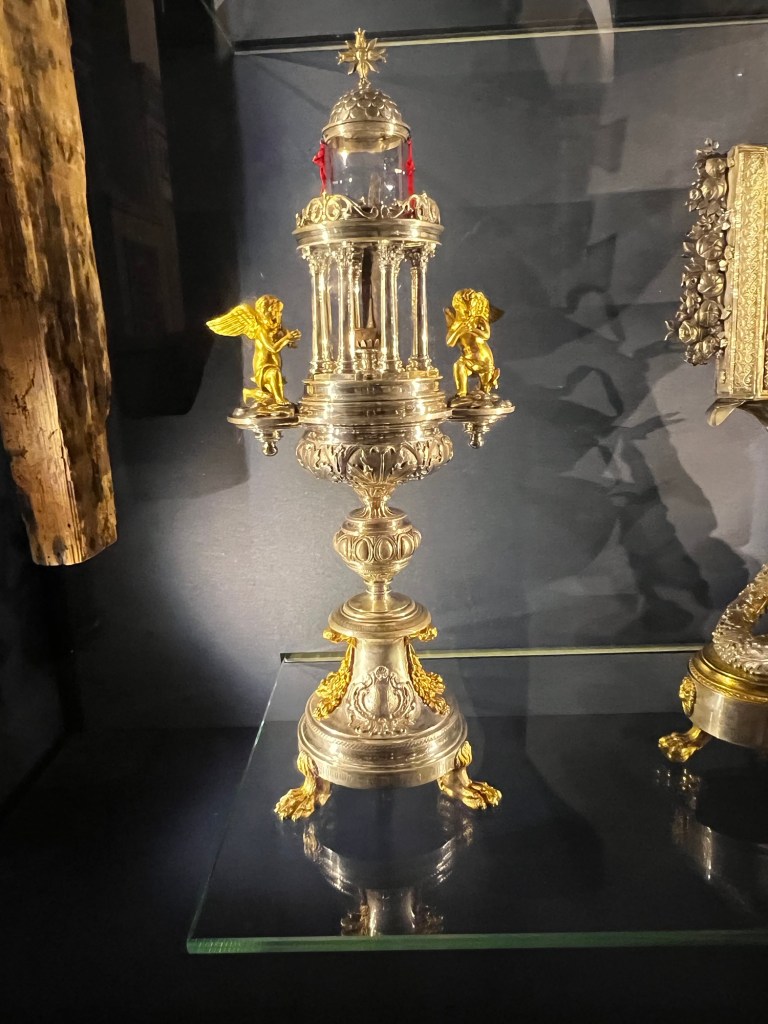
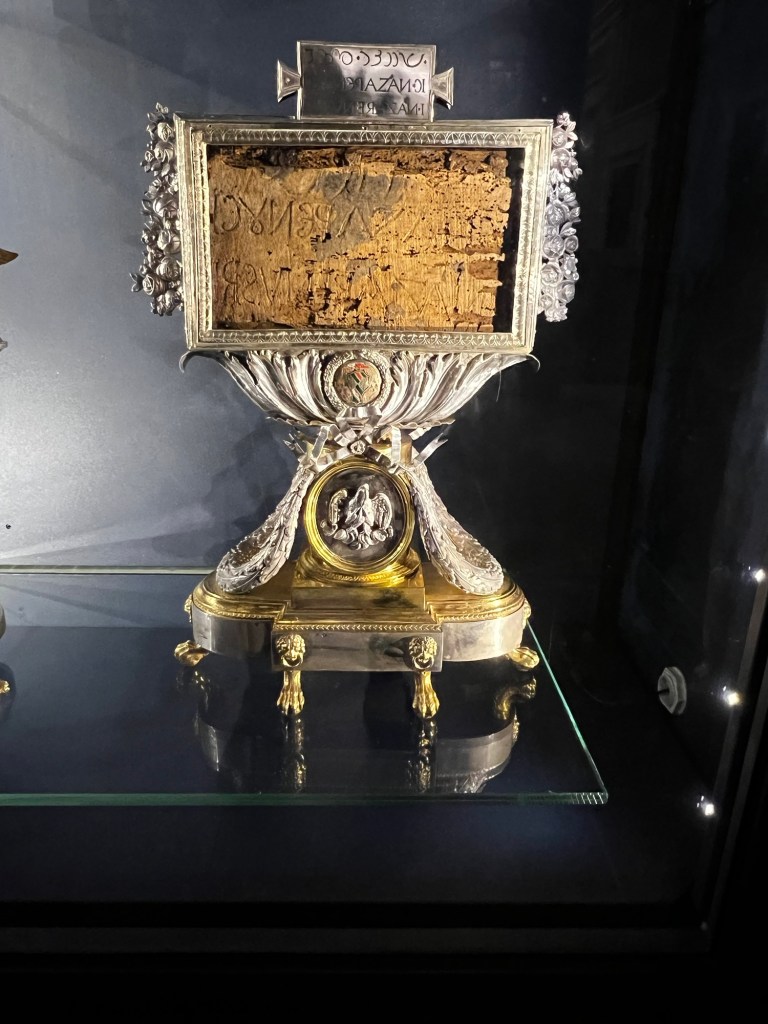
The wooden plaque that Pilate inscribed, “This is the King of the Jews.”
A piece of the cross Jesus was crucified on.


And here they all are on display.
Now that I had visited the Holy Cross in Jerusalem church, it was time to go to church #6.
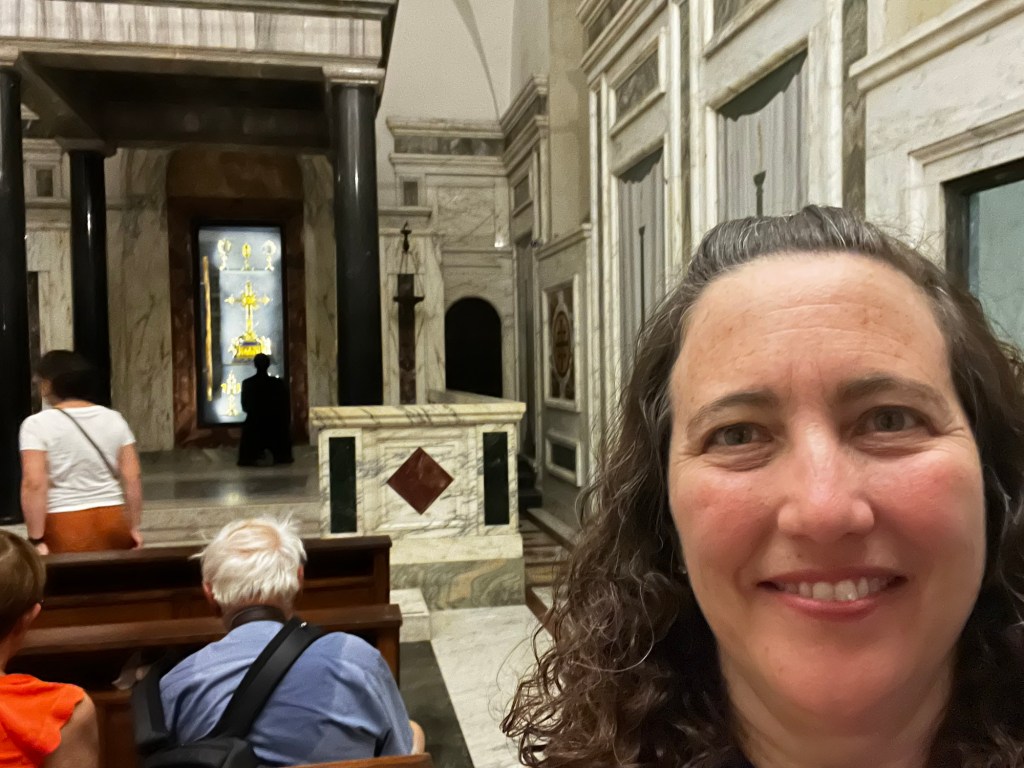

Going back outside the walls again I arrived 45 minutes later (around 5:30) at the second to last one, the Basilica St. Lorenzo Fuori Le Mura (St. Lawrence Outside the Walls).
By now inside I’m feeling more like this
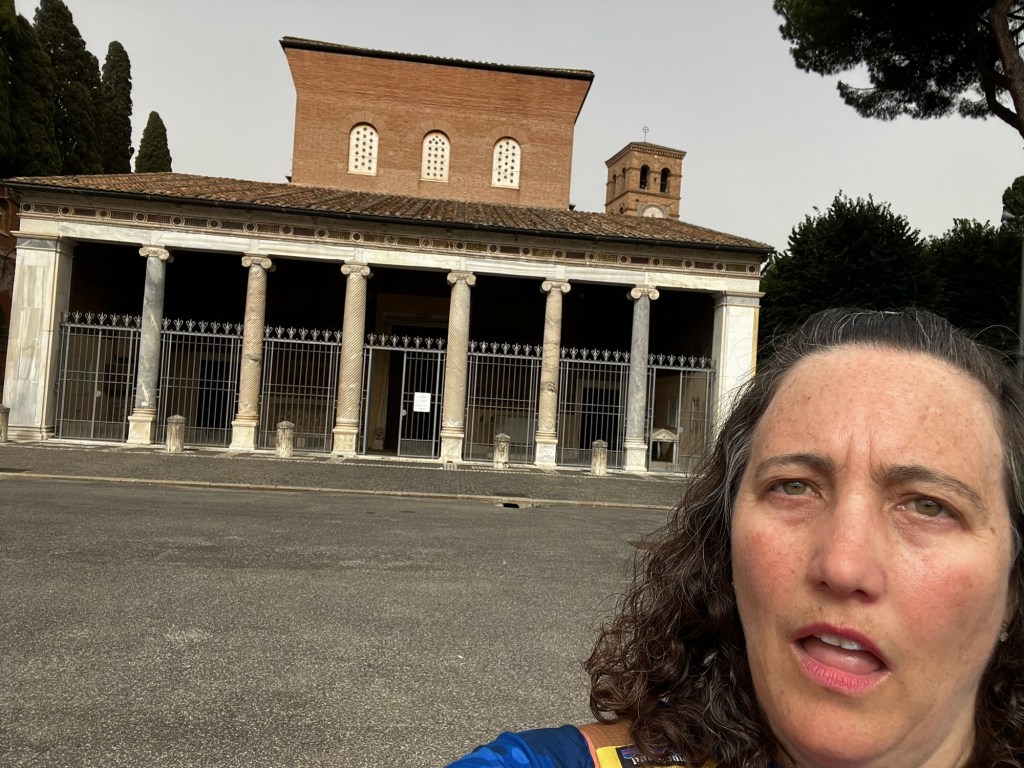
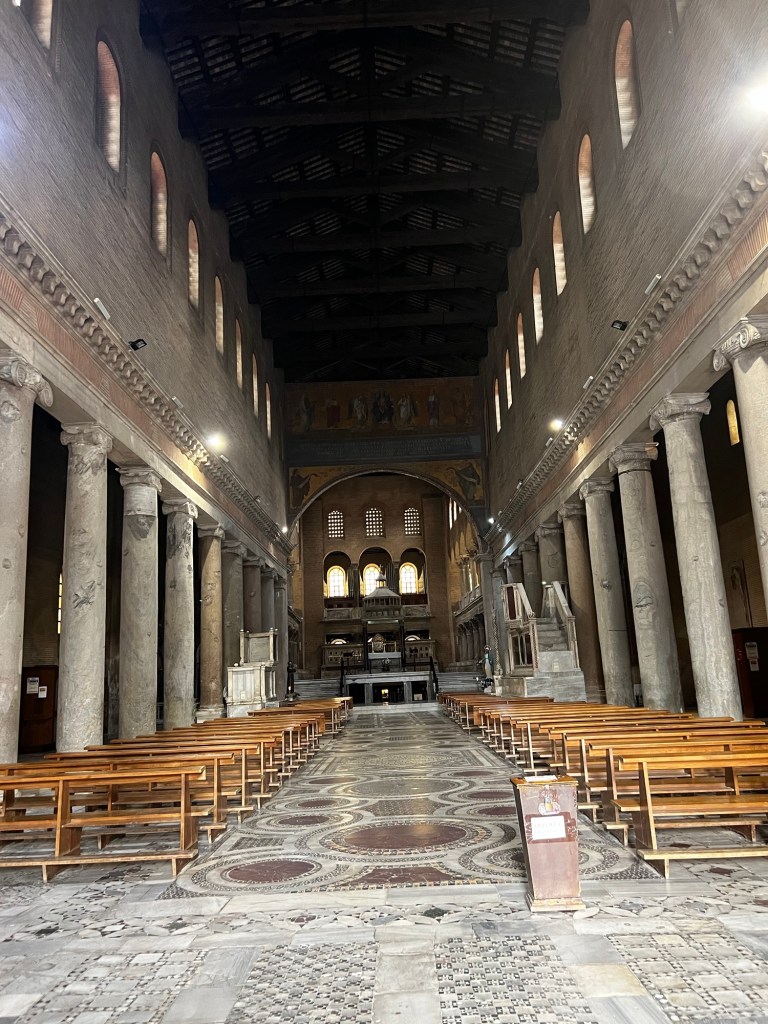
This basilica is not quite as fancy or popular as the other ones.
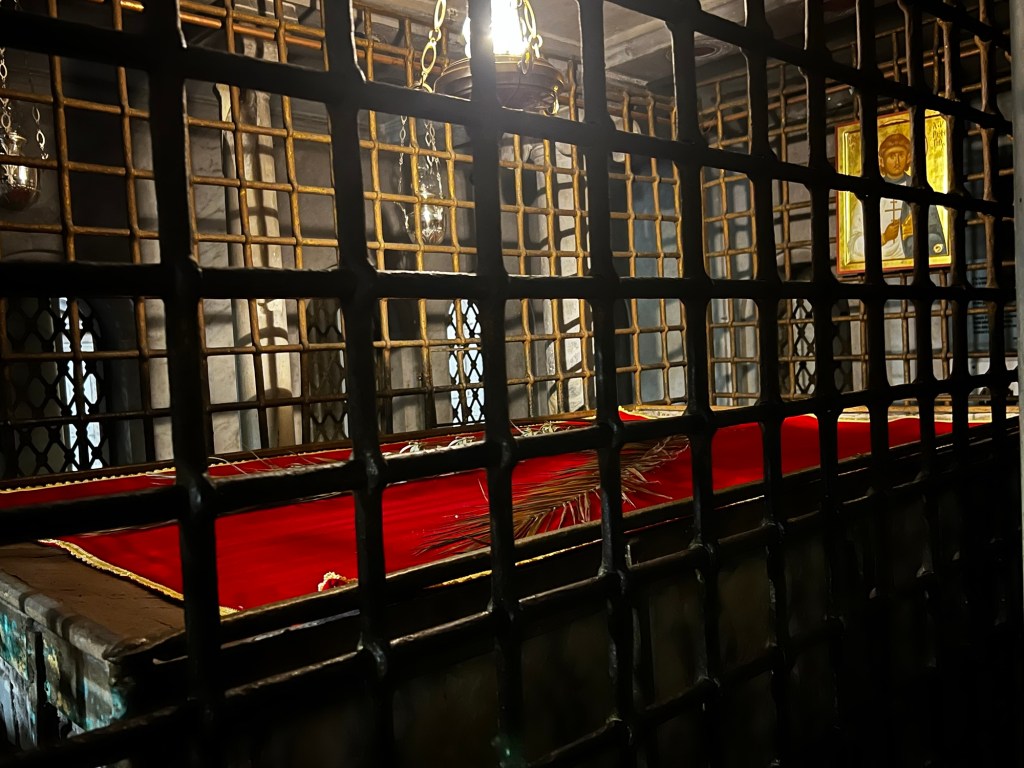
It houses the bones of St. Lawrence, St. Stephen, and St. Justin.
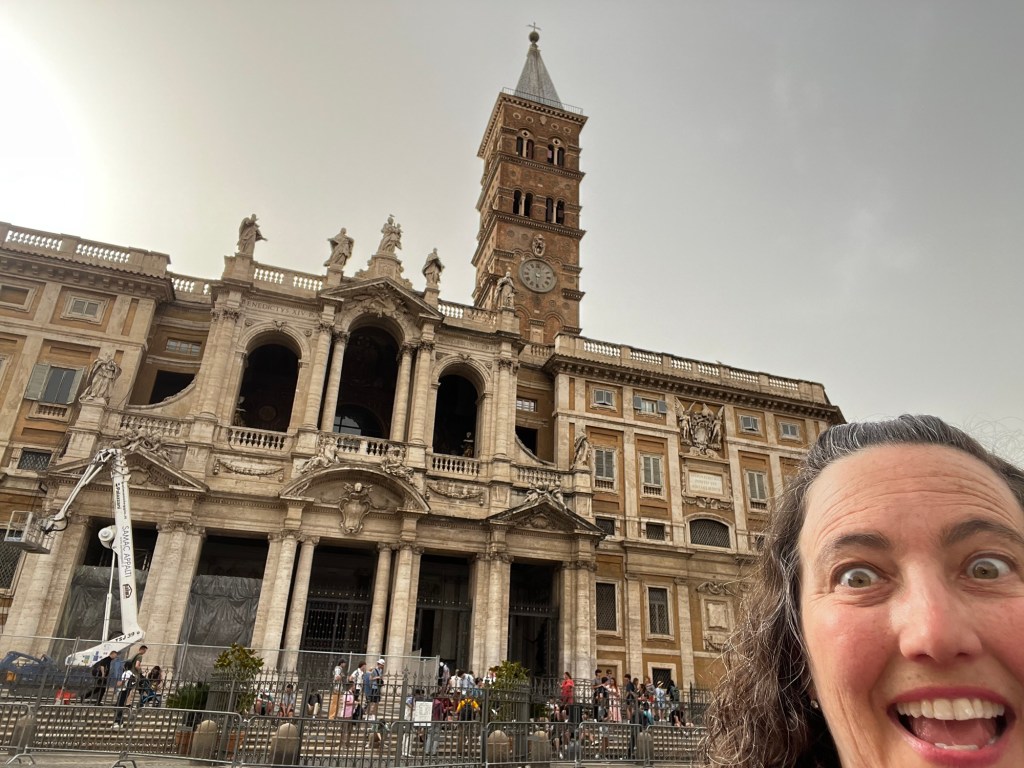
OK, time to head to the final church and one more 30 minute walk, the Grandmother of them all, Basilica di Santa Maria Maggiore (St. Mary Major). I was just a little excited to get to the final destination around 6:15.
St. Mary’s Major is one of the big four Basilica’s in Rome: St. Peter’s, St. Paul’s, St John’s, and Mary. It is the largest church dedicated to Mary and given its size, that’s not surprising.

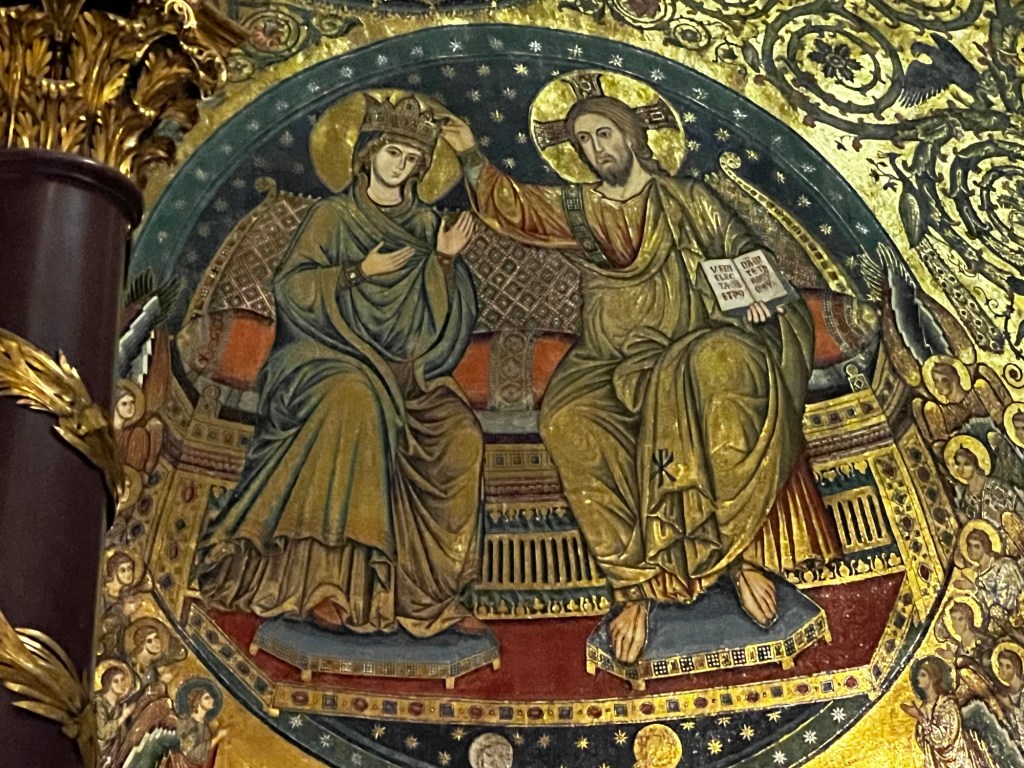
The grand mosaic highlights Jesus crowning of Mary.
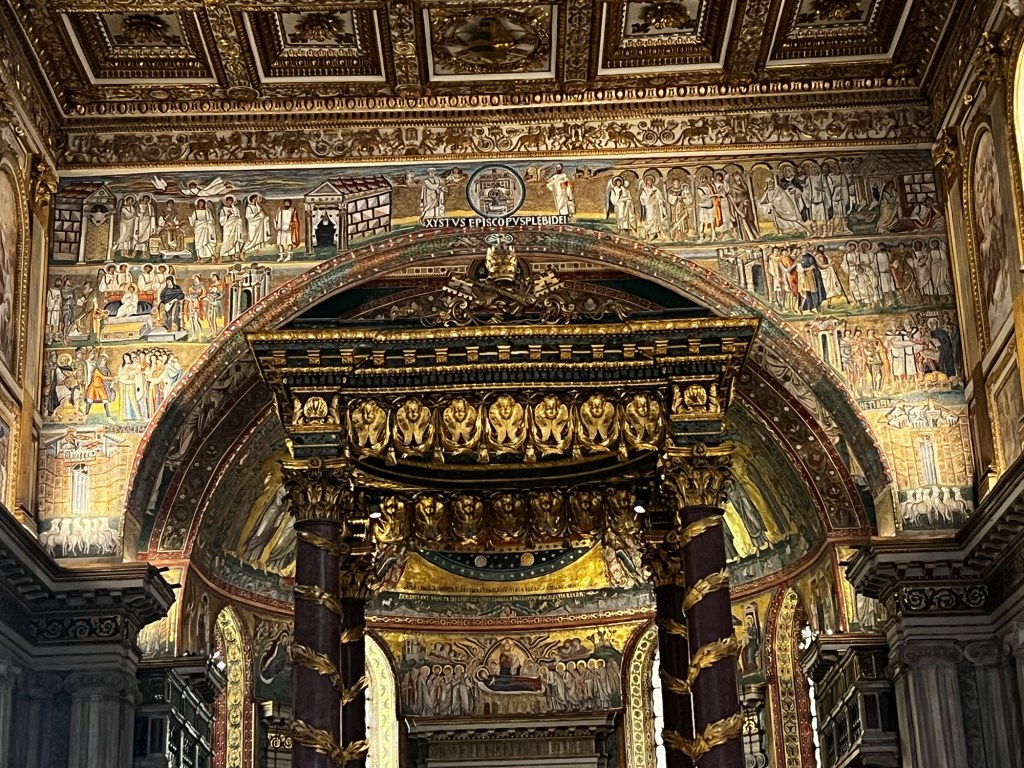
The mosaics over the arch depicts the life of Mary.
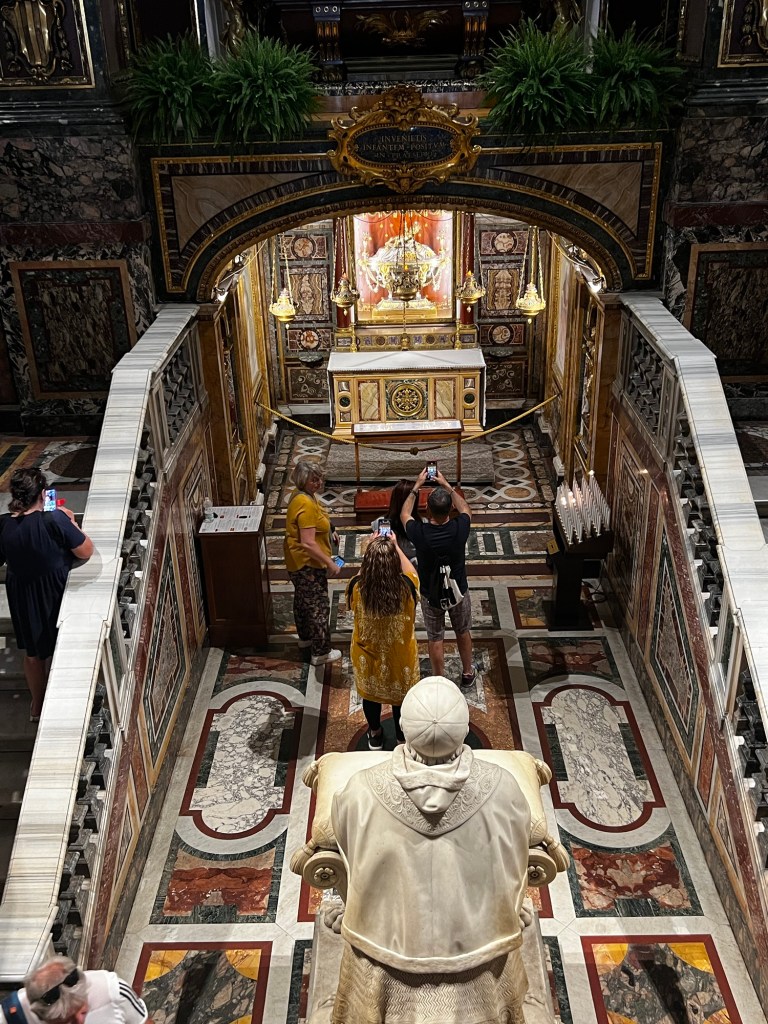
Just below the altar is the statue of a Pope Pius IX kneeling in front of the relic.
Inside this container are 5 pieces of sycamore wood said to be part of the Crib of Christ.


Needless-to-say, I was pretty exhausted after all my travels, had a few blisters, and was hungry. So I grabbed a to-go pizza (I am in Italy after all) and headed back to my room in the monastery. And yes, I slept really, really good that night!
 The PCUSA Pilgrim Pastor
Leave a comment