
June 15, 2024
I couldn’t leave Scotland without first checking out my Presbyterian roots in Edinburgh, the birthplace of Scottish Presbyterianism. Now let’s get one thing straight up front. It’s not pronounced Edinburgh-berg like Pittsburgh. The proper pronunciation is Edin-burrah, said quickly and kind of slurring some of the syllables. Try it. OK, let’s check out Edinburgh.
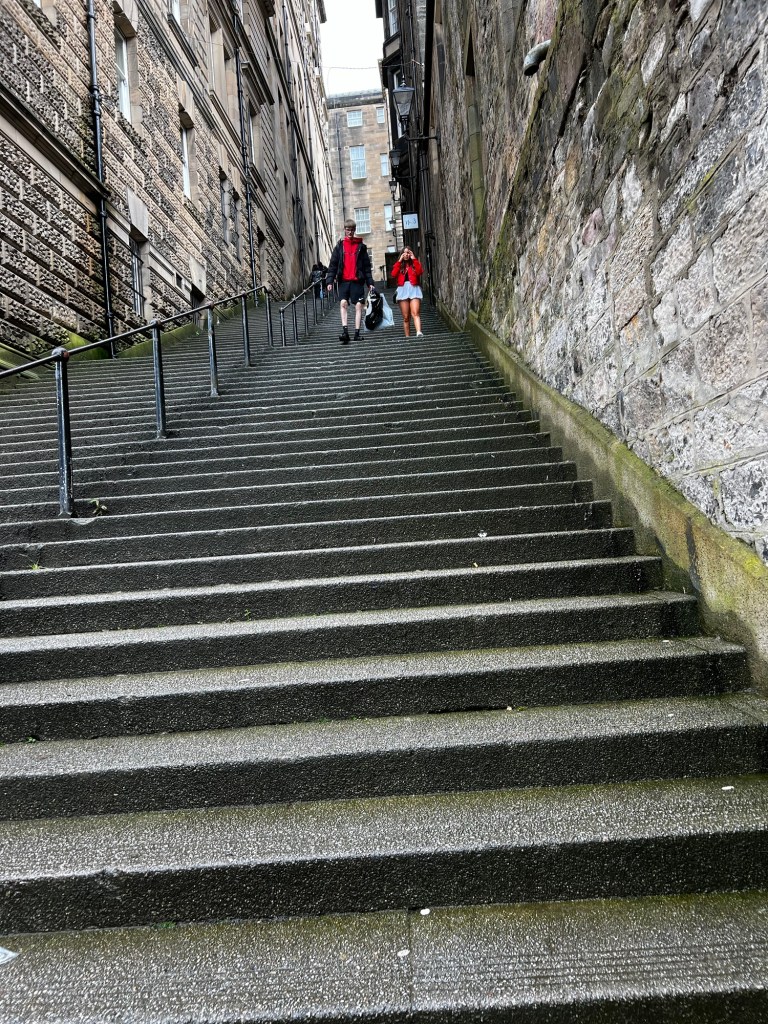
The first thing I quickly learned about Edinburgh as I hauled my luggage from the train station to the hotel is that it is on a hill, a really steep hill.
On my way to the hotel, I ran into this plaque commemorating the manse where John Knox lived. He is the reason Edinburgh is on my pilgrimage itinerary.

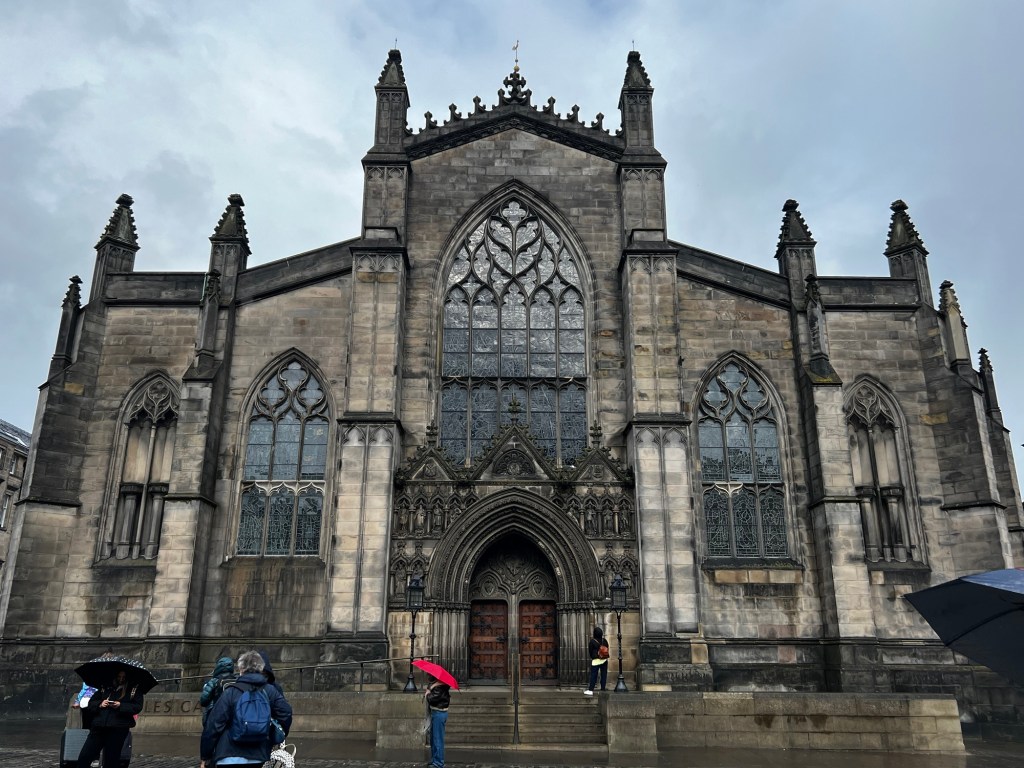
The first place I visited was St. Giles Cathedral. Pretty impressive from the outside!
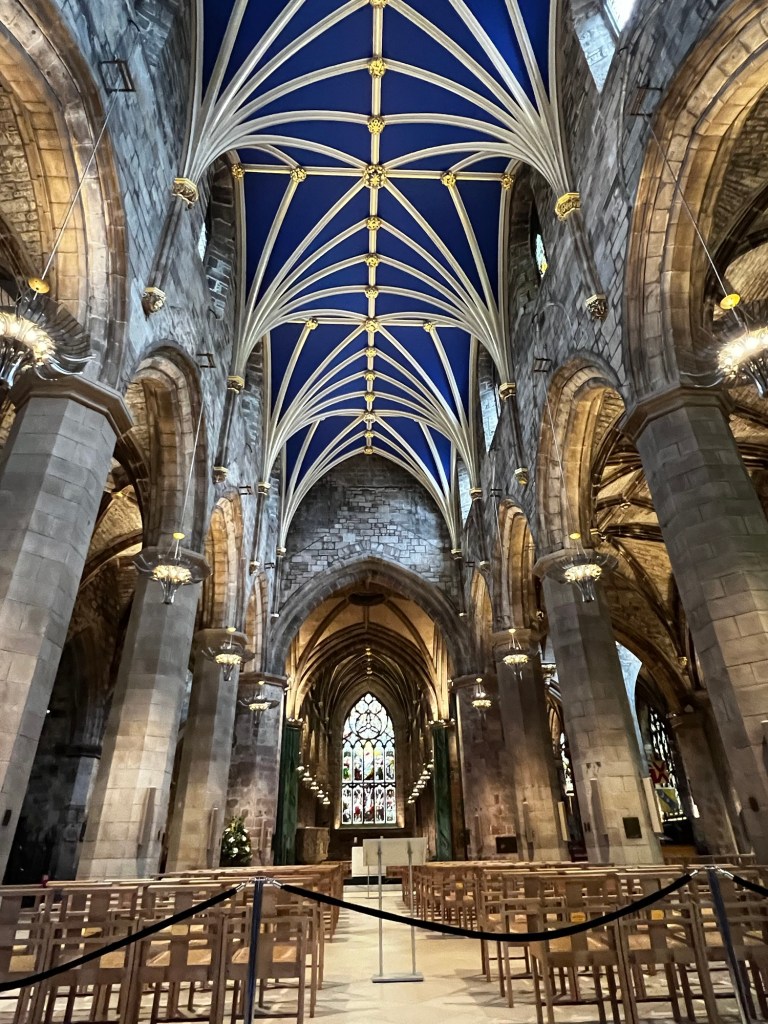
And from the inside.
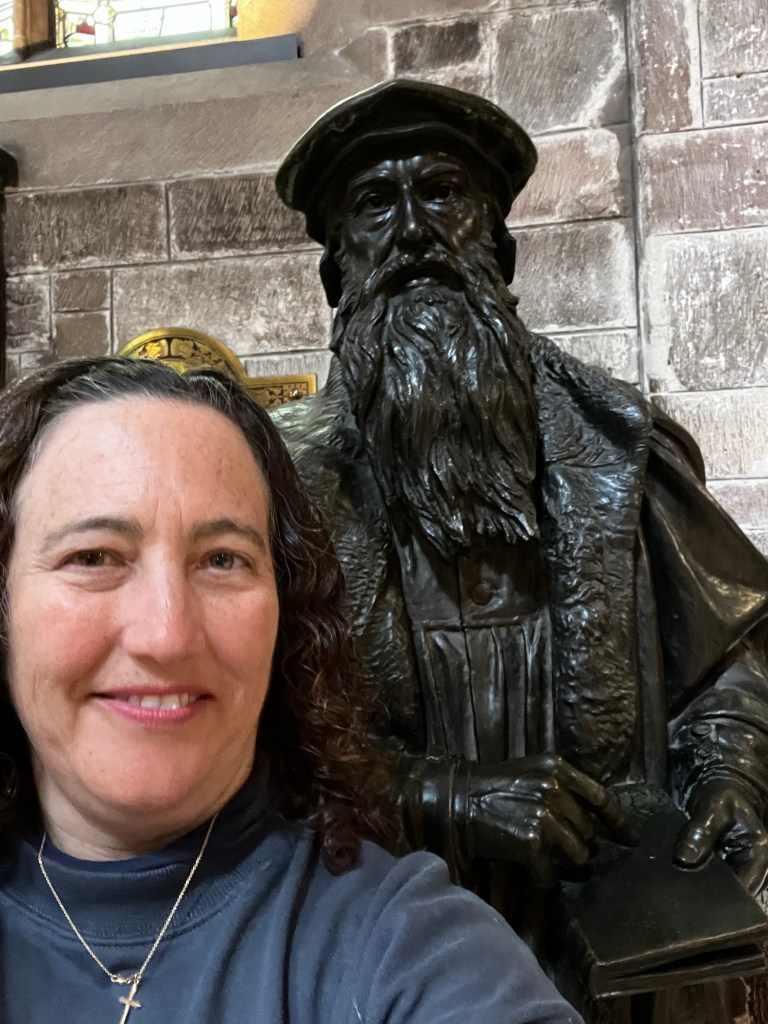
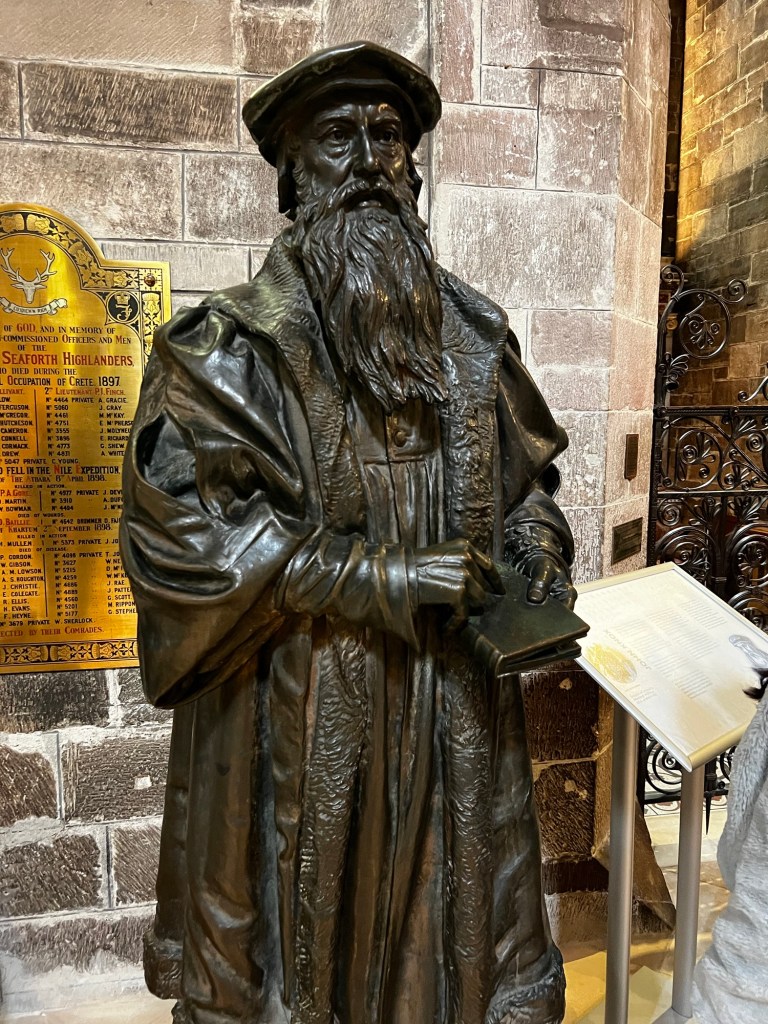
Of course I had to pay my respects to the founder of Scottish Presbyterianism, John Knox himself.
Here is a brief overview of Knox and his importance. He was born in 1513 and trained as a Roman Catholic priest but joined a growing reformation movement in the 1540’s. After being caught up in political events at St. Andrews, he was taken prisoner and enslaved on a French galley ship. Not many make it our of that experience alive, but Knox managed to be released and went into exile landing in Geneva. He ran into another reformer, John Calvin, who greatly influenced Knox’s understanding of the church.In 1558 Protestantism was beginning to take hold in Scotland and upon Knox’s return in 1559, he marched an army of followers into St. Giles and preached there for the first time. The following week he was elected its minster and the building was stripped of its stained glass and images. In 1560 the Scottish Parliament abolished papal authority and St. Giles no longer was a Catholic Church. Knox died in 1572 after being instrumental in establishing a Presbyterian system of church government, a democratic tradition, and a commitment to education which lead to the Scottish Enlightenment and many Scottish Presbyterian involved in drafting the US Declaration of Independence and the US Constitution. And that’s John Knox in a nutshell.

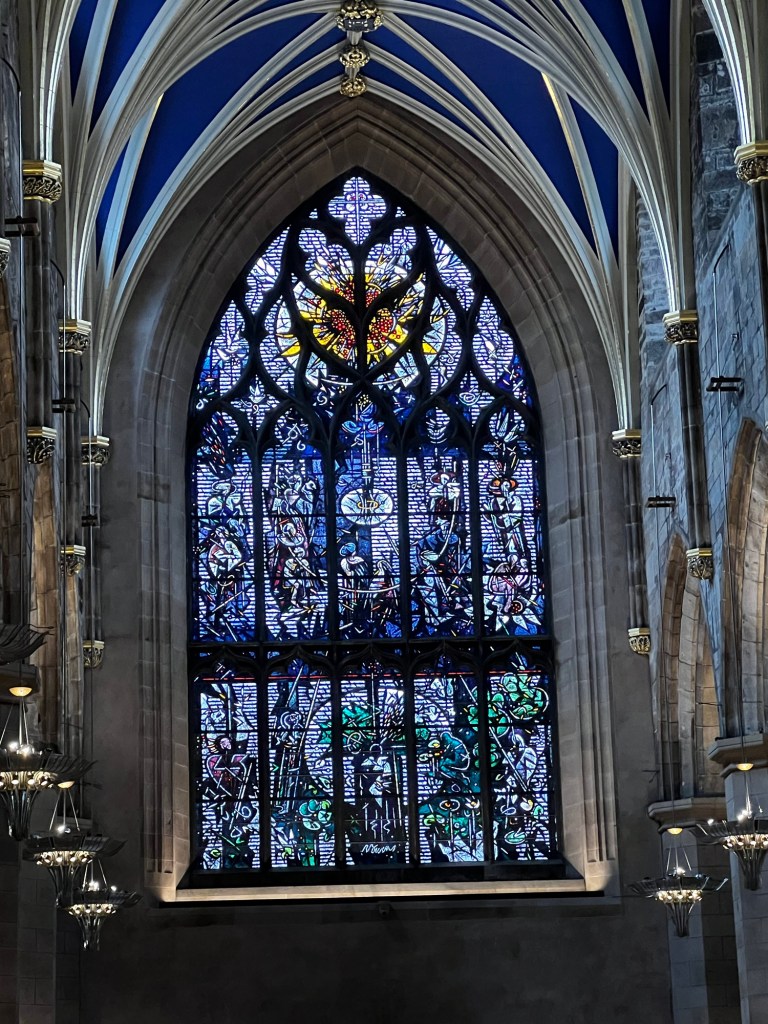
250 years later stained glass didn’t seem like a bad idea anymore so some scenes of Jesus’ life were installed by some of the leading artists of the 19th century.
Another window was put in later with part of it honoring the poet Robert Burns.

Here’s the pulpit Knox preached from denouncing Queen Mary of Scots and her Catholic religion.
I found this original National Covenant interesting. In 1638 the Scottish church once again declared independence from the Catholic Church and moved toward participatory democracy instead of ruled by kings and bishops. It’s not much to look at but it’s a piece of history that solidified the right of the people to run the church.

As I exited St. Giles, of course a bagpiper was playing on the corner. So with his music in the background, here’s a 360 view of St. Giles on what is known as the Royal Mile with Edinburgh Castle in the background.
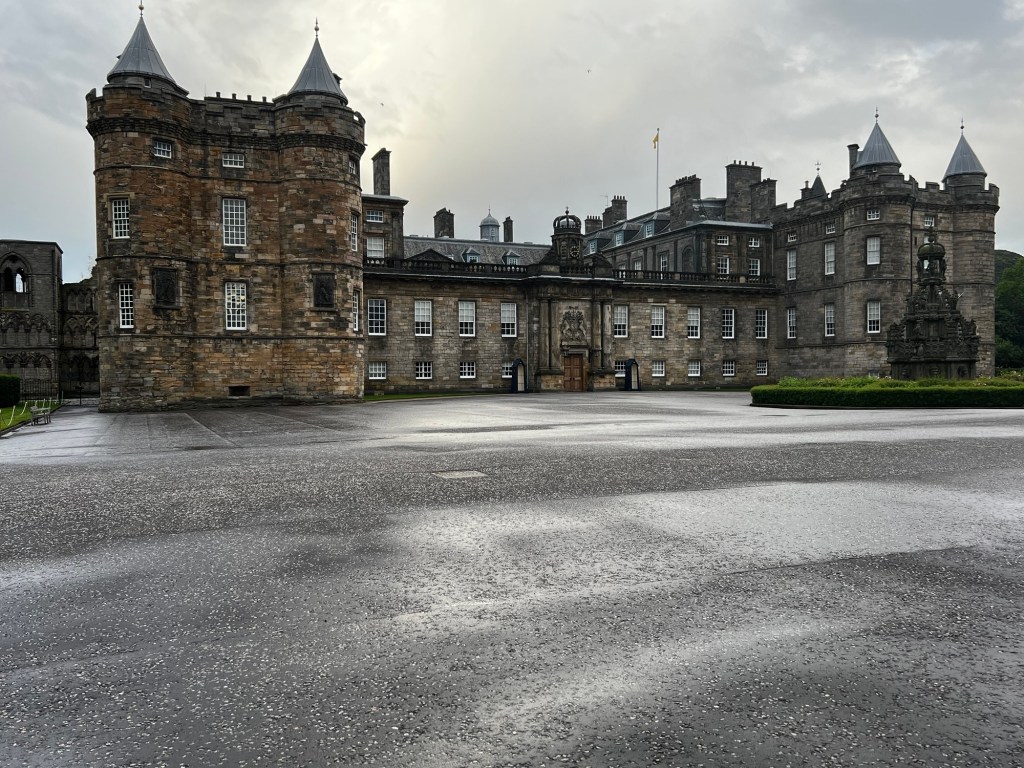
Royal Mile connects two places of royal residents: Edinburgh Castle and Holyroodhouse. Holyroodhouse is still the Royal place of residents when the king of England is in town and was once the home of Mary, Queen of Scots.
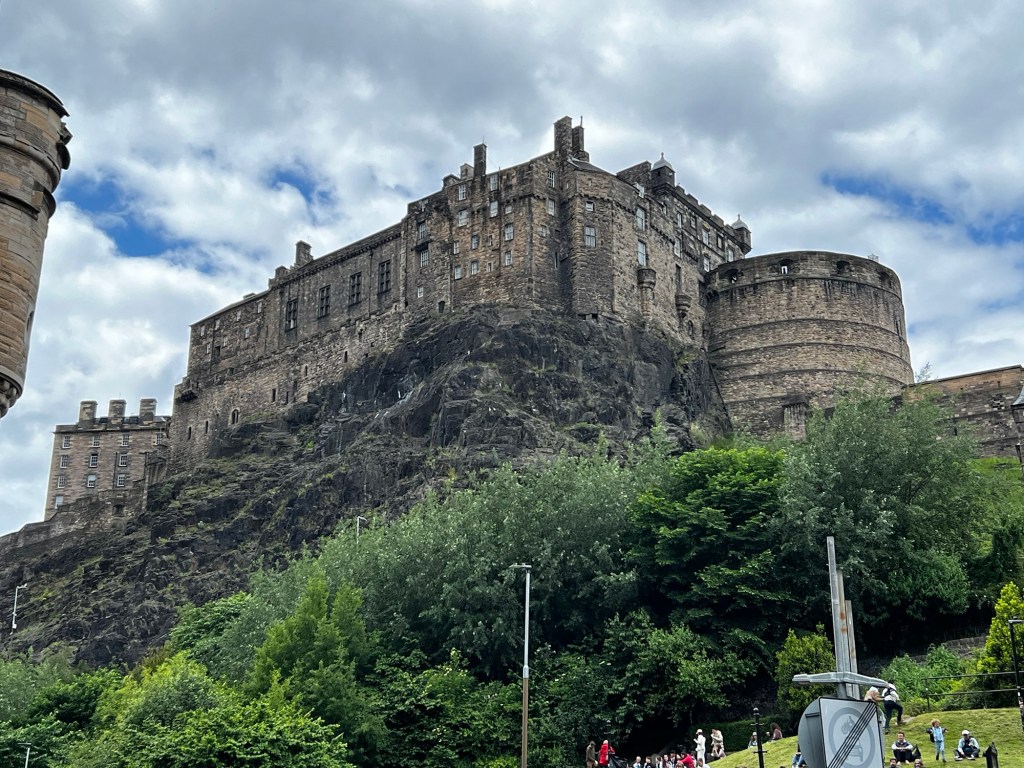
At the other end of the royal mile is Edinburgh Castle, looming over the entire city. Reservations must be made in advance but it is a sight to behold.
Approaching the castle it has two gates through which to enter for extra protection.


Once inside I headed straight for the “Honours of Scotland,” the crown, scepter, and sword. Of course no pictures are allowed inside.
Inside the castle are the Royal Apartments where Mary gave birth to her son, James VI. This room is where he was born.
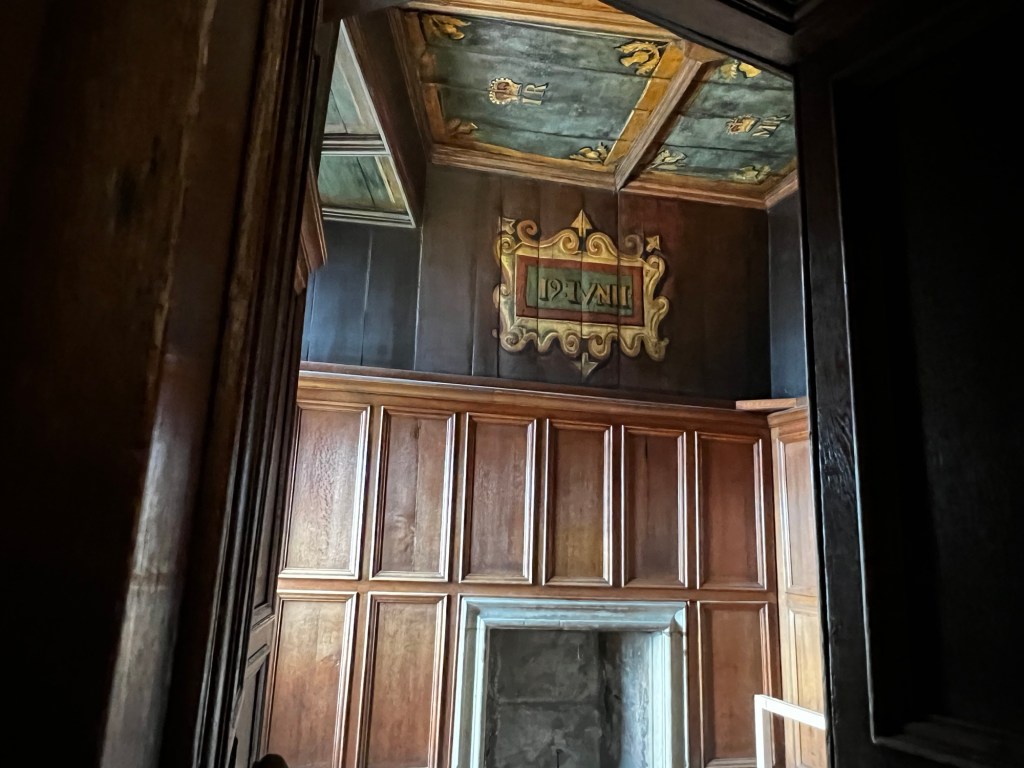

The National Museum has his cradle and a chair.
Other places in the Royal Apartments have also been restored.
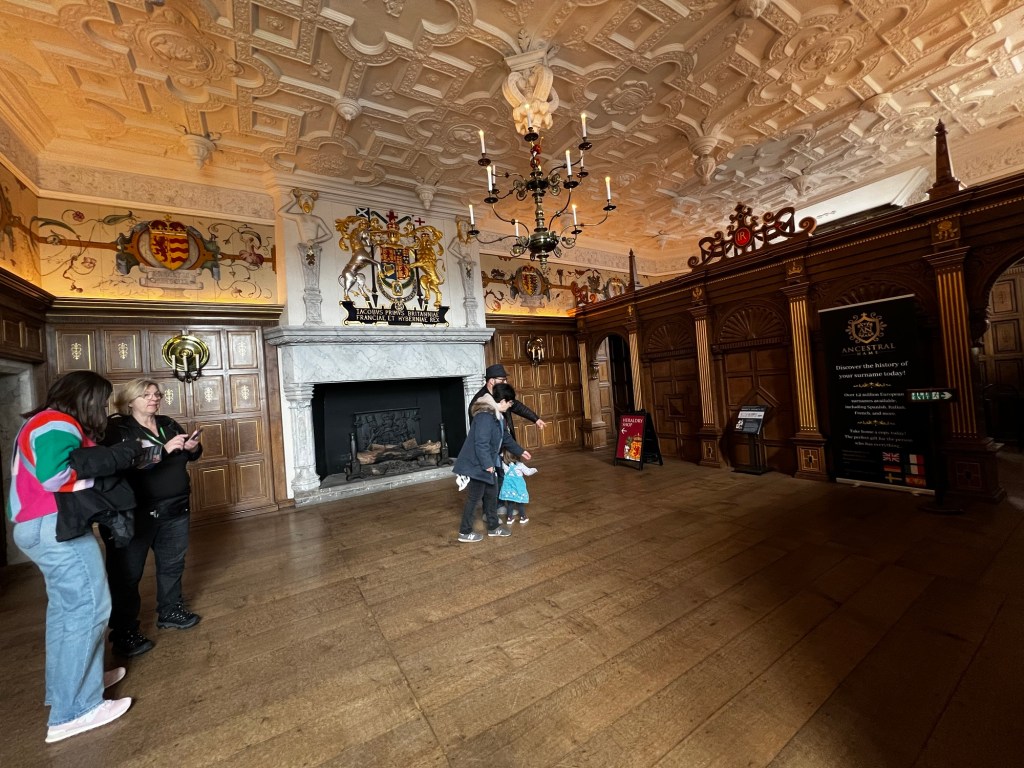
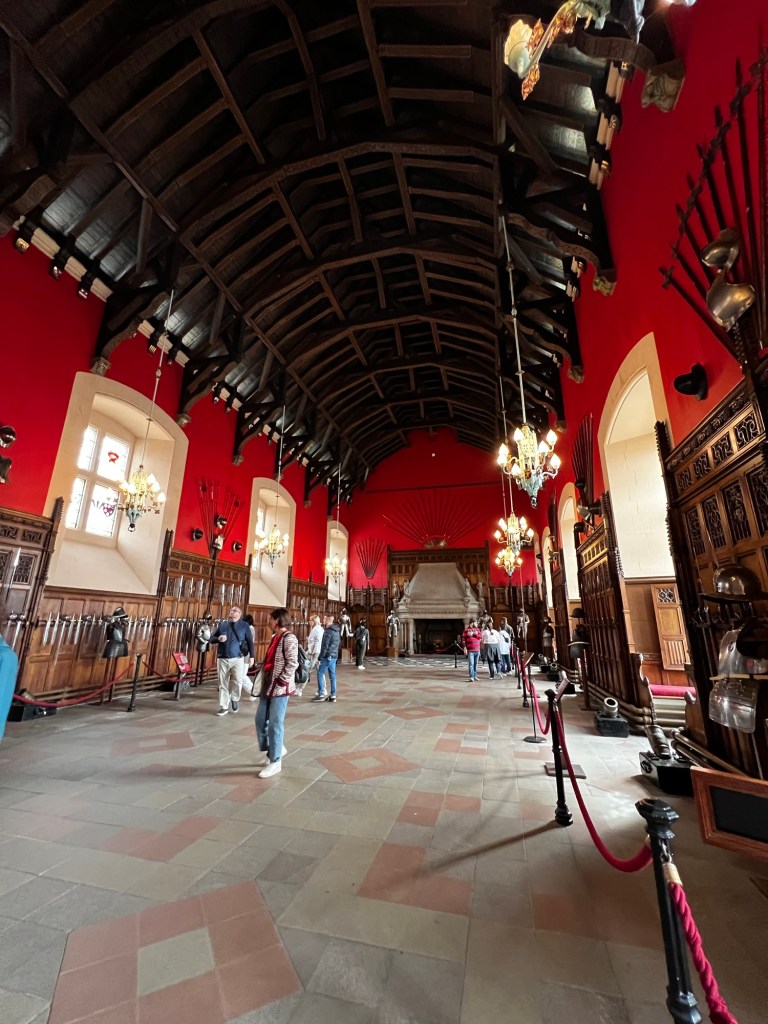
Next was the Royal Hall where guests were entertained and dinner occurred.
I love this Royal peephole where the residents could spy on their unsuspecting guests. See it up on the right corner. It looks like a grate.
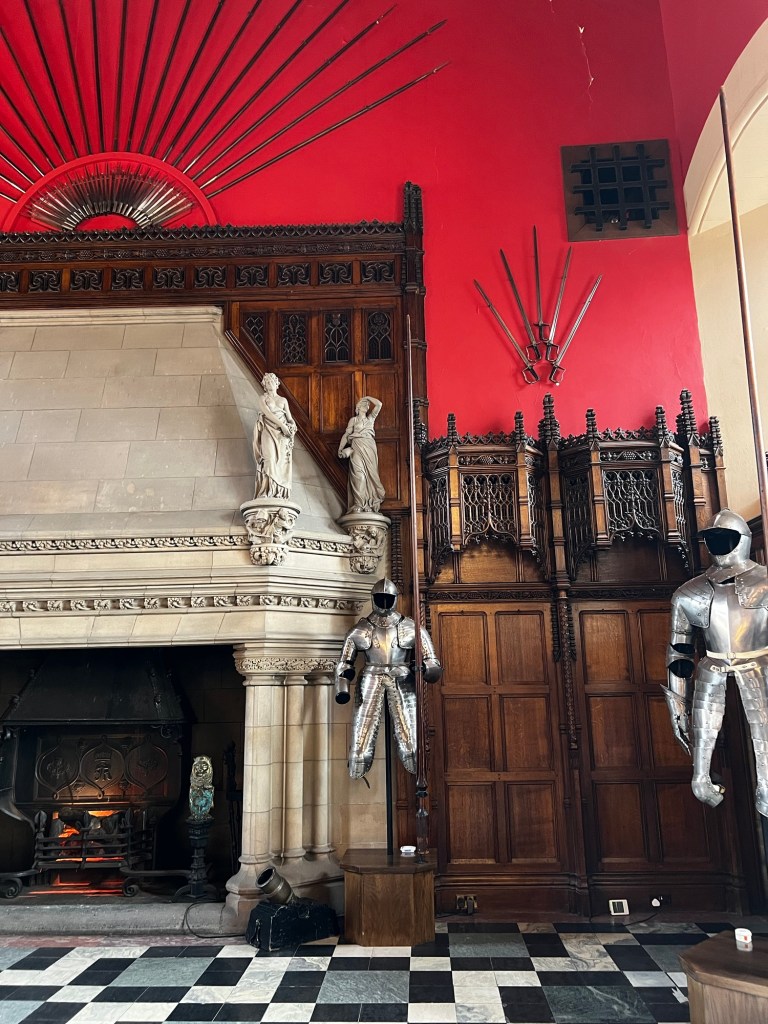
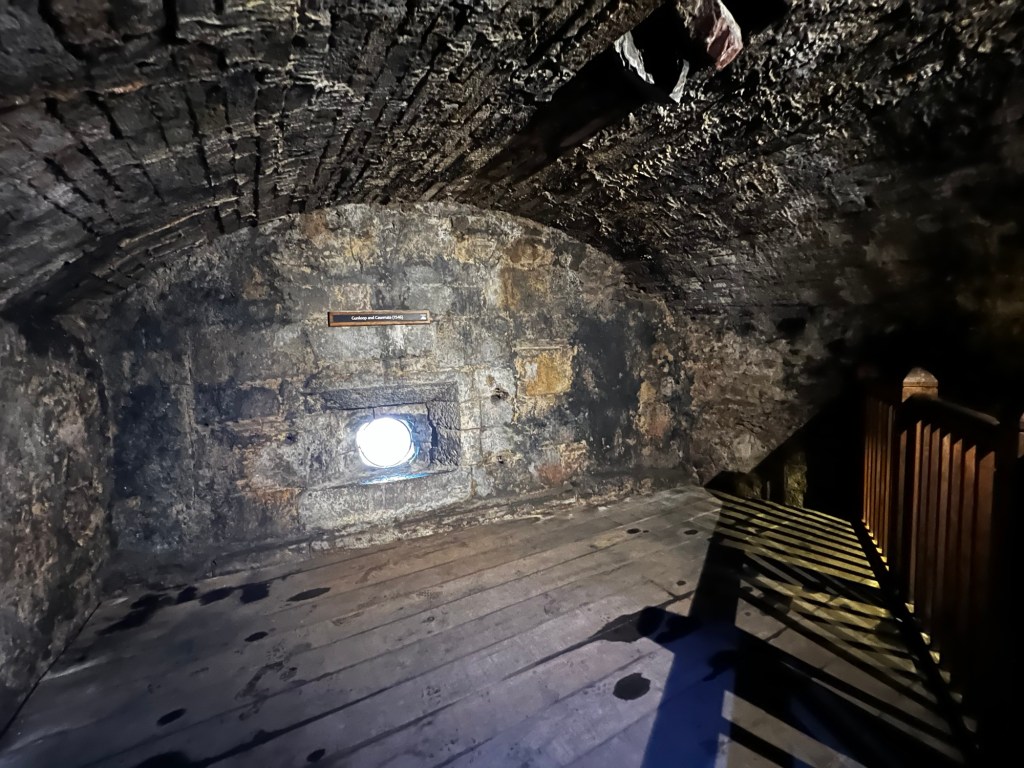
Other parts of the castle were a little more “raw” as soldiers fended off potential threats.
The castle has an open courtyard…
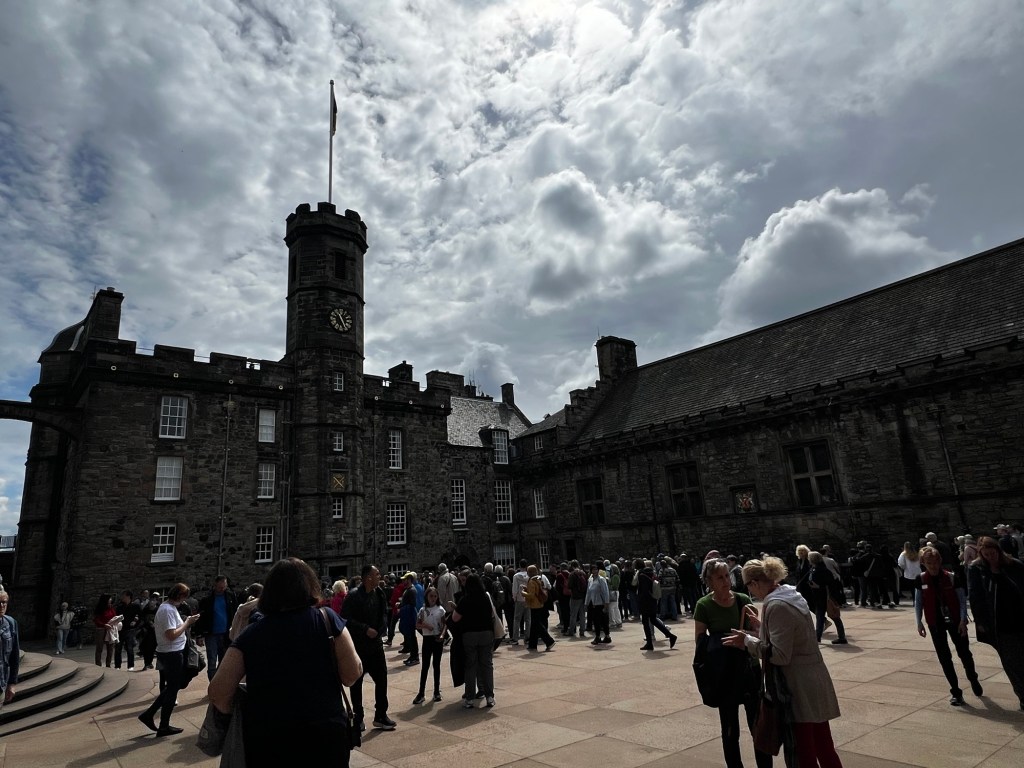
guarded by current Scottish police force.
A cemetery for dogs in inside the castle started in the late 1800’s for “regimental mascots and officers’ dogs.”

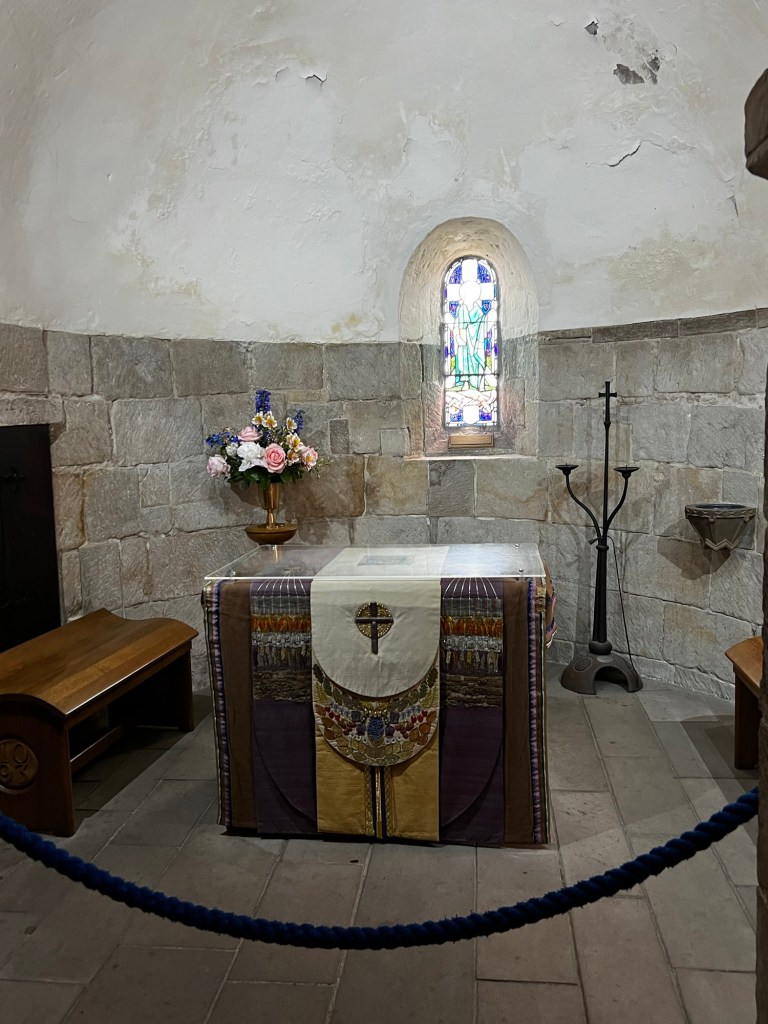
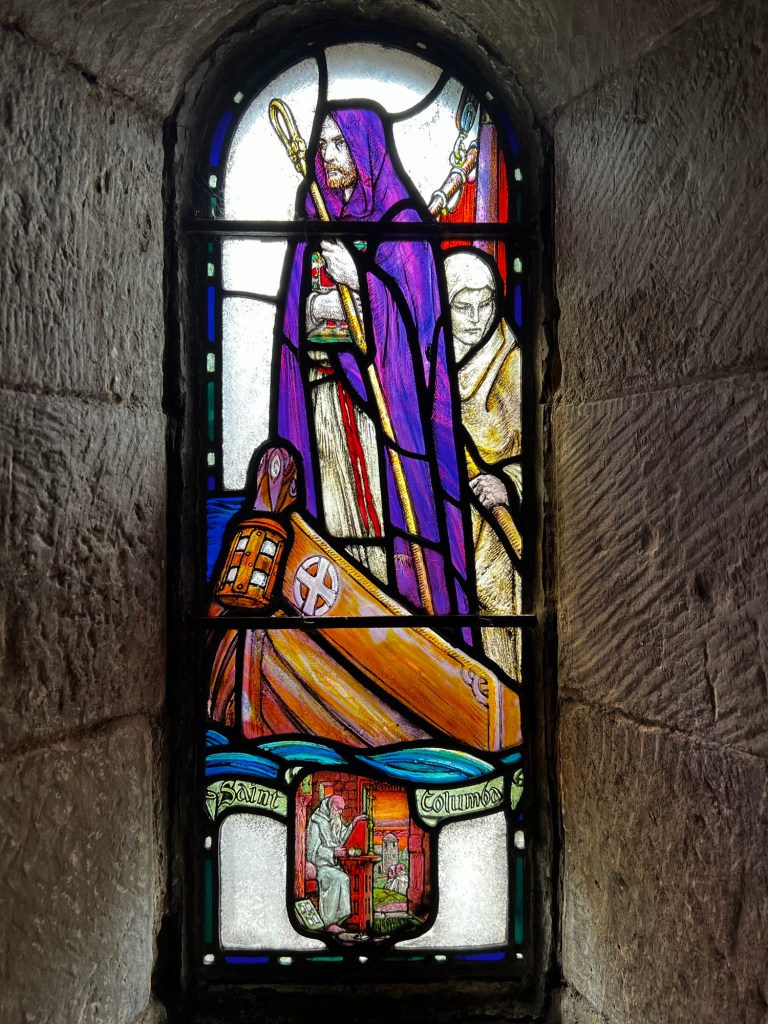
Finally we come to Margaret’s chapel.
And look how I found…Columba himself!
OK, now for the most exciting part. Little did I know it was the King’s birthday the day of my visit. So Scotland decided to do a 21 gun salute in the castle itself. It started with music…
Then came the salute. Looks like gun #2 had some problems but they adapted as true professionals.
It finally ended with a song many of us know.
What a thrill to have such a great view for a special occasion! Happy Birthday, King Charles.
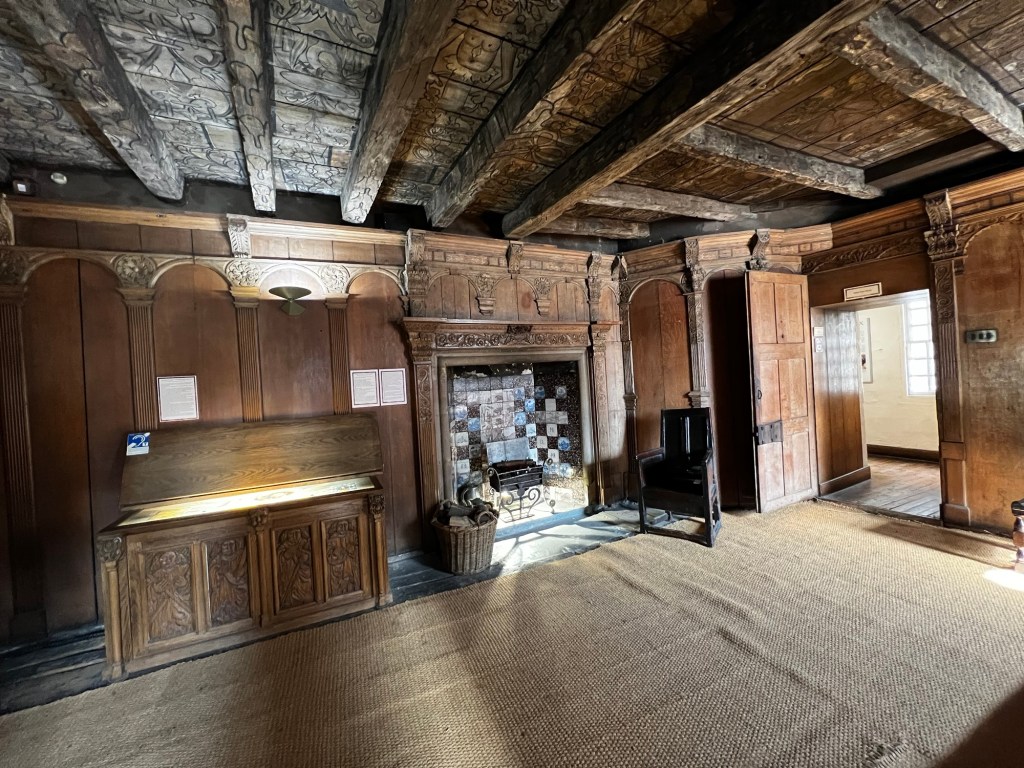
Back to John Knox. I had to see the John Knox House though some doubt whether John Knox really lived here. I did find the authentic house charming as it was built in 1490 and certainly existed during Knox time.
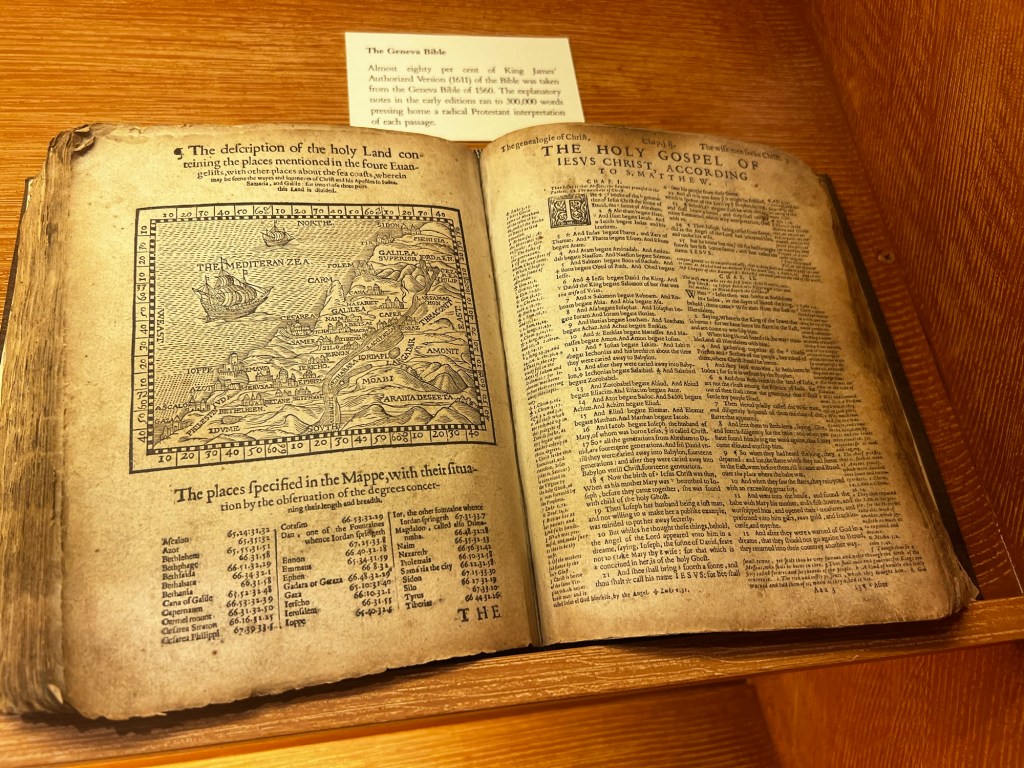
They did have several original printings of the Geneva Bible,
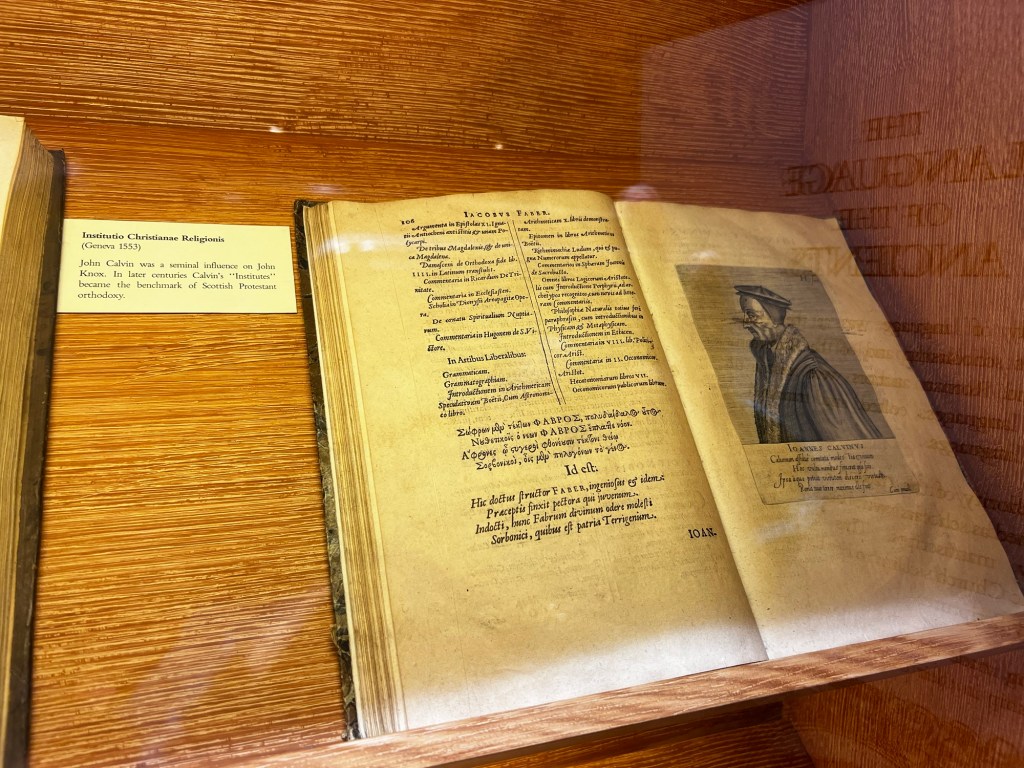
Calvin’s Institutes,
and John Knox’s History of the Reformation
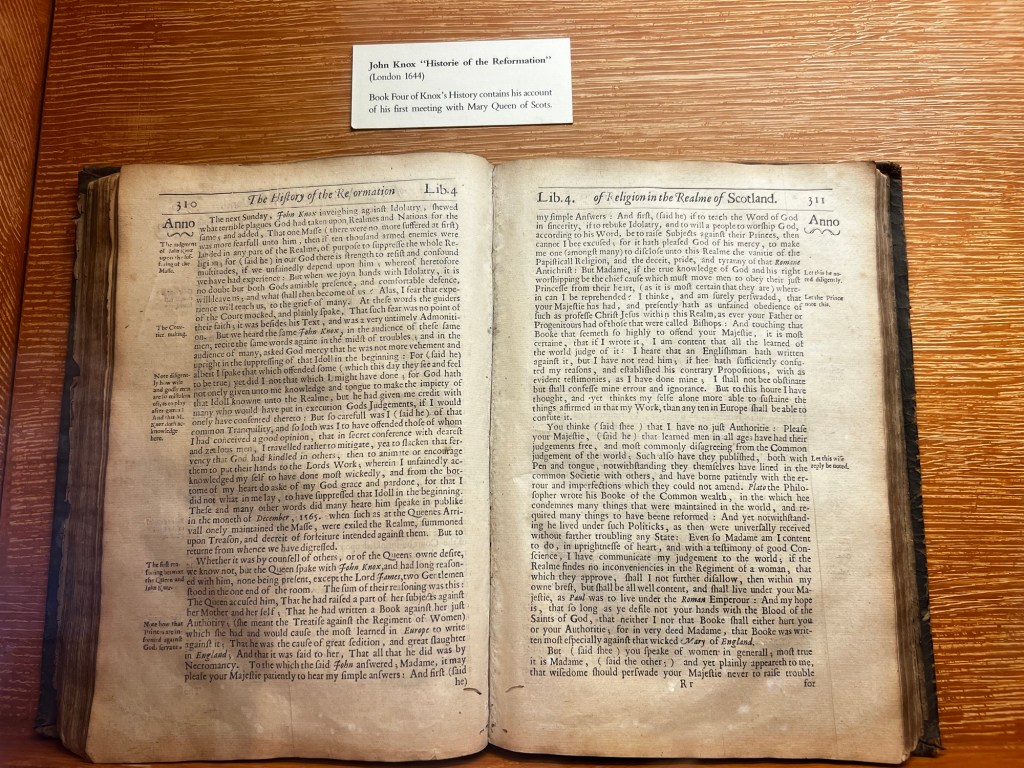
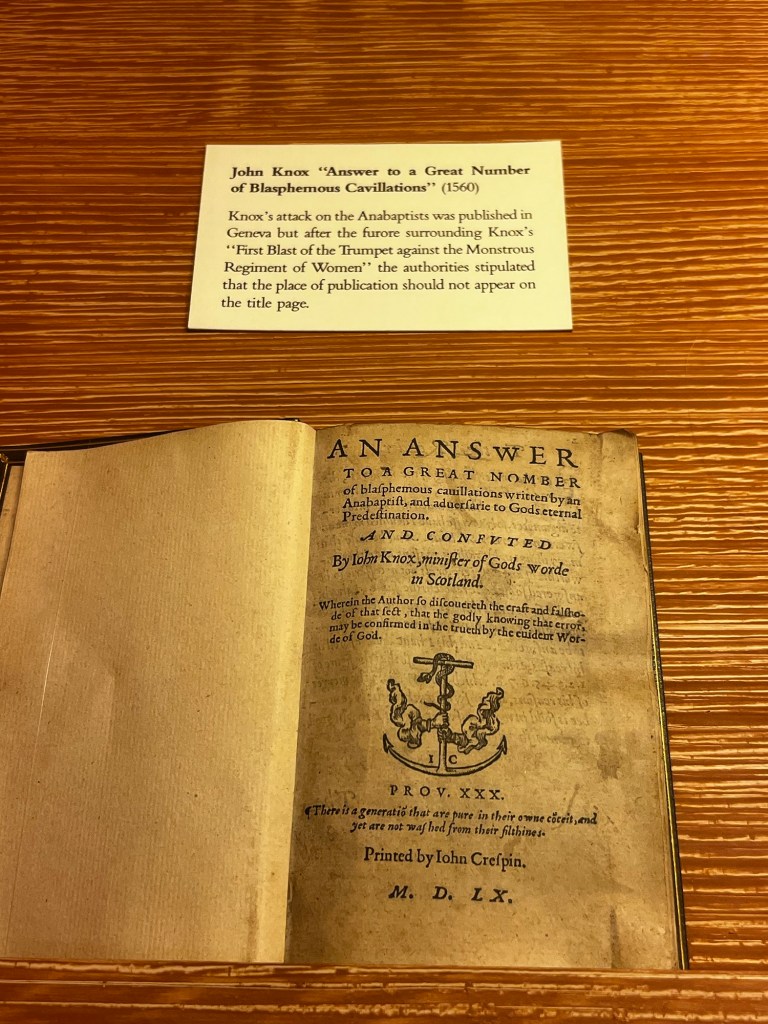
and his written attack on the Anabaptists. He certainly had a passion and fire for defending the faith.
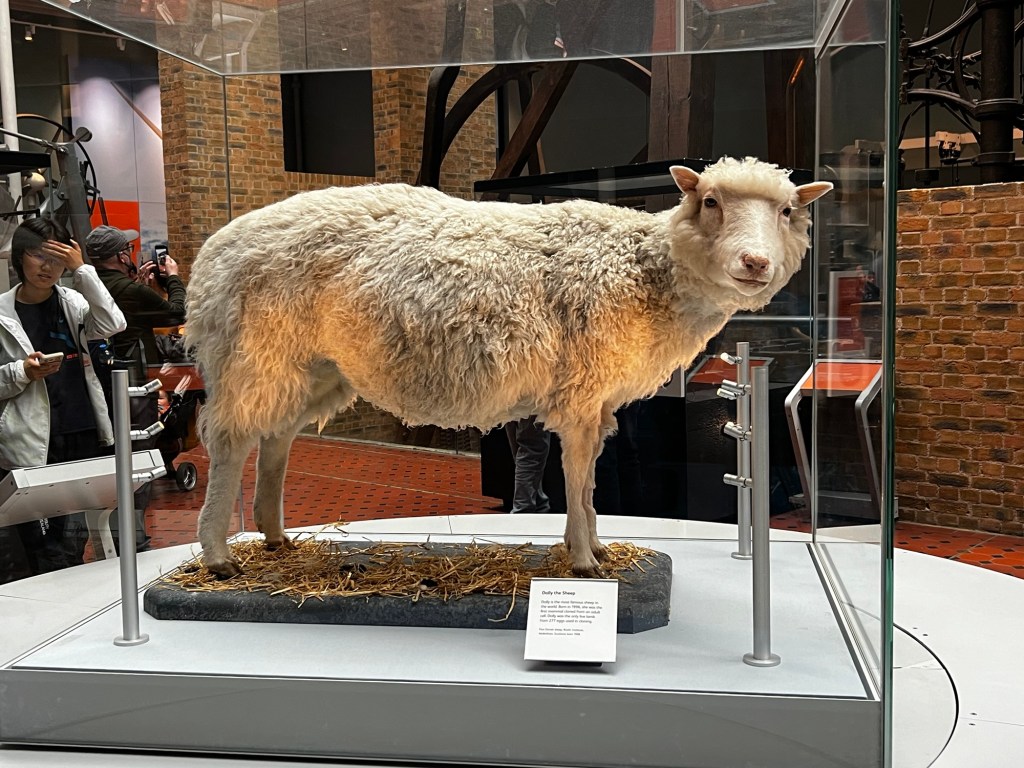
The National Museum of Scotland also had a lot of church, reformation, and John Knox items. But first I had to stop by and see Dolly the Sheep, the first cloned mammal.

While there are many displays of communion items, baptismal fonts, and documents, what I found most interesting was this copy of the Book of Common Order, a.k.a. Knox’s Liturgy. We still have a Book of Order today, a living document to give structure as well as adaptability and freedom to our way of being the church.
Knox was buried near his beloved church, though strangely it is now a parking lot.

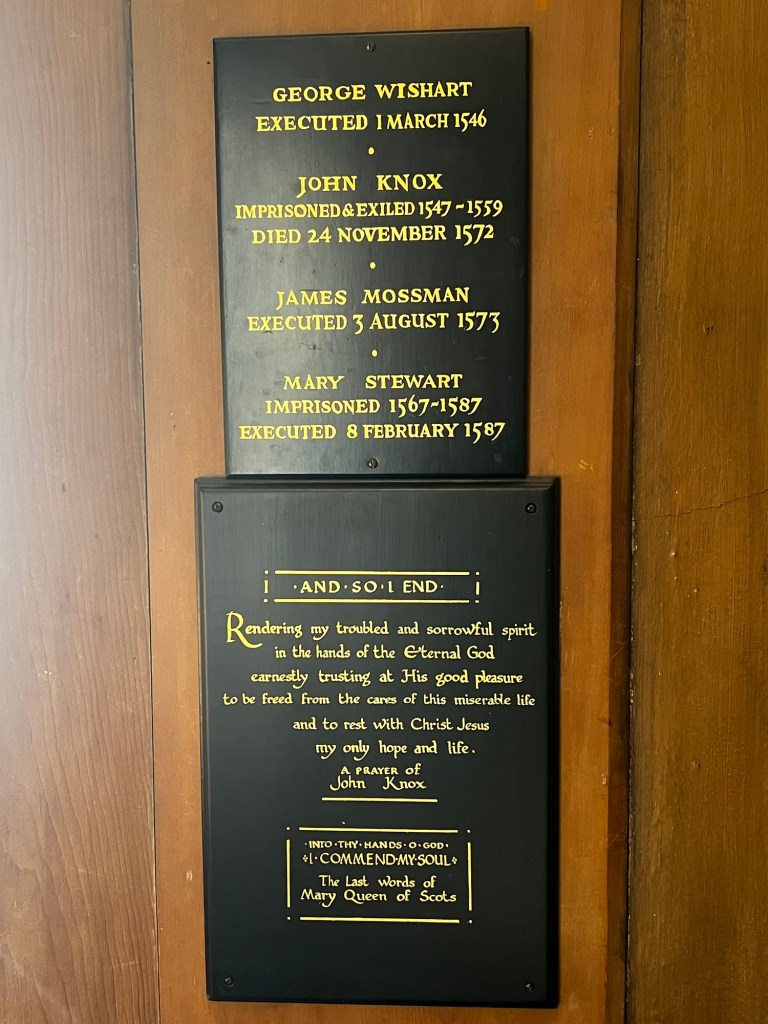
Despite the contentious relationship between Queen Mary and John Knox, their last words were similar and probably akin to what many of our last words might be on this earth.
 The PCUSA Pilgrim Pastor
Leave a comment